by Ginny Sikri | Jul 16, 2024 | InBiteSize
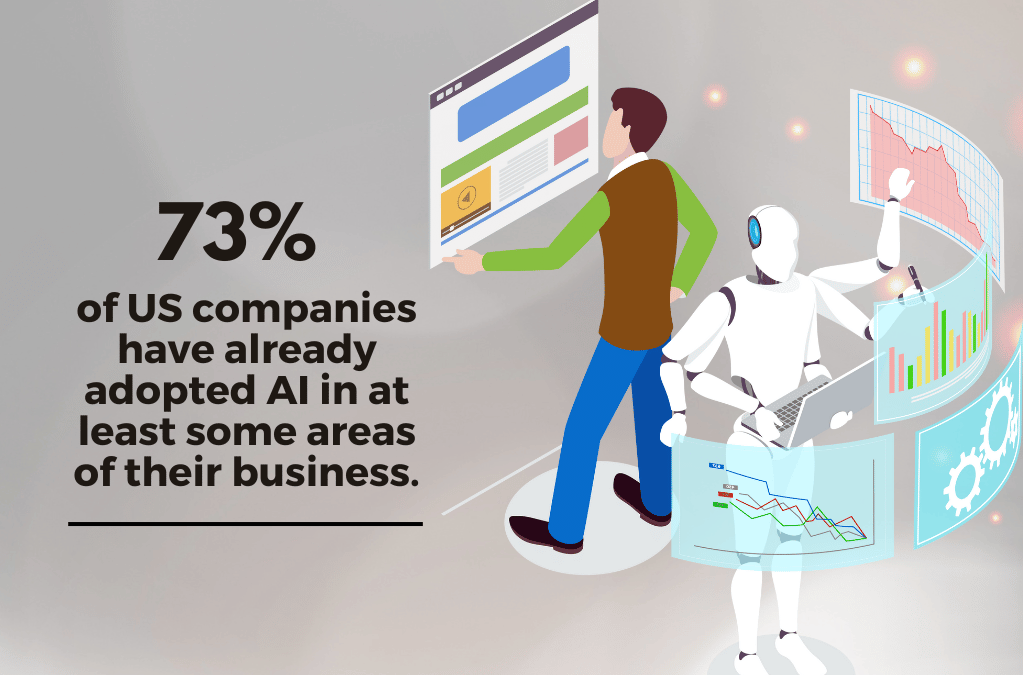
Enterprises are leveraging AI and generative AI to enhance existing services and develop new capabilities for business growth. According to PwC’s 2023 Emerging Technology Survey, 73% of US companies have already adopted AI in at least some areas of their business, with 54% implementing generative AI specifically. (As per PwC AI Predictions)
Project and Program Managers play a crucial role in driving and managing the transformation of AI-driven initiatives. This article explains how AI projects are different from other projects and how project managers need to up level their skills to meet the unique needs of AI based initiatives.
Unlike traditional projects, AI-driven initiatives demand a comprehensive understanding of both technical and operational aspects of AI. Here are some key differentiators of AI projects and strategies for effective management:
AI projects heavily rely on large, high-quality datasets for training and testing AI models. Ensuring data quality, quantity, and relevance is crucial. Data must be cleaned, labelled, and preprocessed adequately to train models effectively.
AI projects require an iterative, cyclical approach (e.g., Agile or CRISP-DM methodology) where continuous experimentation, model tuning, and validation occur throughout the project. Models are continuously trained, tested, and refined based on feedback and new data, allowing for ongoing improvement and adaptation.
Evaluating AI model performance focuses on specific metrics such as accuracy, precision, recall, and F1 score. Model validation is crucial to ensure the AI solution meets the desired criteria and generalizes well to new data. This process requires ongoing model maintenance, monitoring for performance drift, retraining with new data, and handling evolving requirements and environments.
AI projects raise unique ethical concerns around bias, fairness, transparency, and accountability in AI decision-making. Compliance with regulations (e.g., GDPR) regarding data privacy and algorithmic transparency is crucial. Ensuring that AI models do not perpetuate or exacerbate biases is a significant concern.
Post-deployment AI models require ongoing maintenance, including monitoring for model degradation or bias, retraining with new data, and updating algorithms to keep pace with evolving requirements and environments.
AI projects require specialized roles such as data scientists, machine learning engineers, and AI researchers who have expertise in algorithms, statistical modelling, and data manipulation.
Key differentiators highlight the specialized nature of managing AI-driven projects and the need for a tailored approach that addresses the complexities of data science, machine learning, and AI technology integration. Understanding these distinctions is crucial for successfully planning, executing, and managing AI initiatives in various domains.
Data-Driven Decision Making
Project managers need to understand how to leverage AI tools for predictive analytics and data-driven decision making. This involves analyzing historical data, making predictions about project timelines, and identifying potential risks using AI-powered insights.
AI-Specific Technical Knowledge
While project managers don’t need to be AI experts, they should have a foundational understanding of AI concepts, machine learning, and data science. This includes knowledge about data sources, preparation methods, and data quality issues.
Iterative and Agile Project Management
AI projects demand rapid, iterative delivery. AI initiatives thrive on swift, regular model implementation and require flexibility in an agile approach to project management.
Cross-Functional Communication
AI project managers must excel in communicating across organizational boundaries, bridging the gap between technical and business teams. They need to effectively convey complex AI concepts to non-technical stakeholders.
Ethical Considerations and Critical Thinking
Managing AI projects requires strong critical thinking skills to navigate complex challenges. Project managers must also understand and address the ethical implications of AI, ensuring responsible AI use throughout the project lifecycle.
The skills required to manage AI projects go beyond traditional project management and are specifically tailored to the unique demands of AI initiatives. By embracing data-driven decision making, acquiring AI-specific technical knowledge, adopting iterative and agile methodologies, fostering cross-functional communication, and addressing ethical considerations, project managers can effectively lead their organizations through the transformation to AI-driven initiatives, ensuring successful and ethical implementation of AI technologies.
In case you missed it, be sure to review our earlier piece Project Managers and AI: A Partnership for Success.
References:
- PMI Resources to deepen AI Understanding and Certifications
- PMI infinity – AI Personal Assistant for Projects (Personal ChatGPT)
- Course – Generative AI for Everyone, Andrew Ng
-
Article – How AI will transform Project Management – by Antonio Nieto-Rodriguez

by Rochelle Tan | Jul 10, 2024 | InBiteSize
Agile methodologies have revolutionized the way projects are managed and executed, especially in the dynamic world of software development. In our previous article, we took the perspective of how the Agile Manifesto principles are emulated via the Scrum framework. In this sixth installment, we zoom into the sprint events. Central to Scrum is the concept of sprints—short, time-boxed periods during which a team works to complete a specific set of tasks. To make the most out of these sprints, it is crucial to understand and orchestrate the various sprint events efficiently and effectively. This guide aims to provide Agile practitioners, project managers, Scrum Masters, Agile coaches, team members, product owners, and managers with practical insights into the key elements, outcomes, and mechanics of each scrum sprint event.
Each sprint event serves a specific purpose in the Agile framework. The proper implementation of these events will derive the intended outcomes of each sprint event that leads to value delivery. In relation to this, carefully timing and sequencing these events can achieve their desired outcomes and more consistently. Let’s delve into the core sprint events and understand how to execute them effectively.
Backlog refinement is a pre-requisite to the scrum framework. Given that scrum is an empirical processes, this event is done on iteratively to ensure that the product backlog is up-to-date, organized, and relevant. This ongoing process involves reviewing existing stories, tasks, and bugs to determine their clarity, relevance, and value.
Key Elements:
- Review: Evaluate existing backlog items to decide which ones to keep, modify, or remove.
- Expand: Ensure the work items have a clear description and acceptance criteria to help the team determine the effort required to complete the work.
- Gap Analysis: Identify gaps between completed work and potential future work.
- Prioritization: Ensure that high-priority items are ready for upcoming sprints.
Outcomes:
- A well-maintained and prioritized product backlog. Usually about 2 to 3 sprints worth of backlog items.
- Clear understanding of upcoming work: refined and estimated work items
- Minimized surprises during sprint planning sessions.
Sprint planning is usually considered as the first event in the sprint cycle. It is aimed at setting clear goals for the upcoming sprint. During this session, all Agile team members collaborate to determine how much work they can accomplish from the team backlog. This work is then summarized into sprint goals.
Key Elements:
- Team Collaboration: Every team member contributes to the planning process, ensuring collective ownership of the sprint goals.
- Vision Alignment: The product owner provides the vision and context, explaining how the sprint goal ties into the overall project objectives.
- Work Assessment: Only those tasks prioritized based on agreed work allocation (KTLO, TechDebt, CI Product Priority) are considered.
Outcomes:
- A well-defined sprint goal that aligns with the product vision.
- A commitment to the sprint backlog
- A clear understanding of prioritized work items.
- A shared commitment to the sprint goal.
Daily stand-ups, or daily scrums, are short, focused meetings that help keep the team aligned and motivated. These meetings are designed to inspect progress toward the sprint goals, communicate upcoming work, and address any blockers or dependencies.
Key Elements:
- Accountability: Each team member answers three key questions:
- What did I accomplish since the last meeting?
- What do I plan to until the next meeting?
- What is blocking me from completing my work?
- Communication: This open forum encourages team members to seek help and offer assistance when needed.
- Problem-Solving: A separate “meet after” session is held for affected parties to discuss and resolve specific issues.
Outcomes:
- Enhanced team accountability and motivation.
- Real-time identification and resolution of blockers.
- Continuous alignment on sprint goals and progress.
Sprint review and demo, are essential for showcasing the team’s hard work and gathering feedback from stakeholders. This event marks the culmination of the sprint, where completed work items are presented, and data about the last sprint are reviewed and discussed.
Key Elements:
- Demonstration: Present the completed work to stakeholders.
- Feedback: Engage with stakeholders to gather constructive feedback.
- Celebration: Recognize and celebrate the team’s achievements.
Outcomes:
- Validation of completed work against sprint goals.
- Valuable stakeholder feedback for future improvements.
- Transparency about the team’s performance.
- Reinforced team morale and motivation.
In the spirit of continuous improvement, the sprint retrospective is a vital post-mortem process where teams assess their performance. This event encourages open dialogue and honest feedback to identify areas for improvement.
Key Elements:
- Reflection: Evaluate what went well, what didn’t, and why.
- Feedback: Encourage both positive and negative feedback.
- Actionable Items: Translate identified improvements into actionable work items for the next sprint.
Outcomes:
- A culture of continuous improvement and learning.
- Enhanced team dynamics and communication strategies.
- Concrete action plans for addressing identified issues.
- early feedback and preview to the customer
Sprint events are a cornerstone of Agile methodologies, but they are not static. As team dynamics and project contexts change, so must the practices around these events. It’s essential to iterate on these ceremonies based on feedback to stay ahead of challenges that often arise during product development.
Adapting to Change
- Feedback Loops: Regularly solicit feedback from team members and stakeholders to refine sprint events.
- Flexibility: Be open to adjusting the format, timing, and focus of sprint events to better suit the team’s needs.
Innovation: Encourage innovative approaches to enhance the effectiveness of sprint events.
Mastering Agile sprint events is crucial for any team looking to leverage the full potential of the Scrum framework. By understanding the key elements, outcomes, and mechanics of each event, Agile practitioners can ensure that their sprints consistently deliver value. Remember, the journey of continuous improvement and learning never ends. Embrace the spirit of Agile, and keep refining your practices to achieve even greater success.
Are you ready to take your Agile practices to the next level? Give the scrum framework a try. To implement the scrum framework, dive deeper into the scrum framework here: A Comprehensive Guide for Scrum Practitioners
Curious for more? Dive deeper into agile and transformational techniques to advance your knowledge and skills – Join our community of Agile practitioners and unlock the full potential of your organization. Subscribe to InBiteSize today and stay ahead of the curve!
by Rochelle Tan | Jul 8, 2024 | InBiteSize
Agile frameworks, like Scrum, are not just collections of rituals and processes. They’re underpinned by principles designed to deliver quality products and/or services that solve customer problems and meet their needs. Each aspect of the Sprint event in Scrum is a manifestation of these Agile principles, acting as a purposeful step toward achieving the desired outcomes.
In this fifth installment of the agile blog post series that started with the ‘Is Agile Dead?’ post, we elaborate how the scrum framework is implemented and cover topics on cadence, stakeholders & roles, and the key Sprint events—Sprint Planning, Team Syncs (aka Daily Stand-ups), Sprint Review, Backlog Refinement, and Sprint Retrospective. This post is meant to highlight their purpose beyond just the process. It’s not just about knowing the names or the sequence of scrum events or scrum roles; it’s about truly understanding and achieving their intent. Let’s uncover the real essence behind these Agile practices and how they can elevate your team’s performance!
The Scrum framework is a structured approach to Agile project management, characterized by its iterative cycles known as Sprints, which provide a cadence to the work being done. Each Sprint is a time-boxed period, typically lasting one to four weeks (commonly adopting two weeks), during which a potentially shippable product increment is created.
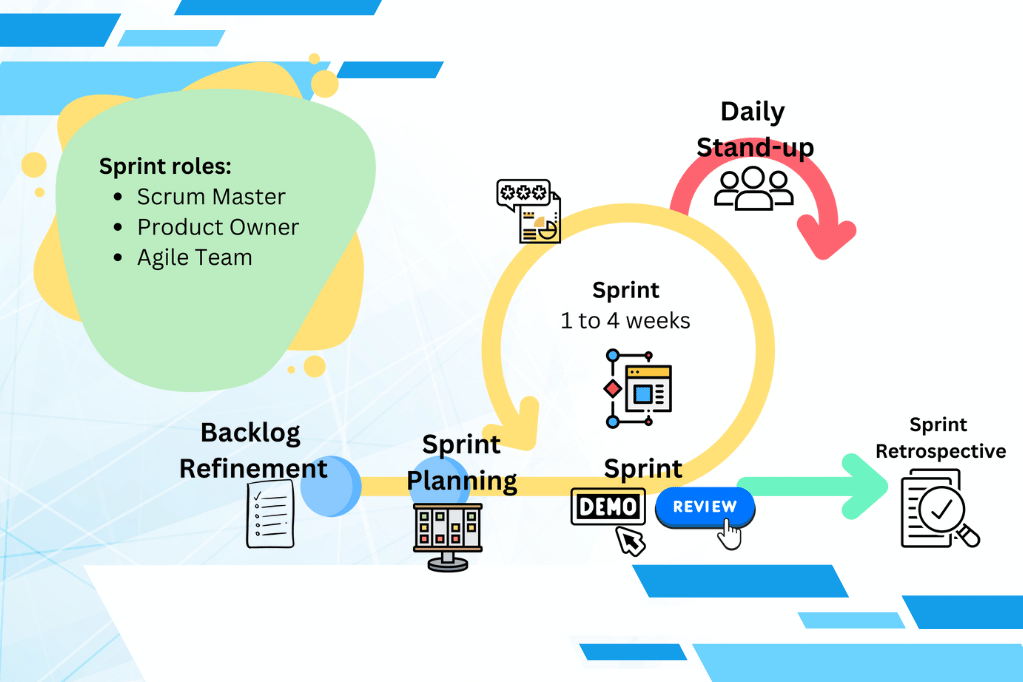
Scrum operates in a regular, repeating cycle of Sprints. This cadence helps teams to develop a rhythm and predictability, allowing for better planning and execution of tasks. Each Sprint includes several key events designed to foster collaboration and ensure continuous improvement. (To help the team determine the iteration cadence, check out Chapter 15. Selecting an Iteration Length from Mike Cohn’s Agile Estimating and Planning).
Scrum teams are cross-functional, meaning they have all the skills necessary to complete the work within the Sprint. They are also self-organizing, with team members taking collective accountability for delivering product increments. This structure aligns with Agile principles by promoting team autonomy, fostering collaboration, and ensuring that each team member is fully engaged in the project.
The Scrum framework includes five main events that are conducted within each sprint:
Backlog Refinement: This event is iterative, but it is also a pre-requisite to Sprint Planning. This event is meant to flesh out the work in the product backlog: user stories, bugs, epics, and/or features. This event aims to clarify the purpose of the work items, set the acceptance criteria, and priority.
Sprint Planning: This event marks the beginning of a Sprint. During Sprint Planning, the team collaborates to define the Sprint Goal and select Product Backlog items to be completed during the Sprint.
Daily Stand-ups or Team Sync: These are brief, daily meetings where team members discuss their progress, plans for the day, and any impediments. This fosters daily communication and ensures alignment.
Sprint Review/Demo: At the end of each Sprint, the team presents the product increment to stakeholders to gather feedback. This event ensures that the product is evolving to meet customer needs and provides an opportunity for course correction if needed.
Sprint Retrospective: Following the Sprint Review, the team conducts a Retrospective to reflect on what went well, what could be improved, and how to make the next Sprint more effective. This continuous reflection drives ongoing improvement.
This event emulates the agile principle on improvement: At regular intervals, the team reflects on how to become more effective, then tunes and adjusts its behavior accordingly.
The Scrum framework defines specific roles to ensure that everyone has a clear understanding of their responsibilities:
- Product Owner: Responsible for maximizing the value of the product and managing the Product Backlog. The Product Owner represents the stakeholders and ensures that the team is working on the most valuable items.
- Scrum Master: Serves as a facilitator for the team, helping to remove impediments and ensure adherence to Scrum practices. The Scrum Master also helps promote a culture of continuous improvement. More recently, Scrum Masters are also considered as the team coach of the agile team.
- Agile Development Team: A group of professionals who do the work of delivering a potentially releasable increment of “Done” product at the end of each Sprint. They are self-organizing and cross-functional. They have all the required skills to design, plan, execute, and improve in building good products to the team’s target customer(s).
The Scrum framework robustly implements Agile principles through its defined roles, events, and iterative cadence. By continually inspecting and adapting processes and products, promoting close collaboration, emphasizing working software as a measure of progress, and fostering an environment where the team regularly reflects and improves, Scrum creates a dynamic environment that is responsive to change and focused on delivering value. This implementation of Agile principles ultimately leads to the successful delivery of high-quality products that meet customer needs.
In summary, the Scrum framework is a powerful tool for implementing Agile principles and achieving business agility. By understanding its purpose and embracing its events, roles, and cadence, teams can foster a culture of continuous improvement and deliver valuable products that meet customer needs. Are you ready to take your organization to the next level with Scrum? Consider implementing this proven approach to drive success in your projects! Keep learning and stay agile!
Happy sprinting!
To learn more about how each of the 12 agile principles is related to scrum events, check out our previous posts: The Agile Mindset Shift: From Doing Agile to Being Agile Part 1 and Part 2.
Interested in learning more about Agile and the Scrum framework? Here are some additional resources to continue your journey:
Blogs & Articles:
- “What is Agile?” by Atlassian
- “The Principles of Agile Manifesto” by Mountain Goat Software
- “Scrum Framework Explained: How it Works and When to Use It” by Atlassian
by Rochelle Tan | Jun 26, 2024 | InBiteSize
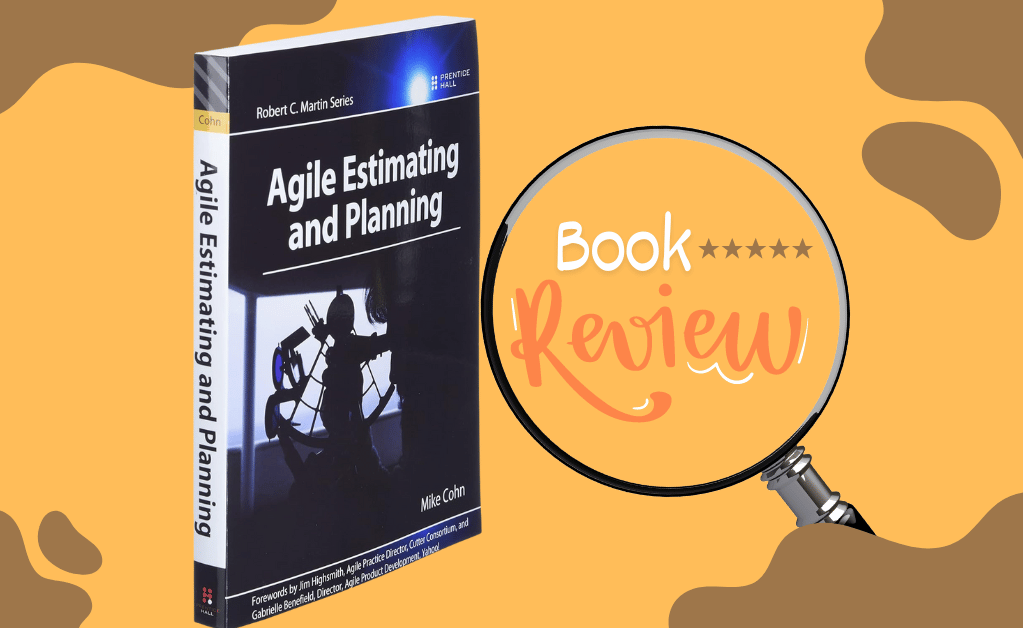
Embrace the challenges of uncertainty and change in software development with Mike Cohn‘s Agile Estimating and Planning. This indispensable guide provides practical strategies for Scrum Masters, Agile Coaches, and all team members looking to refine their planning and estimation skills. Regardless of your role—be it Project Manager or Release Manager—this book serves as a valuable resource for enhancing your product delivery efforts.
In this book review, we delve into the shortcomings of traditional project planning and estimation methods. We will examine how agile techniques and tools assist teams and organizations in transforming project and product uncertainties and risks into more concrete and actionable plans. The book offers robust guidelines and steps for estimation—assessing the scope of work to be done—and planning—effectively implementing and delivering products to customers incrementally.
The Purpose of a Good Plan
Cohn begins by addressing the fundamental purpose of a good plan, which is to transition from high risk and uncertainty to a more controlled and predictable environment. Traditional planning methods have several loopholes that derails the team from implementing a good plan that delivers concrete outcomes:
- Multitasking results in context-switching, which causes further delays and extends the completion time.
- Priority Issues occur when features are not developed in order of importance.
- Activity-based Planning focuses on tasks rather than outcomes, leading to inefficiencies.
- Ignoring Uncertainty by doing upfront planning does not reduce risk. It is through iterative processes that risk and uncertainty are managed.
- Estimates Become Commitments that results in locking teams into unrealistic timelines.
Agile Approach to Planning and Sizing
Cohn advocates for an Agile approach to planning and sizing to mitigate these risks by iterating on these two areas:
- Product Focus involves determining the most important features to be developed.
- Project Focus considers team dynamics and the technical skills of developers to efficiently and effectively implement the work.
Why Agile Planning Works
Cohn’s insights on why Agile planning works are compelling. Here are some highlights:
- Frequent Updates to plans ensure adaptability.
- Multiple Levels of Planning provide various perspectives:
- Daily Planning
- Iteration Planning
- Release Planning
- Feature-based Plans focus on delivering tangible outcomes rather than just completing tasks.
- Small Stories keep work manageable and estimable.
- Team-Level Success Tracking promotes collective ownership.
- No Work in Progress (WIP) ensures completed work moves forward, and unfinished work is replanned.
- Size and Duration Estimation differentiate between estimating work size (story points) and duration (iterations) leads to more accurate timelines.
Part I – Estimating Size
When estimating the size of work in agile projects, Cohn presents two main methods to consider:
- Story Points:
- Are a relative measurement that compares the complexity of tasks.
- Encourage teams to focus on the effort required rather than strict timelines.
- Are not influenced by individual skill levels, making it a universal metric.
- Become faster and more consistent as teams develop a shared understanding of point values.
- Are useful for planning sprints and releases with flexibility.
2. Ideal Days:
- Are time-based estimation assuming 100% focus without interruptions.
- Represents the time a task would take under perfect conditions, not accounting for real-world distractions and delays.
- Are best suited for early project stages when teams are getting familiar with story points.
- Provide an intuitive starting point for teams new to agile methodologies.
Part II – Planning for Value
Cohn emphasizes that the best way to reduce the cost of change is to implement features as late as possible. Prioritization is crucial:
- Determine value using Themes, MoSCoW, and Kano models.
- Consider all types of Cost, including new, retained, and incremental revenue.
- Consider New Knowledge gained during the project.
- Apply risk management.
Part III – Scheduling
Schedules are derived from the estimated size of user stories and their durations:
- High-Level Release Planning sets the roadmap and serves as a guidepost.
- Iteration Planning adds precision and clarity for team alignment.
- Velocity-driven vs. Commitment-driven approaches are used to balance workload and expectations.
Part IV – Tracking and Communicating
The author recommends constant monitoring and transparency of the release and iteration plans. They should not gather dust, but rather be actively reviewed, monitored, and adjusted as necessary. Collaborating with teams to track progress ensures the plans remain relevant and on track for success.
- Leverage Visual Boards (Kanban) for iteration and release plans.
- Apply Continuous Monitoring and updating of plans.
- Have honest Communication about progress and challenges.
- Incorporate Metrics and Visual Tools like burndown charts, boards, and end-of-iteration summaries to make work progress transparent and guide future plans.
Mike Cohn’s Agile Estimating and Planning is a well-structured, insightful guide that balances theory with practical application. The book is written from the perspective of traditional projects with defined start and end dates, but its principles are equally applicable to long-term Agile teams. Cohn’s use of real-life examples and clear explanations makes complex concepts accessible and actionable.
In his work, Cohn delves into crucial aspects of estimation and planning, while also warning against practices that can detract from the essence of agile methodologies. Here are some key considerations:
- Teams are advised to shift user story estimation gradually from Ideal Days to Story Points for more precise and enduring planning through relative sizing.
- Encourage a team-oriented approach during iteration planning by steering clear of task allocation and fostering collaboration.
- Embrace collective estimations by the entire team, rather than relying solely on a few individuals.
- Acknowledge uncertainty; upfront planning alone cannot mitigate risks and uncertainties—address them through iterative processes.
- Advocate for story-splitting while preserving the essence of each story, while recognizing that there may be cases when related work may be combined for efficiency.
- Beware of the trap of Parkinson’s Law when engaging in activity-based planning and execution, where tasks tend to expand to fill the allotted time for individuals or teams.
Is agile estimating and planning worth it? Absolutely. By adopting Cohn’s approaches, organizations can make their product delivery more:
- Customer-centric
- Relevant by adjusting to current certainty
- Outcome-driven
- Cost-effective
- Measurable
- Sustainable
Agile Estimating and Planning not only addresses the shortcomings of traditional project management but also provides a roadmap for more effective product delivery. If you’re looking to enhance your Agile practices, this book is a key resource.
Is your organization seeking fresh ideas from proven agile implementation methods? Grab a copy of Mike Cohn’s Agile Estimating and Planning! This book delivers practical strategies for effective planning using iterative techniques in estimation, sizing, scheduling, and progress monitoring. Don’t miss out on unlocking your team’s full potential! 🚀
Want to learn more? Check out our other book reviews on Tribal Unity or Drive.

by Ginny Sikri | Jun 21, 2024 | InBiteSize
GenAI technology adoption empowers Project/Program Managers with advanced tools and capabilities for more effective project execution. Despite these technical advancements, many tasks in project management still rely heavily on the expertise, judgement, and interpersonal skills of human project managers.
Hence, the effective adoption of AI Technologies complementing Human Expertise in Project Management is a Partnership for Success. Let’s uncover some of the areas where GenAI and AI technologies can boost productivity, and others where human intervention remains crucial too.

Below are some of the areas where GenAI can supplement the way we work.
- Automated Project Planning and Scheduling – GenAI can generate detailed project plans, schedules, and timelines by analyzing project requirements and historical data. It can suggest optimal resource allocation and timelines, reducing the time and effort required in the planning phase.
- Improved Communication and Collaboration – GenAI-powered tools can facilitate communication among team members through automated updates, report generation, and even real-time language translation. These tools ensure that all stakeholders are kept informed and aligned throughout the project lifecycle.
- Task Automation – Routine project management tasks, such as data entry, status reporting, and progress tracking, can be automated using AI Powered tools. This allows project managers to focus on more strategic aspects of their projects.
- Enhanced Decision-Making – By providing data-driven insights and predictive analytics, GenAI supports better decision-making throughout the project lifecycle. Project managers can make more informed decisions with a comprehensive understanding of potential outcomes.
- Advanced Analytics and Reporting – GenAI can provide deep insights into project performance through advanced analytics. It can identify trends, patterns, and anomalies in project data, offering actionable insights for decision-making and continuous improvement.
- Enhanced Risk Management – AI models can predict potential risks and issues by analyzing past project data and real-time information. GenAI can provide scenarios and mitigation strategies, helping project managers proactively address challenges.
- Natural Language Processing (NLP) and Sentiment Analysis – GenAI can analyze communications within the project team to gauge sentiment and engagement levels. This can help in identifying and addressing team morale issues early on.

While GenAI provides valuable tools and capabilities, the human element remains indispensable. Highlighted below are the irreplaceable role of project managers in the successful execution of projects.
- Strategic Vision and Goal Setting – Defining the strategic direction and overarching goals of a project requires a deep understanding of the organizational objectives, stakeholder expectations, and market conditions. Project managers synthesize this information to set a clear vision.
- Stakeholder Management – Building and maintaining relationships with stakeholders involves nuanced communication, negotiation, and conflict resolution skills. Project managers must navigate complex dynamics and align diverse interests, which is often beyond the capability of AI.
- Complex Decision-Making – While AI can provide data-driven insights, making complex decisions often requires a blend of analytical skills, experience, and intuition. Project managers must weigh various factors, including organizational politics, ethical considerations, and long-term impacts, to make informed choices.
- Creative Problem-Solving and Visionary thinking – Addressing unique or unprecedented challenges requires creativity and innovative thinking. Project managers often need to devise novel solutions to problems that cannot be easily solved through automated processes or predefined algorithms.
- Adaptability and Crisis Management – Managing unexpected changes and crises involves rapid adaptation and resourcefulness. Project managers are crucial in assessing the situation, devising contingency plans, and steering the project through turbulent times.
- Negotiation and Conflict Resolution – Negotiating project terms, resolving disputes, and balancing competing priorities often require delicate handling and human empathy. Project managers must navigate these situations tactfully to achieve satisfactory outcomes.
- Ethical and Legal Considerations – Ensuring that projects adhere to ethical standards and legal regulations is a complex task. Project managers must interpret and apply these standards, often dealing with gray areas that require human judgment.
The integration of GenAI technologies in project management offers transformative potential. By automating routine tasks and providing advanced analytics, GenAI empowers project managers to focus on strategic and interpersonal aspects of their projects. However, the value of human expertise remains paramount.The future of project management lies in the harmonious blend of GenAI capabilities and human insight.
The real strength of modern project management lies in the seamless partnership between these advanced technologies and the irreplaceable human touch.
As we delve deeper into this exciting evolution, our upcoming series will explore how specific GenAI-powered tools and platforms can further elevate project management practices. Stay tuned!
Want to learn more? Check out our book review on Introduction to GenerativeAI and Navigating the Paradox of LLM Hallucinations.
by Rochelle Tan | Jun 13, 2024 | InBiteSize
Building on our post “The Agile Mindset Shift: From Doing Agile to Being Agile” in our Agile series, we now explore the six remaining principles of the Agile Manifesto. For each principle, we provide practical applications and desired outcomes aimed at accelerating value delivery and enhancing customer satisfaction.
Principle: Working software is the primary measure of progress.
Intended Outcome: Tangible evidence of progress and value creation.
Tactical Implementation: This approach embodies the “Don’t tell me, show me!” philosophy. Conducting sprint demos to gather early feedback helps ensure the team remains focused on delivering products that resonate with their target customers. It also enables the team—and other involved teams—to stay informed about upcoming developments. Simultaneously, the team can hold a sprint review, which encompasses the sprint demo, celebrating their achievements and reflecting on how they accomplished it. This method ensures productivity and alignment with the ultimate goal: consistently delivering measurable value. For more insights, see our blog post: Sprint Review: Much More Than Just a Demo.
Principle: Agile processes promote sustainable development. All stakeholders should maintain a constant pace indefinitely.
Intended Outcome: Long-term productivity and well-being of the team.
Tactical Implementation: Establish a consistent sprint cycle (typically 1-4 weeks) that the team can sustain over the long term. Maintaining a steady pace ensures that the team remains healthy and productive, avoiding burnout and ensuring steady progress. This cadence can change as the team matures or their situation changes.
Principle: Continuous attention to technical excellence and good design enhances agility.
Intended Outcome: High-quality, scalable, and maintainable software solutions.
Tactical Implementation: Maintain an architecture runway and regularly conduct architecture reviews, alignments, and backlog refinements to manage technical debt and uphold consistent, high-quality design standards. This approach nurtures a culture of excellence, ensuring the product remains robust and adaptable to future needs.
Principle: Simplicity—the art of maximizing the amount of work not done—is essential.
Intended Outcome: Focused and efficient use of resources.
Tactical Implementation: This is also known as the “Work smarter, not harder!” principle. Focus on achieving sprint goals rather than accumulating story points. Keep solutions flexible and avoid prematurely committing to one approach. Prioritizing simplicity ensures that the team works efficiently, avoiding unnecessary complexity and waste. Check this blog post on sprint goals as a tool towards value-delivery and efficiency: Achieving Success with Sprint Goals: A Key to Delivery.
Principle: The best architectures, requirements, and designs emerge from self-organizing teams.
Intended Outcome: Innovative solutions and empowered team members.
Tactical Implementation: Empower teams to make design and implementation decisions, which are supported by regular tech alignments and backlog reviews. Self-organizing teams are more likely to produce creative and effective solutions, leveraging their collective expertise and knowledge. To learn more about developing self-organizing and empowered teams, check out this blog post: Amplify Your Impact: Steps to a Multiplier Mindset.
Principle: At regular intervals, the team reflects on how to become more effective, then tunes and adjusts its behavior accordingly.
Intended Outcome: Continuous improvement and adaptability.
Tactical Implementation: It is a good practice to pause and reflect in order to accelerate. Conducting sprint retrospectives helps evaluate recent performance and identify areas for improvement, fostering a culture of continuous learning and growth. Regular reflection ensures the team evolves and adapts to new challenges and opportunities effectively, leading to consistent improvement.
Shifting from “doing Agile” to “being Agile” is like going from just wearing the jersey to actually playing in the game. Embrace the agile principles, and watch your team boost efficiency, collaborate like pros, and make customers happier and satisfied.
Are you ready to revolutionize your team’s approach to work and see real, tangible results? Schedule a call with one of our experienced Solution Consultants to discuss your current framework and processes and identify opportunities for improvement. Embark on your transformational journey towards accelerating value delivery and driving sustainable growth. Together, we will tailor strategies to meet your unique organizational needs and ensure lasting success in your transformational journey.
Stay tuned for the next installment in our Agile series, where we will explore the Scrum Framework and how the agile principles are translated into tangible outcomes.
Can’t wait for our next article? Remember, change starts with you. Check out our book reviews on A Sense of Urgency or The Disruption Mindset.