Project metrics serve as a crucial tool for project managers, providing key insights that help keep projects on track, manage risks, and improve overall efficiency. By monitoring these metrics, managers can ensure that projects align with their goals, meet stakeholder expectations, and stay within time and budget constraints.
The most important metrics will depend on the project’s unique goals and organizational priorities. It’s more effective to focus on a targeted set of metrics tied directly to the project’s success, rather than trying to track everything. A balanced mix of quantitative and qualitative metrics will offer a clear view of the project’s progress. Here are some key metrics to consider and tools to track progress.
1. Scope Metrics:
Scope Creep: Track any changes or expansions to the project scope beyond what was initially planned.
Requirements Completion: Measure the percentage of requirements that have been met compared to the total.
Tool: Atlassian Jira – Jira tracks scope creep by logging any new or modified requirements. You can create custom issue types for scope changes and monitor how often scope change requests are added to the project backlog.
2. Time Metrics:
On-Time Delivery: Measure whether tasks and milestones are being completed as per the schedule.
Schedule Variance (SV): The difference between the planned schedule and the actual progress, indicating delays or advances.
Tool: Microsoft Project – Microsoft Project can create Gantt charts that visualize on-time delivery. It tracks planned vs. actual task durations and flags tasks that are running late, allowing you to track schedule variance (SV).
3. Cost Metrics:
Budget Performance (Cost Variance): The difference between the budgeted cost of work performed and the actual cost.
Cost Performance Index (CPI): The ratio of earned value to actual cost, which indicates cost efficiency.
Cost to Completion: Project the remaining cost to complete the project based on current expenditures.
Tool: Oracle Primavera P6 – Primavera P6 allows for detailed budget tracking by measuring cost variance (difference between planned and actual cost) and calculating the Cost Performance Index (CPI). The tool helps forecast the cost to completion based on current spending trends.
4. Quality Metrics:
Defects and Issues: Number and severity of defects or issues discovered during development or testing.
Client or Stakeholder Satisfaction: Feedback from stakeholders to assess if their quality expectations are met.
Tool: HP Application Lifecycle Management ALM – HP ALM is widely used for tracking defects and issues in software development. It allows for the logging of defects, categorizing by severity, and generating reports on defect closure rates to measure overall quality.
5. Risk Metrics:
Risk Register Updates: Monitor the identification, evaluation, and mitigation of risks over time.
Risk Severity Index: Track the likelihood and potential impact of identified risks.
Tool: Risk Register (Spreadsheets or dedicated tools like RiskyProject) – Using RiskyProject, you can maintain a dynamic risk register, regularly update identified risks, and quantify each risk’s severity index. The tool can simulate risk impact on cost and schedule to predict risk outcomes.
6. Resource Utilization:
Resource Allocation vs. Utilization: Measure how effectively team members and other resources are being used.
Team Productivity: Track deliverables per team member, velocity (if using Agile), or hours spent on tasks.
Tool: Smartsheet – Smartsheet helps track resource allocation versus utilization through resource management dashboards, showing which team members are under- or over-utilized. You can view real-time data on hours worked vs. planned, helping ensure optimal resource use.
7. Communication and Engagement Metrics:
Stakeholder Engagement: Track the frequency and effectiveness of communication with stakeholders.
Meeting Effectiveness: Evaluate the productivity and outcomes of project meetings.
Tool – Slack or Microsoft Teams with integrated analytics. Tools like Slack track the frequency of team communications. You can use plugins like Slack’s analytics or Microsoft Teams’ activity insights to monitor stakeholder engagement by tracking message activity and meeting participation rates
8. Performance Metrics:
Milestones Achieved: Monitor the completion of major project milestones.
Earned Value Management (EVM): A comprehensive metric combining scope, time, and cost to assess overall project performance.
Tool: Asana – Asana allows you to set up key project milestones and track their completion rates. It helps you visualize project progress.
In addition, earned value management (EVM) techniques can be applied by integrating Asana with financial reporting tools.
9. Customer Satisfaction:
Net Promoter Score (NPS): Post-project feedback on how likely stakeholders or clients are to recommend the project outcomes.
Surveys and Feedback: Measure satisfaction at different phases of the project.
Tool: SurveyMonkey or Qualtrics – SurveyMonkey or Qualtrics can be used to send out stakeholder surveys post-project to assess customer satisfaction. You can track responses related to Net Promoter Score (NPS) and gather qualitative feedback on project outcomes.
These metrics typically give a clear overview of the project’s health and help make timely adjustments.The best tool or combination of tools will depend on specific project needs, team size, and organizational requirements. It’s often beneficial to use a combination of these tools to get a comprehensive view of project metrics in real-time
Ready to transform your enterprise? Contact us to learn more about RTculate’s Enterprise Health Framework today and set your organization on a path to sustained innovation and growth. Your enterprise’s next chapter of growth and innovation begins here.
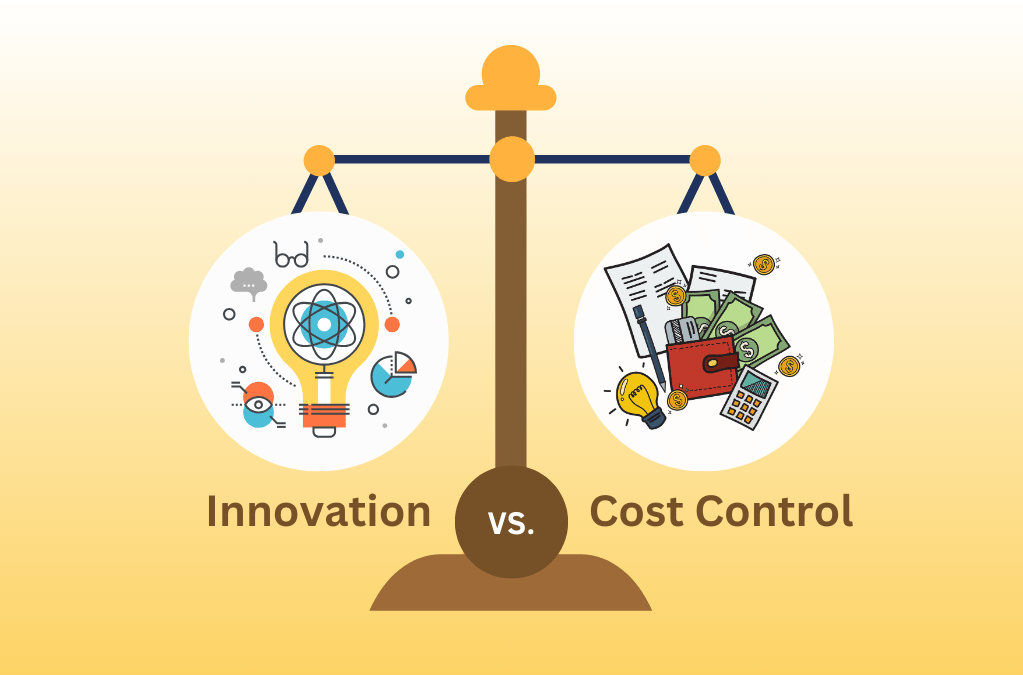
Imagine being the CEO of your own company with a $10 million budget, faced with numerous innovative ideas and ongoing initiatives to fund. How would you allocate your budget? Which investments would you prioritize? Running a successful business requires more than just developing and selling products; it involves making strategic decisions. Balancing innovation with cost control is a significant challenge. Innovation fuels growth but often comes with high costs. The key is finding a balance that enables advancements without risking financial stability. This article explores strategies like the Lean Start-up approach and participatory budgeting through lean portfolio management to achieve this balance.
Understanding the Landscape: Challenges and Strategies
Balancing innovation with cost control presents several challenges:
Knowing which product to invest in: Companies need to identify which products or services warrant investment to maximize returns.
Managing investments across horizons: Spreading investments wisely between short-term, medium-term, and long-term goals is essential.
Controlling cost overruns: Keeping expenses within budget while innovating can be daunting.
Deciding to pivot or persevere: Continuously assessing whether to continue with the current strategy or make changes is vital for success.
To tackle these challenges, organizations can utilize Lean Portfolio Management (LPM). LPM offers a versatile approach that integrates frameworks, tools, and techniques to aid in investment prioritization, governance, and achieving operational excellence. The tools and techniques included are as follows:
Investment by horizon
Participatory budgeting
Lean budgeting
Lean start-up approach
Leveraging Lean Portfolio Management (LPM)
LPM is a strategic approach that aligns strategy with the execution of engineering and operational activities. It helps organizations to prioritize initiatives and projects based on their potential value and strategic fit, ensuring efficient allocation of resources. Key elements of LPM include:
Decision-making for investment horizons: LPM helps in evaluating and prioritizing projects across different horizons.
Financial management: Provides a framework for tracking investments and returns, enabling better financial control.
Operational excellence: Ensure the consistent and proper implementation of strategic initiatives, aligning them with company standards.
Investment by Horizon
Investing by horizon involves categorizing investments into short, medium, and long-term goals. This approach helps in managing financial risks and aligning innovation with strategic objectives.
Short-term investments: Focus on enhancing current offerings.
Medium-term investments: Develop new products or services expected to generate revenue within a few years.
Long-term investments: Invest in high-risk, high-reward innovative projects that could transform the industry.
Organizations can prioritize tasks across different horizons, enabling a diversified portfolio and budget allocation that encourages innovation.
Participatory Budgeting (PB)
PB engages employees, customers, and key stakeholders in the budget allocation process by enhancing transparency and accountability. By incorporating diverse perspectives, strategic decisions are informed and well-rounded. This method can also be applied to prioritize features and business capabilities during the product discovery process. (More about PB – https://www.participatorybudgeting.org/about-pb/)
Lean Budgeting
Another framework for financial management is lean budgeting. Lean Budgeting focuses on empowerment, transparency, continuous improvement, and waste reduction. This is done through the following key components:
Empowering teams: Teams manage their budgets, making them more flexible and accountable for financial decisions.
Transparency: Encourages open communication about resource allocation and financial constraints. By making the work and cost visible, it creates awareness and accountability across the organization.
Innovation within constraints: Teams are motivated to innovate efficiently within budget limits and promote the economic approach to decision-making, project selection, prioritization, execution, spend, etc.
The Lean Start-Up Approach
To support operational excellence, the Lean start-up approach emphasizes iterative development and customer feedback loops. This method allows companies to quickly test and validate ideas, minimizing resource wastage. Here’s how it helps address key challenges:
Cost overruns: By focusing on MVPs (Minimum Viable Products), companies can reduce the risk of overspending on unvalidated ideas while double-downing on products that proved to be desirable, viable, and feasible.
Investment management: Regular feedback and iterative processes ensure that only high-valued products and services continue to receive funding. Each product iteration undergoes a review to determine whether to pivot or persevere.
Case Study and Implementation Insights
Lean Portfolio Management in Action
A healthcare company used Lean Portfolio Management to decide on investment horizons. To simplify initiative prioritization, each initiative was categorized by horizon and priorities were done based on these categories. Budgets were set by horizon and by value streams.
Each implementation team organized by value streams – aligning the development teams to the products and services they build/support. Each value stream manages their budgets within set thresholds. By aligning finance with this new model, they recognized costs (e.g., Opex vs. Capex) based on agile product development’s iterative approach.
This organization took a holistic view to their lean portfolio management model that allowed them to build innovative products without losing sight on the importance of cost management to ensure the longevity of the company.
Future Trends and Concluding Thoughts
The landscape of innovation and cost control is continuously evolving. Emerging trends such as AI-driven project management and real-time financial analytics are poised to further enhance the balance between innovation and cost control.
In conclusion, balancing innovation with cost control requires a structured, strategic approach. By leveraging strategies within lean portfolio management, companies can drive innovation and meet customer needs while maintaining financial stability. It requires an investment from the organization and taking a holistic approach to create an innovative and cost-conscious ecosystem.
Call to Action
Ready to implement these strategies in your organization? Start by evaluating your current approach to innovation and cost control. Explore our resources and tools to help you on this journey. Invest in developing organizational capability by leveraging industry experts, course offerings, and getting hands-on experience. Balance the scale and achieve economical sustainable growth in today’s dynamic business landscape.
How can you efficiently deliver high-value products and services with distributed teams while ensuring top-notch quality quickly? In today’s fast-changing business landscape, agile frameworks are the go-to for project management and software development. To truly harness Agile’s power, you need the right tools for seamless collaboration, efficient workflow, and impeccable code quality. Let’s explore how leading organizations transform chaos into a well-oiled machine. We’ll uncover common, practical tools and strategies that equip you to lead with confidence and clarity!
People are at the heart of implementing and delivering products and services. It is vital for organizations to create the right environment and equip their teams with the appropriate agile tools to enable an accelerated and high-quality value delivery framework. These tools should foster autonomy, empowerment, and innovation, while cultivating a culture of collaboration, continuous improvement, and growth.
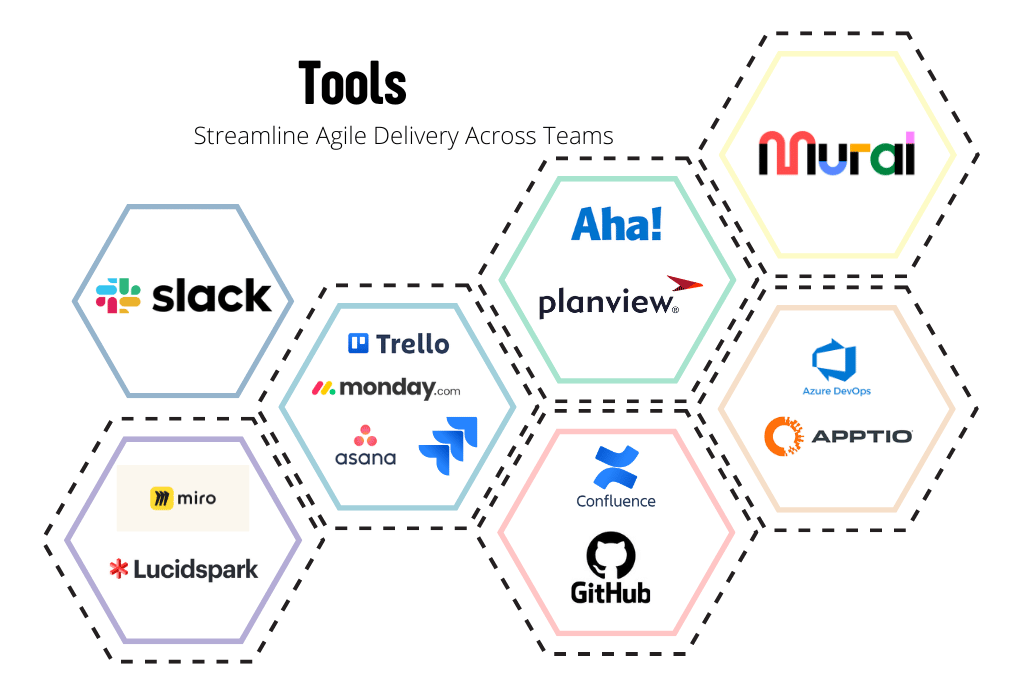
Here are some examples of agile tools that enhance cultural cohesion and promote high-performing teams to develop outstanding products and services.
Issue tracking and project boards for task management.
Built-in CI/CD pipelines.
Pull request reviews and team collaboration features.
Extensive integration options including Slack, Jira, and Azure DevOps.
Why it helps: GitHub streamlines version control and collaboration between developers, aligning with Agile’s focus on continuous delivery and integration.
Purpose: End-to-end project management, from planning to CI/CD.
Key Features:
Boards for backlog management and sprint tracking.
Pipelines for continuous integration and delivery (CI/CD).
Git repositories for version control.
Built-in test management tools.
Why it helps: Azure DevOps is ideal for Agile teams focused on automating deployment processes while maintaining a strong grip on planning and execution.
Purpose: Portfolio management, transparency, and Alignment.
Key Features:
Corporate Strategy, Objectives and Key Results (OKR’s), and Business Cases.
Integration with Jira, Confluence, and ADO.
Aligns the strategic plans to the organization’s execution activities.
Value stream budgets, governance, and operations.
Why it helps: These tools supports strategic planning and funding, operational excellence, and portfolio governance and fulfillment of these strategic plans.
How Tools Integrate
Consider a scenario where ideas are captured in Aha! to manage business cases and strategies. Once these are approved, they become OKRs and are broken down into actionable tasks in Jira. A significant portion of the work involves creating code, which the team stores in GitHub. Meanwhile, communications and decisions are handled via Slack and documented in Confluence. As the team completes tasks and checks in code to GitHub, work item status in Jira is updated and aggregated back into Aha!. Collaboration tools like Miro and Lucidspark aid in brainstorming and planning, completing the system. The results of these collaborative activities can lead to new requirements that feed into Jira and/or Aha!.
Practical Tips for Implementing Agile Tools
For teams and organizations aiming to implement agile tools in their domain, consider these best practices for successful deployment and adaptation.
Involve Your Team: Ensure the people who will be using the tools have a say in the selection process. Their buy-in is crucial for successful adoption.
Training and Purpose: Provide training and explain the purpose of each tool to ensure everyone understands how to use them effectively.
Simplify Integration: Opt for tools that integrate seamlessly with each other. Tools that are tedious to use or don’t work well together will likely be abandoned, wasting valuable resources.
Case Study
Let’s look at a real-world example to see how these tools come together. A healthcare diagnostic company undergoing a digital transformation leveraged Agile methodologies to manage Identity Access Management (IAM) work. The organization leverages the following agile tools within their platform.
Aha! for portfolio and program management. The organization established integration between Aha! and Jira to provide real-time (or close to real-time) information across both systems. This data is usually used by Portfolio, Program, and Project Managers and stakeholders, who need a high-level view of how the value delivery framework is progressing.
Jira for managing and organizing epics, stories, and tasks. The data is created and managed by every team member. It provides detailed information on how each team is fulfilling the work down to the most granular level of work.
GitHub for code version control. This holds the code and notes needed to deliver and maintain the services that the IAM platform is creating, managing, and delivering their services.
Slack for remote communication and coordination. The platform team members use this platform to discuss and distribute information. They have multiple channels created by teams and by events to organize the relevant conversation within the respective channels.
Confluence for documentation and decision-making. Many decisions coming from planning, retrospectives, and other events are captured and made available to key stakeholders through Confluence.
Lucidspark for collaboration and visualization efforts. The organization operates in a hybrid model with team coming in 2 to 3 times a week. Their team members are also spread out across North America, Asia, and Europe. Team events are rarely done in-person. So the organization provided an ability to facilitate interactive live sessions by using collaboration tools.
Integrating the use of these tools enabled them to streamline their processes, enhance team collaboration, and accelerate project delivery.
Conclusion
This list of Agile tools isn’t exhaustive, but it’s a good starting point! The tools you select and how you integrate them should align with your organization’s unique needs. What’s vital is choosing tools that streamline and accelerate your team’s delivery process. The right Agile tools can revolutionize your team’s workflow—boosting efficiency, enhancing collaboration, and ensuring superior deliverables. Empower your team to seamlessly incorporate these powerful tools into your Agile framework.
Are you ready to elevate your Agile delivery? Dive into these tools and watch your team soar!
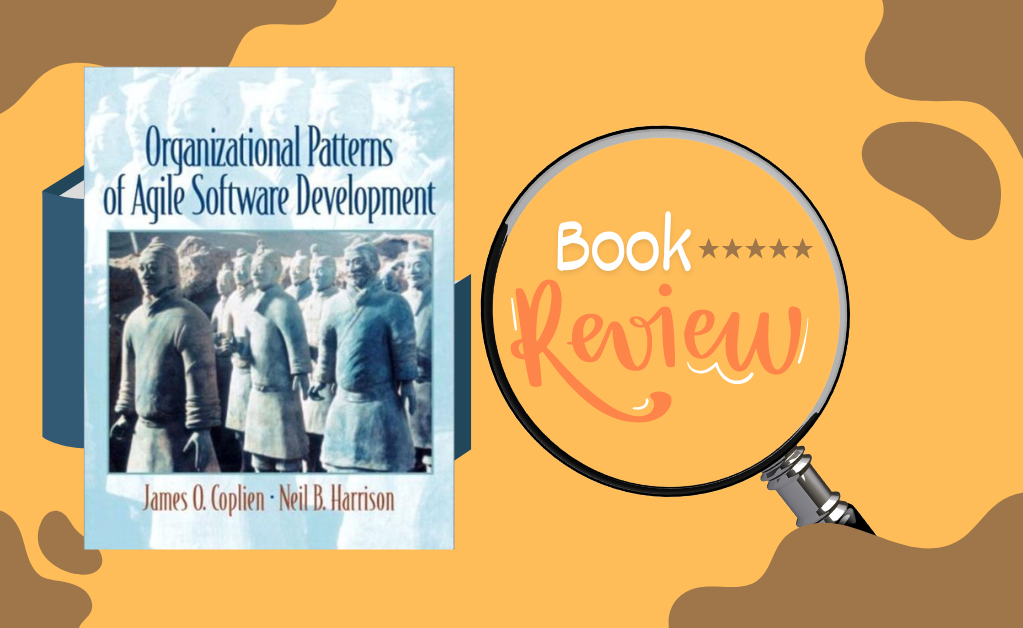
In “Organizational Patterns of Agile Software Development,” authors James O. Coplien and Neil B. Harrison provide an extensive examination of how patterns can enhance the structure and execution of software projects. These patterns are designed to establish organizational wholeness that aligns with and advances the organization’s objectives—improving profitability, increasing productivity, and elevating morale. Delve into this insightful work to uncover the strategies behind agile success.
In this review, I will share some key insights from the book. However, I will not go into detail about each pattern or the pattern languages so that you have a chance to uncover these gems as you read. Instead, my aim here is to give you my takeaways and understanding to help kickstart your journey should you decide to explore the value these organizational patterns have to offer.
What is a Pattern?
Before you can effectively utilize the book’s content, it’s essential to understand what a pattern is and its key elements.
Definition
A pattern is a recurring structural configuration that solves a problem within a specific context, contributing to the overall wholeness of a system—in this case, your organization.
Elements and Characteristics
A pattern is only a pattern if it has the three elements below.
Small: Applies at a local, team level.
Collaborative: Encourages teamwork and emergent structures that enhance organizational wholeness.
Flexible: Can be applied independently or in combination with other patterns.
Pattern Language
The book dives deep into several pattern languages, each designed to tackle different aspects of organizational design and development. Patterns are organized in a certain order, called sequence, within a pattern language.
Pattern languages are structured ways to combine multiple patterns to address complex problems in the organization. They guide you in layering and sequencing patterns for maximum effectiveness.
Types of Pattern Languages in the Book
The book provides four pattern languages grouped based on their intent and purpose.
Design Patterns: Helps you understand the architecture and the relationships of the major parts of the organization.
Project Management Pattern Language: Focuses on scheduling, process, tasks, and work progress.
Piecemeal Growth Pattern Language: Describes growing the product and organizational collaboration.
Construction Patterns: Brings the organization to life by putting the design patterns into practice.
Organization Style Pattern Language: Explores roles and relationships within different organizational styles.
People and Code Pattern Language: Expands Conway’s Law, correlating organizational structure with the product they produce.
How to Use Pattern Languages
Each pattern language offers a sequence (of patterns)—a story—to guide you through its application. While the book is tailored to help organizations achieve their business objectives, these patterns can be adapted for tasks like constructing a house or designing systems. When constructing a house, Design Patterns lay the groundwork and define the architecture, while Construction Patterns bring these designs to life. Within an organization, these patterns are crafted to aid in structuring and executing actions to effectively tackle organizational challenges. Below are examples of the issues they address:
Enhancing communication channels for individuals working in the same location or across different geographical areas.
Managing disruptions while ensuring the team’s continuous progress.
Achieving task completion by drawing on best practices such as prototyping and embracing an iterative approach.
How to Read and Apply Patterns
Understanding how to read and apply patterns from this book is crucial for maximizing their benefits. The authors recommend for the patterns to be initially read in order. The book is broken down into three main parts:
Part I. History and Introduction
Overview of Patterns and Organizational Patterns – Defines what patterns are and the intricacies involved with their relationship with pattern languages and application in the organization.
History and Background of the Patterns – Elaborates on how the authors identified the patterns based on real-life use cases and extensive consultation with practitioners.
How to Use this Book – Explains the mechanics on how to read and apply the patterns
Part II. The Pattern Languages – Expands on each pattern and their relationships within the Organizational Design and Construction Pattern Languages.
Part III. Foundations and History – Explores the effective way to apply the patterns in the organization.
Part IV. Case Studies – Provides the details on actual use cases where the patterns were effectively used.
Each pattern within the Pattern Language has been written in this format. (See example of a pattern in the information box)
Name: A descriptive label.
Stars(*): The number of stars indicate the confidence level and frequency of use.
Context: The situation where the pattern is applicable.
Problem/Forces: Describes the crisis or disruption that threatens project progress.
Solution (starting with ‘Therefore‘): The resolution provided by the pattern.
Rationale and Examples: Explains why the pattern works and provides relevant examples and related patterns that expands or supports it.
Applying Patterns in Your Organization
The authors highlight that the patterns are not magic remedies for all organizational challenges but provide insightful guidelines for Agile practitioners, project managers, and transformation leaders. The patterns are based on principles that drive towards organizational wholeness that leads to consistent product delivery, balance of communication, higher revenues, and engaged team members. These benefits are only possible with a good understanding of the patterns and the context in which they are applicable.
Here are steps to effectively integrate patterns into your organization:
Assess the Organization: Identify weak spots and recurring issues that need addressing.
Focus on organizational wholeness: Patterns intend to support the accomplishment of the organization’s goals.
Apply a strategic approach: Apply patterns where they can be most successful.
Take a piecemeal approach: Think locally but aim to impact the whole system.
Maintain Balance: Communicate clearly and openly.
Reflect and Adapt: Continuously evaluate the effectiveness and relevance of the patterns.
For transformation leaders and agents responsible for applying these patterns to your organization, here are some key points to remember as you embark on your journey.
Patterns are applied iteratively and results may take time.
Multiple paths can be taken based on context and insight.
Leave room for retrospection to ensure relevance and effectiveness.
Minimize disruption by timing pattern application appropriately.
Augment patterns based on organizational practices.
Trust the process, but ensure patterns are relevant.
Promote unity of purpose and involve management.
Conclusion
“Organizational Patterns of Agile Software Development” is an invaluable reference for transformation leaders and teams aiming to understand and promote productivity and consistent product delivery. Rather than following it as a prescriptive textbook, leverage the patterns as best practices combined with your insights into your organization’s readiness and maturity. Create a tailored action plan that helps your organization efficiently apply these patterns, driving toward organizational wholeness.
Blogger’s note: Comparison with Other Literature
When I first picked up this book, I struggled to connect with it and understand its relationship to agile software development. Could it be the writing style? These days, most of the books I explore present concepts followed by real-world use cases and written in a storytelling style, whereas this one adopts a more textbook approach. As I delved deeper, everything started to click, and I saw how the patterns applied. There are numerous books and frameworks that share similar principles, but these ones stand out due to its relevance and familiarity. Isn’t it fascinating how certain approaches resonate more with us? It’s all about finding the right fit for your learning journey.
The Big Red Book on Scrum by Jeff and JJ Sutherland emphasizes small teams for effective communication, akin to the “4.2.2 Size the Organization” pattern.
Scaled Agile Framework (SAFe) focuses on optimizing value streams and team workspaces to establish flow, resonating with the Organizational Style pattern language, specifically the 5.1.12 Shaping the Circulation Realms Pattern*
If you could get all the people in an organization rowing in the same direction, you could dominate any industry, in any market, against any competition, at any time.
This is the central theme of this book emphasizing teamwork as the key to successful project outcomes. While building a cohesive team may be difficult, it is not impossible.
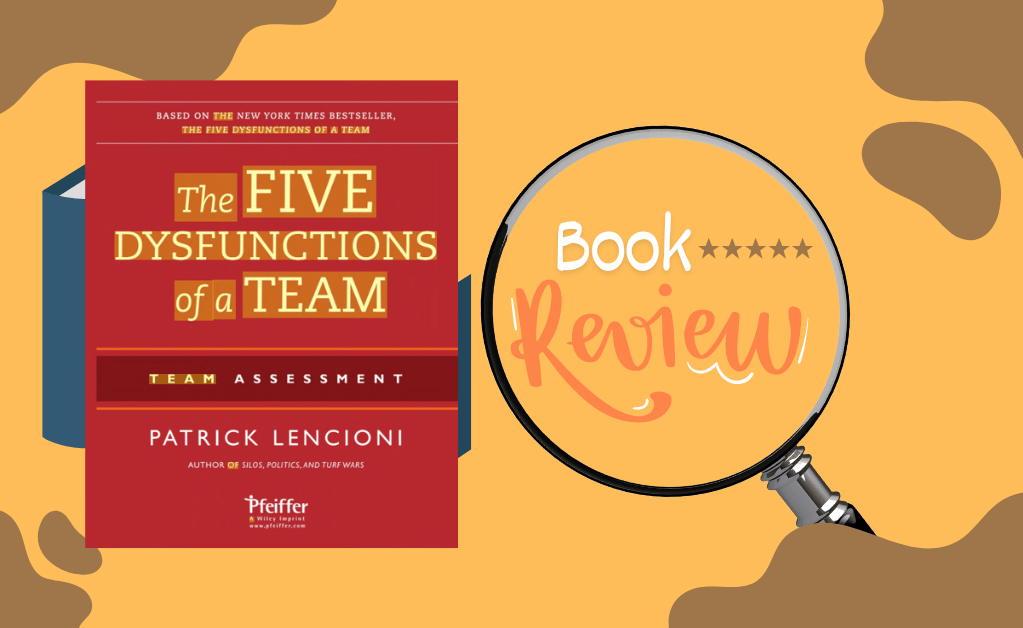
“The Five Dysfunctions of a Team”, a business book by Patrick Lencioni, explores team challenges that hinder a team’s effectiveness and it offers practical strategies for overcoming them. This book provides team leaders and managers with the necessary tools to build a cohesive team.
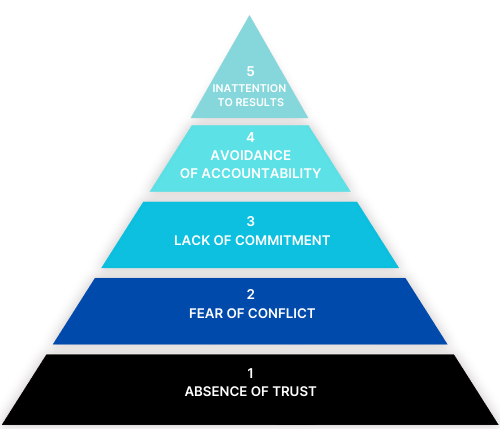
Lencioni outlines a model that identifies Five interrelated Dysfunctions that can disrupt a team’s effectiveness and provides actionable practical strategies that can be applied to improve team dynamics.
The FIVE DYSFUNCTIONS of a team:
Absence of Trust
This is the foundational dysfunction. Teams struggle when members don’t trust each other. This lack of trust prevents open communication, sharing of ideas, and collaboration, leading to a lack of vulnerability and support among team members. Team members are unwilling to be vulnerable with one another, which prevents them from sharing their weaknesses and mistakes. A lack of trust leads to guardedness and inhibits open communication.
Fear of Conflict
Without trust, teams avoid healthy conflict and debate. This fear of conflict leads to artificial harmony where issues are not addressed, resulting in unresolved problems and poor decision-making. Teams that lack trust tend to avoid conflict. This avoidance stifles productive debate and can result in unresolved issues and resentment.
Lack of Commitment
When teams don’t engage in open discussions and/ or some level of conflict, they struggle to commit to decisions. This lack of commitment means members are not fully invested in achieving team goals, leading to ambiguity and low accountability. When teams do not engage in open discussions, members may not feel fully invested in decisions.
Avoidance of Accountability
Teams that lack commitment struggle with holding each other accountable. This avoidance results in lower performance standards and unmet goals, as members are reluctant to confront each other about failures. Without commitment, team members are less likely to hold each other accountable for their actions. This can result in low standards and a culture where poor performance is tolerated.
Inattention to Results
When team members don’t hold each other accountable, they focus on personal goals rather than collective results. This inattention to team goals impacts overall performance and the achievement of objectives. Finally, when team members prioritize personal success over collective goals, the team’s overall performance suffers. This dysfunction can erode the focus on achieving shared objectives.
Lencioni offers Actionable practical strategies for overcoming each dysfunction :
Absence of Trust:
Personal Histories Exercise: Encourage team members to share personal stories and experiences to build a foundation of trust.
Behavioral Profiling: Use tools like the Myers-Briggs Type Indicator (MBTI) or DiSC assessment to help team members understand each other’s personalities and work styles.
Leader’s Vulnerability: Leaders should model vulnerability by admitting their mistakes and weaknesses, setting a precedent for the rest of the team.
Fear of Conflict:
Mining for Conflict: Leaders should actively seek out and address areas of disagreement to ensure healthy conflict occurs.
Real-Time Permission: During meetings, remind team members that conflict is necessary and productive.
Conflict Resolution Training: Provide training on how to engage in constructive conflict and resolve disputes effectively.
Lack of Commitment:
Cascading Messaging: At the end of meetings, review and agree on key decisions and next steps, ensuring everyone is on the same page.
Deadlines and Clarity: Seek consensus Set clear deadlines and expectations for tasks and projects.
Worst-Case Scenario Analysis: Discuss potential risks and outcomes to help team members commit to decisions with a better understanding of implications.
Avoidance of Accountability:
Publication of Goals and Standards : Make goals and standards public to increase accountability.
Simple and Regular Progress Reviews: Hold regular progress reviews where team members report on their commitments and hold each other accountable.
Peer Accountability: Encourage team members to hold each other accountable, not just rely on the leader to enforce standards.
Inattention to Results:
Results-Based Rewards: Tie rewards and recognition to the achievement of team goals rather than individual accomplishments.
Scoreboards and Metrics: Use visible scoreboards and metrics to track team progress towards goals.
Team-Based Objectives: Focus on collective outcomes and ensure everyone understands and is committed to the team’s overall objectives.
Summary
“The FIVE DYSFUNCTIONS of a Team” offers insights into team dynamics and provides a framework for understanding and addressing common issues in teamwork. Its accessible style and practical approach make it a useful resource for managers, team leaders, and anyone looking to build stronger, more cohesive teams, leading to faster project completion, higher employee satisfaction, and reduced project costs.
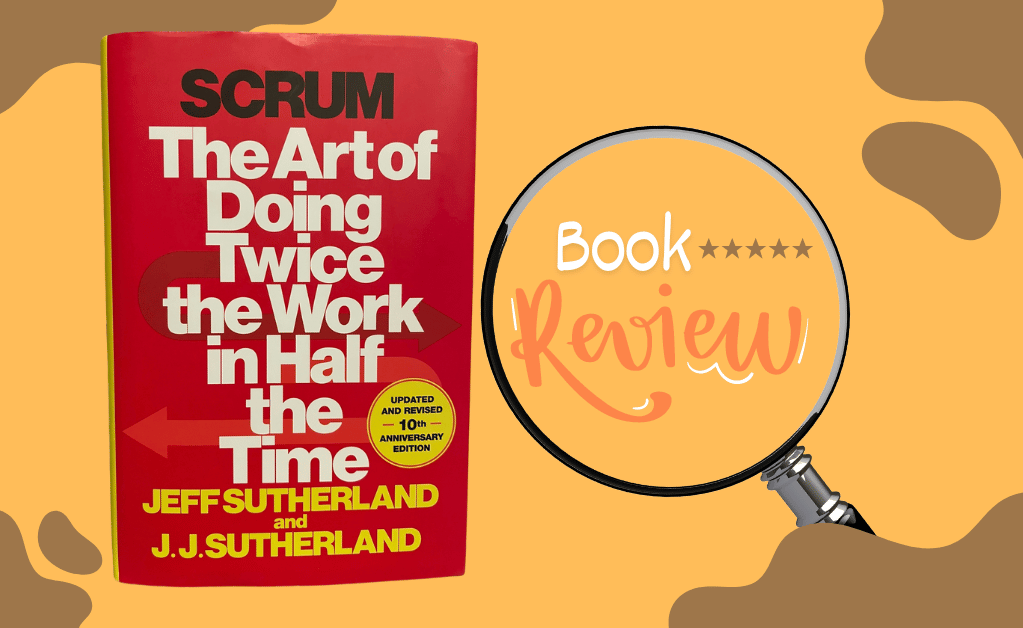
Scrum Demystified: Insights from Jeff and JJ Sutherland's "Red Book"
In “Scrum: The Art of Doing Twice the Work in Half the Time”, Jeff Sutherland and JJ Sutherland distill the essence of Scrum, providing both beginners and seasoned practitioners with a comprehensive guide to this agile framework. Whether you’re curious about Scrum or an experienced professional seeking a refresher, this book offers a wealth of insights, theories, and real-world examples. The authors not only explain the mechanics of Scrum but also delve into the psychology and principles behind its effectiveness.
What is Scrum?
Basic
Scrum emerged from the recognition that there was a more effective way to implement projects and deliver value, transitioning from the traditional waterfall approach to a more agile, iterative methodology. This agile framework incorporates elements of Lean, Extreme Programming (XP), and best practices, such as:
Autonomous, empowered self-organizing teams
Deming’s Plan-Do-Check-Act cycle
The Japanese practice of ShuHaRi
Scrum emphasizes iterative progress through small, cross-functional teams working towards a common goal. Jeff and JJ Sutherland trace the history of Scrum, explaining its origins and evolution, making it evident why this methodology is favored by many organizations today.
Why It's Worth Reading
Comprehensive Insight
One of the standout features of this book is its dual approach. The authors don’t just offer a step-by-step guide on implementing Scrum; they go deeper, explaining why each aspect of Scrum is necessary. For instance, Jeff Sutherland describes why the size of a team matters, using real-life examples to illustrate the exponential increase in communication channels as more people are added to a team. The formula [communication channel = n(n-1)/2] is used to demonstrate this complexity.
Real-Life Examples
The book is peppered with stories of both success and failure, providing readers with a balanced view of Scrum’s potential and pitfalls. These stories are not just illustrative but also serve as case studies that offer actionable insights.
Supporting Studies and Principles
The authors bring in psychological studies and theories, including Maslow’s hierarchy of needs, Fundamental Attribution Errors, and Dual-Task Interference, to name a few. These references enrich the content, making it not just a manual for Scrum but a holistic guide to understanding teamwork and productivity.
How to Use It
Tactical Guidance
Beyond the theoretical underpinnings, the Sutherlands provide practical advice on making Scrum work within teams and at scale (Scrum@Scale). This makes the book invaluable for project managers, scrum masters, and delivery/implementation managers who are looking to implement Scrum in their organizations effectively.
Key Takeaways
For teams and organizations implementing Scrum, the following elements are essential:
Cross-Functional, Long-Lasting Teams: The book underscores the significance of small, cross-functional teams that are motivated and engaged.
Autonomy, Mastery, and Purpose: Team members must be empowered to make decisions, continuously improve, and understand the overarching purpose of their work. (Curious to learn more, check out our review on Drive).
Realistic Expectations: The authors frankly acknowledge that Scrum is not a magic solution; it requires time, dedication, and proactive effort to produce results.
Scrum Principles, Not Process: Success comes from applying Scrum principles to achieve desired outcomes, such as value delivery, rather than adhering to a strict process or set of rules.
Personal Insights
When I first began reading “Scrum,” I expected a straightforward introduction to the framework. It felt akin to a medical doctor reading a nursery book to learn about anatomy. However, as I delved deeper, I discovered the book offered far more. It presented a rich tapestry of theory, supported by studies, expert insights, and real-life examples, demonstrating how Scrum has driven organizational success—or highlighted failures in its absence.
I particularly appreciated the historical anecdotes, which provided a deeper understanding of how Scrum originated and why it remains effective. In the 10th anniversary edition of the “Red Book,” the authors enhance their work and include success stories from various organizations across different fields—venture capital, car manufacturing, weddings, government, pharmaceuticals, and more. These examples reinforce the versatility and effectiveness of Scrum beyond its roots in software development.
Conclusion
“Scrum: The Art of Doing Twice the Work in Half the Time” by Jeff Sutherland and JJ Sutherland is a must-read for anyone interested in optimizing their work processes, achieving greater efficiency, and continuously delivering high value product and/or service. Whether you’re new to Scrum or a seasoned practitioner, this book offers valuable insights that can help you implement and refine Scrum in your organization.
If you’re ready to transform your team’s productivity, this book is your guide. And if you’re looking for personalized advice, consider booking a call with one of our expert coaches who can help you integrate Scrum into your workflow.