Have you ever been part of a team where everything just clicked? Where everyone supported each other, worked towards a shared goal, and celebrated success together? That’s the power of a high-performing team. These teams don’t happen by chance—they’re built with intention, care, trust, and strong leadership.
A good leader brings people together, helps them grow, and keeps everyone focused on what matters most. The role of a leader goes far beyond giving directions; it’s about creating an environment where people can thrive and collaborate seamlessly. So, what does it take to build a high-performing team?
To enable high performance, leaders must adopt specific strategies and behaviors that foster collaboration, trust, and productivity. Below are key strategies and frameworks that can guide this process:
Key Strategies for Building High-Performing Teams
1. Set Clear Goals and Objectives
Define long-term organizational objectives and break them into measurable short-term goals.
Use frameworks like SMART objectives to ensure clarity, focus, and alignment with team priorities.
Regularly review and adapt goals to reflect changing conditions or organizational needs.
2. Foster Effective Communication
Encourage open, two-way communication to build trust, reduce misunderstandings, and promote transparency.
Adapt communication styles to fit team dynamics and individual preferences.
Provide regular updates on progress, priorities, and organizational changes to ensure alignment.
3. Build Trust and Psychological Safety
Model trust, transparency, and empathy as a leader to create a culture where team members feel safe to share ideas.
Address conflicts promptly and constructively to maintain harmony and mutual respect.
Promote an environment where feedback is welcomed without fear of judgment or retaliation.
4. Promote Accountability
Set clear expectations for performance and hold individuals and the team accountable for results.
Lead by example—demonstrate accountability through your actions.
Use consistent feedback mechanisms to ensure accountability remains positive and constructive.
5. Encourage Continuous Improvement
Invest in team growth through training, coaching, and opportunities for skill development.
Recognize team members’ strengths and delegate responsibilities accordingly.
Empower creativity and innovation by giving team members ownership of their work.
6. Emphasize Diversity and Inclusivity
Build teams with diverse skills, backgrounds, and perspectives to drive innovation and problem-solving.
Foster an inclusive environment where all members feel valued and their contributions are acknowledged.
7. Celebrate Successes
Recognize both individual and team achievements to boost morale and motivation.
Use rewards, public acknowledgment, or team celebrations to reinforce positive outcomes and desired behaviors.
Supporting Frameworks for Team Development
Leaders can leverage tested and proven frameworks that can help kickstart their team’s transformation. Here are two relevant frameworks that complement each other—Lencioni’s approach fixes dysfunctions, while Tuckman’s model charts the natural growth of teams. Together, they provide a structured way to diagnose challenges and support leaders towards enabling team development.
Patrick Lencioni’s Five Dysfunctions of a Team
Patrick Lencioni’s framework identifies key areas that undermine team success and offers actionable steps for improvement:
Absence of Trust – Teams lacking trust fail to collaborate openly.
Fear of Conflict – Avoiding healthy debate stifles growth.
Lack of Commitment – Without clear agreements, teams struggle to take decisive action.
Avoidance of Accountability – Failure to hold one another accountable hinders performance.
Inattention to Results – A focus on individual success rather than team outcomes diminishes impact.
Tuckman’s Stages of Team Development
Tuckman’s model outlines the natural progression of teams as they mature:
Forming – Team members get acquainted and begin understanding roles.
Storming – Conflicts arise as dynamics and responsibilities are established.
Norming – Teams develop cohesion, trust, and norms for collaboration.
Performing – Teams operate at peak productivity, achieving results seamlessly.
Additional Insights: Combining Approaches
I recently explored Stephen E. Morris’s Leaders, Believers, and Expert Deceivers, where he highlights the importance of sense-making when applying frameworks. Often, a combination of approaches tailored to the team’s dynamics and organizational needs delivers the best results.
My Principles for Shaping High-Performing Teams
Drawing from my experience, I’ve developed principles that leverage a combination of the key strategies and frameworks that I have found critical to building and sustaining high-performing teams:
Cultivating a Shared Culture and Identity – Building a high-performing team requires nurturing a shared culture and identity. A strong sense of purpose and connection enables individuals to align their efforts, feel valued, and work cohesively toward common goals.
Creating a Shared Vision with Clear Guideposts – Bringing the team into a shared vision with clear milestones provides alignment, motivation, and focus. By defining priorities and setting achievable goals, teams understand their role in driving the bigger picture.
Flexibility in Strategies and Adaptability in Execution – Staying competitive requires flexibility in strategies and adaptability during execution. High-performing teams view challenges as opportunities to innovate, pivot priorities, and improve workflows.
Fostering a Culture of Trust and Collaboration – Trust is the foundation of any successful team. Creating an environment where members feel safe to share ideas, take risks, and collaborate openly strengthens relationships, fuels innovation, and enhances problem-solving.
Conclusion
By integrating proven frameworks, embodying effective leadership principles, and fostering a culture of trust and collaboration, leaders can unlock the full potential of their teams. High-performing teams are not built overnight—they require ongoing care, intentionality, and adaptability. However, the results are worth the effort: teams that consistently deliver extraordinary outcomes while fostering a culture of continuous growth and success.
About the author
Ginny is a Program Manager and Business Analyst with expertise in launching AI-driven SaaS products for GTM, RPA Automation, Digital transformations and Complex multi-country solution delivery.
Project metrics serve as a crucial tool for project managers, providing key insights that help keep projects on track, manage risks, and improve overall efficiency. By monitoring these metrics, managers can ensure that projects align with their goals, meet stakeholder expectations, and stay within time and budget constraints.
The most important metrics will depend on the project’s unique goals and organizational priorities. It’s more effective to focus on a targeted set of metrics tied directly to the project’s success, rather than trying to track everything. A balanced mix of quantitative and qualitative metrics will offer a clear view of the project’s progress. Here are some key metrics to consider and tools to track progress.
1. Scope Metrics:
Scope Creep: Track any changes or expansions to the project scope beyond what was initially planned.
Requirements Completion: Measure the percentage of requirements that have been met compared to the total.
Tool: Atlassian Jira – Jira tracks scope creep by logging any new or modified requirements. You can create custom issue types for scope changes and monitor how often scope change requests are added to the project backlog.
2. Time Metrics:
On-Time Delivery: Measure whether tasks and milestones are being completed as per the schedule.
Schedule Variance (SV): The difference between the planned schedule and the actual progress, indicating delays or advances.
Tool: Microsoft Project – Microsoft Project can create Gantt charts that visualize on-time delivery. It tracks planned vs. actual task durations and flags tasks that are running late, allowing you to track schedule variance (SV).
3. Cost Metrics:
Budget Performance (Cost Variance): The difference between the budgeted cost of work performed and the actual cost.
Cost Performance Index (CPI): The ratio of earned value to actual cost, which indicates cost efficiency.
Cost to Completion: Project the remaining cost to complete the project based on current expenditures.
Tool: Oracle Primavera P6 – Primavera P6 allows for detailed budget tracking by measuring cost variance (difference between planned and actual cost) and calculating the Cost Performance Index (CPI). The tool helps forecast the cost to completion based on current spending trends.
4. Quality Metrics:
Defects and Issues: Number and severity of defects or issues discovered during development or testing.
Client or Stakeholder Satisfaction: Feedback from stakeholders to assess if their quality expectations are met.
Tool: HP Application Lifecycle Management ALM – HP ALM is widely used for tracking defects and issues in software development. It allows for the logging of defects, categorizing by severity, and generating reports on defect closure rates to measure overall quality.
5. Risk Metrics:
Risk Register Updates: Monitor the identification, evaluation, and mitigation of risks over time.
Risk Severity Index: Track the likelihood and potential impact of identified risks.
Tool: Risk Register (Spreadsheets or dedicated tools like RiskyProject) – Using RiskyProject, you can maintain a dynamic risk register, regularly update identified risks, and quantify each risk’s severity index. The tool can simulate risk impact on cost and schedule to predict risk outcomes.
6. Resource Utilization:
Resource Allocation vs. Utilization: Measure how effectively team members and other resources are being used.
Team Productivity: Track deliverables per team member, velocity (if using Agile), or hours spent on tasks.
Tool: Smartsheet – Smartsheet helps track resource allocation versus utilization through resource management dashboards, showing which team members are under- or over-utilized. You can view real-time data on hours worked vs. planned, helping ensure optimal resource use.
7. Communication and Engagement Metrics:
Stakeholder Engagement: Track the frequency and effectiveness of communication with stakeholders.
Meeting Effectiveness: Evaluate the productivity and outcomes of project meetings.
Tool – Slack or Microsoft Teams with integrated analytics. Tools like Slack track the frequency of team communications. You can use plugins like Slack’s analytics or Microsoft Teams’ activity insights to monitor stakeholder engagement by tracking message activity and meeting participation rates
8. Performance Metrics:
Milestones Achieved: Monitor the completion of major project milestones.
Earned Value Management (EVM): A comprehensive metric combining scope, time, and cost to assess overall project performance.
Tool: Asana – Asana allows you to set up key project milestones and track their completion rates. It helps you visualize project progress.
In addition, earned value management (EVM) techniques can be applied by integrating Asana with financial reporting tools.
9. Customer Satisfaction:
Net Promoter Score (NPS): Post-project feedback on how likely stakeholders or clients are to recommend the project outcomes.
Surveys and Feedback: Measure satisfaction at different phases of the project.
Tool: SurveyMonkey or Qualtrics – SurveyMonkey or Qualtrics can be used to send out stakeholder surveys post-project to assess customer satisfaction. You can track responses related to Net Promoter Score (NPS) and gather qualitative feedback on project outcomes.
These metrics typically give a clear overview of the project’s health and help make timely adjustments.The best tool or combination of tools will depend on specific project needs, team size, and organizational requirements. It’s often beneficial to use a combination of these tools to get a comprehensive view of project metrics in real-time
Ready to transform your enterprise? Contact us to learn more about RTculate’s Enterprise Health Framework today and set your organization on a path to sustained innovation and growth. Your enterprise’s next chapter of growth and innovation begins here.
If you could get all the people in an organization rowing in the same direction, you could dominate any industry, in any market, against any competition, at any time.
This is the central theme of this book emphasizing teamwork as the key to successful project outcomes. While building a cohesive team may be difficult, it is not impossible.
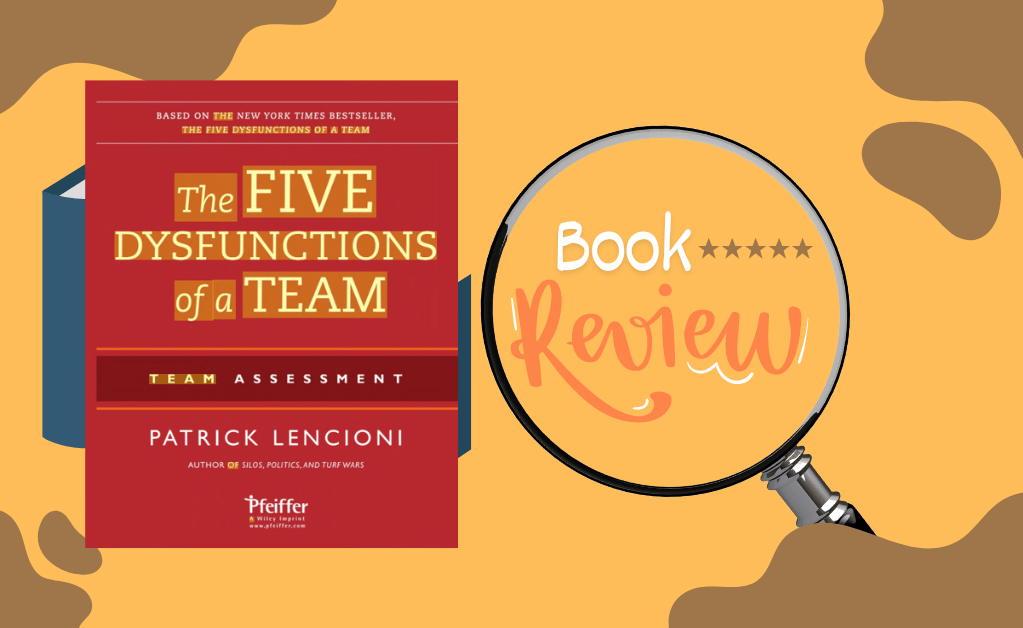
“The Five Dysfunctions of a Team”, a business book by Patrick Lencioni, explores team challenges that hinder a team’s effectiveness and it offers practical strategies for overcoming them. This book provides team leaders and managers with the necessary tools to build a cohesive team.
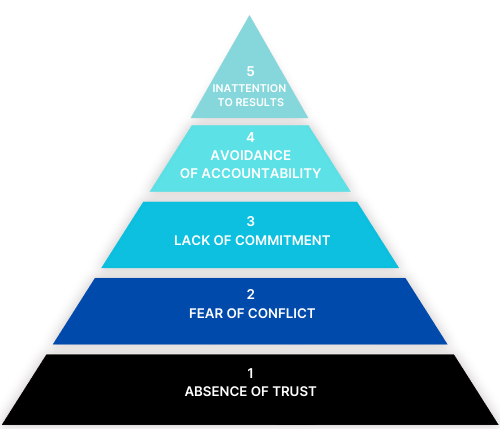
Lencioni outlines a model that identifies Five interrelated Dysfunctions that can disrupt a team’s effectiveness and provides actionable practical strategies that can be applied to improve team dynamics.
The FIVE DYSFUNCTIONS of a team:
Absence of Trust
This is the foundational dysfunction. Teams struggle when members don’t trust each other. This lack of trust prevents open communication, sharing of ideas, and collaboration, leading to a lack of vulnerability and support among team members. Team members are unwilling to be vulnerable with one another, which prevents them from sharing their weaknesses and mistakes. A lack of trust leads to guardedness and inhibits open communication.
Fear of Conflict
Without trust, teams avoid healthy conflict and debate. This fear of conflict leads to artificial harmony where issues are not addressed, resulting in unresolved problems and poor decision-making. Teams that lack trust tend to avoid conflict. This avoidance stifles productive debate and can result in unresolved issues and resentment.
Lack of Commitment
When teams don’t engage in open discussions and/ or some level of conflict, they struggle to commit to decisions. This lack of commitment means members are not fully invested in achieving team goals, leading to ambiguity and low accountability. When teams do not engage in open discussions, members may not feel fully invested in decisions.
Avoidance of Accountability
Teams that lack commitment struggle with holding each other accountable. This avoidance results in lower performance standards and unmet goals, as members are reluctant to confront each other about failures. Without commitment, team members are less likely to hold each other accountable for their actions. This can result in low standards and a culture where poor performance is tolerated.
Inattention to Results
When team members don’t hold each other accountable, they focus on personal goals rather than collective results. This inattention to team goals impacts overall performance and the achievement of objectives. Finally, when team members prioritize personal success over collective goals, the team’s overall performance suffers. This dysfunction can erode the focus on achieving shared objectives.
Lencioni offers Actionable practical strategies for overcoming each dysfunction :
Absence of Trust:
Personal Histories Exercise: Encourage team members to share personal stories and experiences to build a foundation of trust.
Behavioral Profiling: Use tools like the Myers-Briggs Type Indicator (MBTI) or DiSC assessment to help team members understand each other’s personalities and work styles.
Leader’s Vulnerability: Leaders should model vulnerability by admitting their mistakes and weaknesses, setting a precedent for the rest of the team.
Fear of Conflict:
Mining for Conflict: Leaders should actively seek out and address areas of disagreement to ensure healthy conflict occurs.
Real-Time Permission: During meetings, remind team members that conflict is necessary and productive.
Conflict Resolution Training: Provide training on how to engage in constructive conflict and resolve disputes effectively.
Lack of Commitment:
Cascading Messaging: At the end of meetings, review and agree on key decisions and next steps, ensuring everyone is on the same page.
Deadlines and Clarity: Seek consensus Set clear deadlines and expectations for tasks and projects.
Worst-Case Scenario Analysis: Discuss potential risks and outcomes to help team members commit to decisions with a better understanding of implications.
Avoidance of Accountability:
Publication of Goals and Standards : Make goals and standards public to increase accountability.
Simple and Regular Progress Reviews: Hold regular progress reviews where team members report on their commitments and hold each other accountable.
Peer Accountability: Encourage team members to hold each other accountable, not just rely on the leader to enforce standards.
Inattention to Results:
Results-Based Rewards: Tie rewards and recognition to the achievement of team goals rather than individual accomplishments.
Scoreboards and Metrics: Use visible scoreboards and metrics to track team progress towards goals.
Team-Based Objectives: Focus on collective outcomes and ensure everyone understands and is committed to the team’s overall objectives.
Summary
“The FIVE DYSFUNCTIONS of a Team” offers insights into team dynamics and provides a framework for understanding and addressing common issues in teamwork. Its accessible style and practical approach make it a useful resource for managers, team leaders, and anyone looking to build stronger, more cohesive teams, leading to faster project completion, higher employee satisfaction, and reduced project costs.
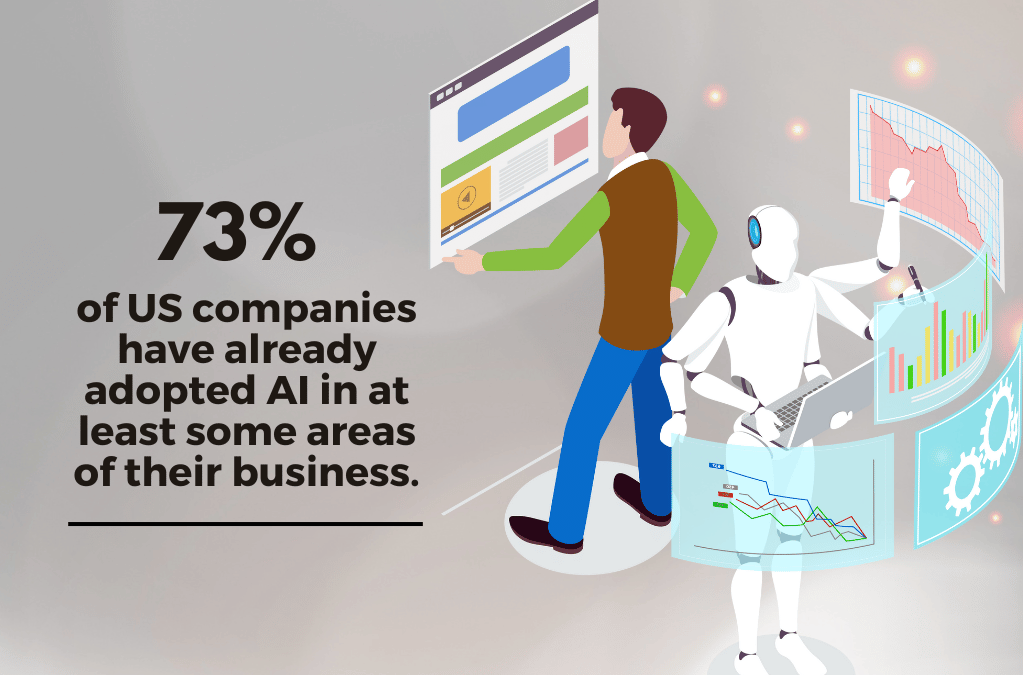
Enterprises are leveraging AI and generative AI to enhance existing services and develop new capabilities for business growth. According to PwC’s 2023 Emerging Technology Survey, 73% of US companies have already adopted AI in at least some areas of their business, with 54% implementing generative AI specifically. (As per PwC AI Predictions)
Project and Program Managers play a crucial role in driving and managing the transformation of AI-driven initiatives. This article explains how AI projects are different from other projects and how project managers need to up level their skills to meet the unique needs of AI based initiatives.
What are the Key Differentiators of AI Projects?
Unlike traditional projects, AI-driven initiatives demand a comprehensive understanding of both technical and operational aspects of AI. Here are some key differentiators of AI projects and strategies for effective management:
AI projects heavily rely on large, high-quality datasets for training and testing AI models. Ensuring data quality, quantity, and relevance is crucial. Data must be cleaned, labelled, and preprocessed adequately to train models effectively.
AI projects require an iterative, cyclical approach (e.g., Agile or CRISP-DM methodology) where continuous experimentation, model tuning, and validation occur throughout the project. Models are continuously trained, tested, and refined based on feedback and new data, allowing for ongoing improvement and adaptation.
Evaluating AI model performance focuses on specific metrics such as accuracy, precision, recall, and F1 score. Model validation is crucial to ensure the AI solution meets the desired criteria and generalizes well to new data. This process requires ongoing model maintenance, monitoring for performance drift, retraining with new data, and handling evolving requirements and environments.
AI projects raise unique ethical concerns around bias, fairness, transparency, and accountability in AI decision-making. Compliance with regulations (e.g., GDPR) regarding data privacy and algorithmic transparency is crucial. Ensuring that AI models do not perpetuate or exacerbate biases is a significant concern.
Post-deployment AI models require ongoing maintenance, including monitoring for model degradation or bias, retraining with new data, and updating algorithms to keep pace with evolving requirements and environments.
AI projects require specialized roles such as data scientists, machine learning engineers, and AI researchers who have expertise in algorithms, statistical modelling, and data manipulation.
What are the Strategies for Effective AI Project Management?
Key differentiators highlight the specialized nature of managing AI-driven projects and the need for a tailored approach that addresses the complexities of data science, machine learning, and AI technology integration. Understanding these distinctions is crucial for successfully planning, executing, and managing AI initiatives in various domains.
Data-Driven Decision Making
Project managers need to understand how to leverage AI tools for predictive analytics and data-driven decision making. This involves analyzing historical data, making predictions about project timelines, and identifying potential risks using AI-powered insights.
AI-Specific Technical Knowledge
While project managers don’t need to be AI experts, they should have a foundational understanding of AI concepts, machine learning, and data science. This includes knowledge about data sources, preparation methods, and data quality issues.
Iterative and Agile Project Management
AI projects demand rapid, iterative delivery. AI initiatives thrive on swift, regular model implementation and require flexibility in an agile approach to project management.
Cross-Functional Communication
AI project managers must excel in communicating across organizational boundaries, bridging the gap between technical and business teams. They need to effectively convey complex AI concepts to non-technical stakeholders.
Ethical Considerations and Critical Thinking
Managing AI projects requires strong critical thinking skills to navigate complex challenges. Project managers must also understand and address the ethical implications of AI, ensuring responsible AI use throughout the project lifecycle.
Conlusion
The skills required to manage AI projects go beyond traditional project management and are specifically tailored to the unique demands of AI initiatives. By embracing data-driven decision making, acquiring AI-specific technical knowledge, adopting iterative and agile methodologies, fostering cross-functional communication, and addressing ethical considerations, project managers can effectively lead their organizations through the transformation to AI-driven initiatives, ensuring successful and ethical implementation of AI technologies.
GenAI technology adoption empowers Project/Program Managers with advanced tools and capabilities for more effective project execution. Despite these technical advancements, many tasks in project management still rely heavily on the expertise, judgement, and interpersonal skills of human project managers.
Hence, the effective adoption of AI Technologies complementing Human Expertise in Project Management is a Partnership for Success. Let’s uncover some of the areas where GenAI and AI technologies can boost productivity, and others where human intervention remains crucial too.
Leveraging AI to boost productivity
Below are some of the areas where GenAI can supplement the way we work.
Automated Project Planning and Scheduling – GenAI can generate detailed project plans, schedules, and timelines by analyzing project requirements and historical data. It can suggest optimal resource allocation and timelines, reducing the time and effort required in the planning phase.
Improved Communication and Collaboration – GenAI-powered tools can facilitate communication among team members through automated updates, report generation, and even real-time language translation. These tools ensure that all stakeholders are kept informed and aligned throughout the project lifecycle.
Task Automation – Routine project management tasks, such as data entry, status reporting, and progress tracking, can be automated using AI Powered tools. This allows project managers to focus on more strategic aspects of their projects.
Enhanced Decision-Making – By providing data-driven insights and predictive analytics, GenAI supports better decision-making throughout the project lifecycle. Project managers can make more informed decisions with a comprehensive understanding of potential outcomes.
Advanced Analytics and Reporting – GenAI can provide deep insights into project performance through advanced analytics. It can identify trends, patterns, and anomalies in project data, offering actionable insights for decision-making and continuous improvement.
Enhanced Risk Management – AI models can predict potential risks and issues by analyzing past project data and real-time information. GenAI can provide scenarios and mitigation strategies, helping project managers proactively address challenges.
Natural Language Processing (NLP) and Sentiment Analysis – GenAI can analyze communications within the project team to gauge sentiment and engagement levels. This can help in identifying and addressing team morale issues early on.
The Irreplaceable Human Element
While GenAI provides valuable tools and capabilities, the human element remains indispensable. Highlighted below are the irreplaceable role of project managers in the successful execution of projects.
Strategic Vision and Goal Setting – Defining the strategic direction and overarching goals of a project requires a deep understanding of the organizational objectives, stakeholder expectations, and market conditions. Project managers synthesize this information to set a clear vision.
Stakeholder Management – Building and maintaining relationships with stakeholders involves nuanced communication, negotiation, and conflict resolution skills. Project managers must navigate complex dynamics and align diverse interests, which is often beyond the capability of AI.
Complex Decision-Making – While AI can provide data-driven insights, making complex decisions often requires a blend of analytical skills, experience, and intuition. Project managers must weigh various factors, including organizational politics, ethical considerations, and long-term impacts, to make informed choices.
Creative Problem-Solving and Visionary thinking – Addressing unique or unprecedented challenges requires creativity and innovative thinking. Project managers often need to devise novel solutions to problems that cannot be easily solved through automated processes or predefined algorithms.
Adaptability and Crisis Management – Managing unexpected changes and crises involves rapid adaptation and resourcefulness. Project managers are crucial in assessing the situation, devising contingency plans, and steering the project through turbulent times.
Negotiation and Conflict Resolution – Negotiating project terms, resolving disputes, and balancing competing priorities often require delicate handling and human empathy. Project managers must navigate these situations tactfully to achieve satisfactory outcomes.
Ethical and Legal Considerations – Ensuring that projects adhere to ethical standards and legal regulations is a complex task. Project managers must interpret and apply these standards, often dealing with gray areas that require human judgment.
Conclusion
The integration of GenAI technologies in project management offers transformative potential. By automating routine tasks and providing advanced analytics, GenAI empowers project managers to focus on strategic and interpersonal aspects of their projects. However, the value of human expertise remains paramount.The future of project management lies in the harmonious blend of GenAI capabilities and human insight.
The real strength of modern project management lies in the seamless partnership between these advanced technologies and the irreplaceable human touch.
As we delve deeper into this exciting evolution, our upcoming series will explore how specific GenAI-powered tools and platforms can further elevate project management practices. Stay tuned!