by Rochelle Tan | Mar 12, 2024 | InBiteSize
Welcome to the second installment of our Multiplier (by Liz Wiseman’s book) series. In case you missed it, find our book review here.
Leadership has been, and will always be, a topic of fascination and debate. The traditional model of top-down control is being challenged by a new era of collaborative leadership that amplifies the collective intelligence within teams. Enter the era of the Multiplier leader: a visionary who not only adds value but also expands the capabilities and potential of their team members.
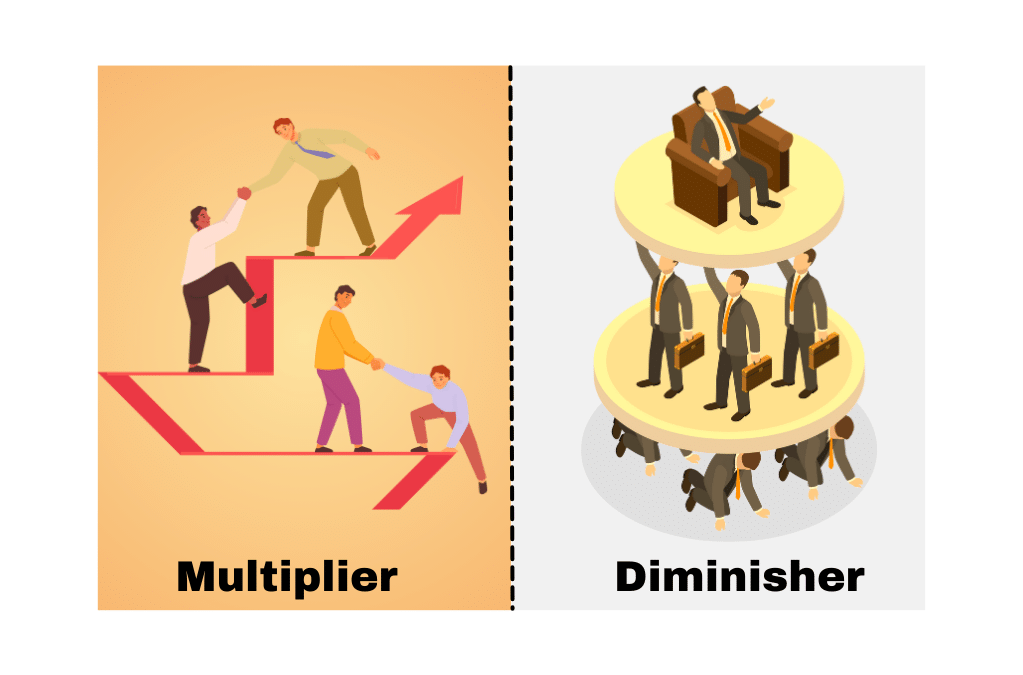
Imagine a spectrum with two poles: on one end is the Diminisher, and at the other lies the Multiplier. The Diminisher believes that intelligence is scarce, a quantity they’ve cornered. They’re like black holes, creating a gravitational force that sucks the life and intelligence out of the room, leaving disengagement and stifled potential in their wake. Conversely, the Multiplier thrives on the notion that intelligence is abundant. They’re liberators and even when they seem to be the cause of a projection of intelligence, it’s actually everyone else’s genius that they are pulling out. They create an atmosphere where the team’s collective brainpower explodes into a beautiful fireworks display of accomplishment. Awareness of this spectrum is the first step, yet it’s not enough. You could spend your life charting where you think you stand, but it is action that truly moves you forward. Leadership, after all, is not a passive state; it is a continuous practice.
What does it take to be a Multiplier? Intentionality. This isn’t a switch you flip. It’s a conscious choice you make every single day.
Delve into the world of Multiplier Leaders with us as we unveil the 5 essential disciplines that set them apart. Learn how these leaders contrast with Diminishers and discover practical examples showcasing their distinct leadership styles in action.
|
Multiplier |
Diminisher |
| Title |
Talent Magnet |
Empire Builder |
| Description |
A leader who attracts and retains top performers. They have a keen eye for talent and take pride in developing a team of high achievers. They are not threatened by the intellect and capabilities of their employees; rather, they see it as a resource to be harnessed for the greater good of the organization.
The effect on the team is profound. Under the guidance of a Talent Magnet, individuals feel recognized and appreciated, which fosters an environment of creativity and engagement. |
On the other side of the spectrum, we have the Empire Builder. This leader is more concerned with the size and perceived power of their team than with the actual performance and contribution of individual members. They may be great at accumulating talent, but they fall short in the utilization and development of that talent. They engender an environment of competition and insecurity, where individual contributions are undervalued. Ultimately, this approach leads to team members feeling underutilized and unappreciated. |
Use Case:
George has been a top performer at Lane Company at his previous position. He found himself moving to a new position to expand his horizons in the organization. But soon he found himself being disengaged and was considering leaving the company for opportunities elsewhere. What happened to George? |
George started his career at Lane Company working for a Talent Magnet, Mandeep. Mandeep was very supportive and inspired George to continuously push himself to go beyond what he thought he was capable of. This allowed George to expand his horizons by taking on new responsibilities that George would normally have had to wait for years before he could do if he followed the company’s career growth roadmap. |
By the time George moved to his new role , he found himself working with a manager who controlled all the work that goes in and out of the team. Every work that George implements requires his manager’s approval. George’s manager attracted him for being a top performer at his previous role, but did not provide the same support and opportunities as George’s previous manager. This stunted, if not regressed, George’s growth. |
| Title |
The Liberator |
The Tyrant |
| Description |
A Liberator is a Multiplier who creates an environment where people are free to think, speak, and act with reason. They are adept at removing barriers that impede performance and provide the necessary space for creativity to flourish. This approach results in team members who feel empowered and are more likely to take risks and contribute fully to the organization’s success. One such example of a Liberator is Robert Enslin, the President of Global Customer Operations for SAP AG. He has been instrumental in dismantling the traditional hierarchical structure within his organization, creating a more inclusive and innovative space for employees to thrive. |
Conversely, the Tyrant Diminisher creates an oppressive environment where control and fear reign. Team members under a Tyrant leader are less likely to voice their ideas or take risks, for fear of retribution. This approach stifles creativity and innovation and can lead to an exodus of talented individuals seeking a more supportive environment. |
Use Case:
The marketing team was assigned to prepare the presentation and activities needed to meet next month’s New Product Offering at the Tech Conference. Time is tight and there are many dependencies to implement. |
As a leader, the Talent Magnet will ensure that the team understands the importance of the upcoming event and key deliverables that will consider this a success. The leader asks the team to provide their thoughts on the best approach and who would take ownership and responsibility to get the presentation and the product demo ready for the conference. The leader brings the team and allows them to brainstorm, design, and execute their plans. While the team is busy at work, the leader is responsible for removing any blockers that the team is experiencing to proceed with the work. Everyone contributes and takes a holistic approach to implementing the plan. |
A Tyrant leader takes the reign upon hearing of the requirement. The leader provides the team his/her plan and his/her idea of how the team should execute the plan. This includes incorporating checkpoints to ensure that the leader assesses and approves any decisions and ideas before they can proceed. |
| Title |
The Challenger |
The Know-It-All |
| Description |
A Challenger is a leader who constantly challenges their team to extend beyond their current capabilities. They do so by posing difficult questions and creating opportunities that require their team to stretch and grow. This approach not only pushes team members to achieve more but also instills a sense of collective purpose and direction. Challenger Multipliers understand that the best ideas often come from within the team, and they are willing to facilitate an environment where these ideas can be discussed and developed. |
The Know-It-All leader is the opposite of the Challenger. They believe that they have all the answers and often dismiss the input of others. This diminishes the confidence and autonomy of the team and creates an environment where individuals are reluctant to share their thoughts or take initiative. Know-It-All leaders frequently stifle creativity and limit the potential of their teams by not allowing the brilliance of each team member to shine through. Their lack of humility and willingness to learn can create a toxic work environment that hinders growth and innovation. |
Use Case:
A scrum team, responsible for delivering software, continues to under deliver and carryover work. Management has placed more people and experts in the team hoping to remedy the problem. After a change in the team dynamics, the team started to consistently deliver on their commitments. |
The team’s situation changed when the leadership in the team changed – selecting a new team lead from one of the senior team members. The new leader started by establishing team agreements to ensure that the team is aligned with their expectations on each members’ responsibility. This established accountability and ownership to all the team members, while respecting the authority of the new team lead. |
The team had a Know-It-All leader, who solely relied on his own opinion – relying on his own ideas of what his team needed. Despite going through training, getting some coaching, and mentorship, nothing changed. For months, the team’s performance did not improve.
Regardless of what recommendations were provided, the leader had rebutted why others’ ideas would not work and that his recommendations are better. |
| Title |
The Debate Maker |
The Decision Maker |
Description
|
Leaders who are skilled in debate-making have the ability to turn different perspectives into a powerful tool for progress. With their adeptness at framing issues, they ask the pivotal question of what problem should be solved and can thereby spark healthy discussions from all sides. By staying engaged, using comprehensive fact-based information, and educating those around them, they can drive towards sound decisions that positively impact the people involved. Debaters are able to utilize their resources thoughtfully, leading to efficient execution with much lower resource levels than otherwise required. Ultimately, the multiplier effect of such leaders allows healthy discussions to take place while bringing clarity to seemingly unresolvable issues. |
As decision makers pursue their own vision and follow their instincts, they may inadvertently overlook the value of collective input and understanding. This approach can undermine the abilities of the team members and lead to underutilization of resources. While a select few may be overworked, others may be left wondering why they weren’t consulted. As a result, there may be a lack of important information from those closest to the action, resulting in a poorer decision. This can also lead to resource teams not having the understanding necessary to effectively execute these decisions. To improve decision-making, it is critical to value the input of all team members and to create a culture that values diverse perspectives and feedback. |
Use Case:
Following a recent round of layoffs, tension is high within the organization. Productivity has taken a hit as everyone reels from the news. The HR team is working diligently to address these concerns and implement support programs to help all team members navigate this challenging period and bounce back stronger than ever. |
The HR manager takes a more collaborative approach by allowing the team to provide input and discuss opinions to promote the exchange of ideas. The manager usually promotes the divergence of ideas to identify the problem to be solved. And asks the team to help identify the best recommendation(s) to implement. |
The HR manager ensures that everyone knows that she has the main authority to make decisions for the entire HR team. This is from the programs to implement and the types of training and workshops to conduct to help the organization bounce back. The team struggles to implement any idea as they have to wait on the HR manager to give her blessings before any activity can move forward. Status meetings run for hours since everyone needs to provide details to the HR manager. People just wait for their turns to give their updates and leave since they do not need to hear what others have to say since each person works in silos. |
| Title |
The Investor |
Micromanagement |
| Description |
One of the most important things you can do is empower your team. This means giving them ownership in the projects they work on and trusting them to take charge of their own destinies. But ownership isn’t just about the end goal; it’s about giving your team the resources they need to get there. It’s about stretching their roles and investing in their growth. |
Micromanagement is a common management style adopted by some leaders who want to maintain a high level of control over their team. However, this style can do more harm than good. Micromanagers tend to stifle their team’s efforts, leaving them feeling like their hands are tied under the weight of incessant and obsessive oversight. |
Use Case:
The company created an innovation program meant to fund ideas that anyone in the organization has to allow for a Proof of Concept (PoC ) or a Minimum Viable Product (MVP) to be built. The team that owns this program are expected to review, fund, and facilitate the completion of each funded idea’s PoC or MVP. |
By adopting an investor leadership approach, the leader equips their team with necessary resources like funds, time, people, and space to bring their ideas to life. They set the vision for the innovation program and establish clear guidelines for its success. Acting as a coach rather than a team member, the leader is involved in activities such as:
- Regular check-ins for feedback and questions
- Hosting demo days to track progress with working prototypes
- Offering support by identifying and addressing risks and dependencies faced by the team.
This investor leadership style empowers the team to thrive and excel in their endeavors. |
In contrast to investors, micro-managers take similar steps but yield different outcomes due to varying communication and interaction styles. They provide resources but also exert control, closely monitoring team progress and insisting on their approval for any changes. This approach hampers creativity and productivity, creating a counterproductive work environment that hinders innovation. |
To transition from a Diminisher to a Multiplier, leaders must embrace key shifts in their management approach.
- A Multiplier mindset focuses on maximizing the talents of their team members.
- Multipliers cultivate an inclusive and nurturing work environment by valuing diverse perspectives, promoting open dialogue, and fostering teamwork.
- They empower their team members by granting autonomy and encouraging risk-taking, leading to innovative problem-solving.
- Multipliers invest in team development through skill-building and recognition as a crucial aspect of their leadership approach.
The impact of Multiplier leadership is profound. These leaders drive engagement, productivity, and innovation. Their teams become adaptable and resilient to change, ensuring organizational success. Embrace the transformative power of becoming a Multiplier leader for long-term growth and prosperity. So, where do you fall on the leadership spectrum – as a Multiplier or a Diminisher?
In this installment, we delved into the world of Multipliers and Diminishers and created an awareness for leaders to lean towards the Multiplier side of the spectrum. Join us on a journey towards becoming a true Multiplier as we learn how to tap into your leadership potential and avoid unintentional pitfalls of the Accidental Diminishers.

by Rochelle Tan | Feb 21, 2024 | InBiteSize
As professionals climb the career ladder, leadership books become part of their essential toolkit. For those on the path of continuous learning and leadership refinement, “Multipliers: How the Best Leaders Make Everyone Smarter” by Liz Wiseman is a critical addition to your library.
Here’s why.
Wiseman introduces us to an empowering breed of leaders she coins ‘Multipliers’. These are the Genius Makers who apply their intelligence to amplify the capabilities and smarts of their teams. My key takeaway? Being a Multiplier is not about being the Genius; it’s about catalyzing others’ intellectual skill. Every organization could reap the benefits of nurturing such leaders.
It has been said that after meeting with the great British Prime Minister William Ewart Gladstone, you left feeling he was the smartest person in the world, but after meeting with his rival Benjamin Disraeli, you left thinking you were the smartest person.
– BONO (Time, May 11, 2009 )
Supported by research from eminent psychologists, “The Multiplier” shows that intelligence can grow and express itself fruitfully in enriching environments. Thanks to Carol Dweck’s work on Growth Mindsets, Eric Turkheimer’s studies on intelligence shifts due to environmental changes, and Richard Nisbett’s findings on societal IQ evolution, we understand that leadership can have a profound effect on the cognitive growth of teams.
The core message that Wiseman presents—that Multipliers can extract twice the capability out of their resources—strikes a resonant chord within me. In my experience as an Agile Coach, I’ve seen the importance of unearthing the latent potential of the organization to drive outcomes and sustainable improvements.
The book drives home the distinction between ‘Diminishers’ and ‘Multipliers’, presenting it not as a binary set but as a spectrum where one can evolve toward being a Multiplier. Leaders must recognize the untapped intelligence in their teams and avoid the “being the smartest person in the room” approach that often stifles creativity and energy.
At first glance, it may be hard to distinguish a ‘Multiplier’ leader from a ‘Diminisher’ leader. There are many similarities. Both have strong business acumen and are customer-driven. They also surround themselves with smart people and are often considered thought leaders in their own domain. However, Wiseman’s five disciplines —Talent Magnet, Liberator, Challenger, Debate Maker, and Investor—provide the clear distinction between a Multiplier, and a Diminisher.
For instance, the Liberating discipline, which gives team members the space to think, act and make decisions, struck a particular chord with me. It reminded me of times when fostering an open, innovative environment allowed teams that I coached to produce their best work. It’s a validation of the space Multipliers create for brilliant ideas to breathe and flourish.
For those captivated by the desire to seed their organizations with more Multipliers, Wiseman’s book is an invaluable collection. Whether you’re an executive coach, business leader, or a transformation champion, “Multipliers” offers you a timeless model.
In subsequent articles, we will dive deeper into the realms of Multiplier leadership. We’ll unpack the subtleties of the 5 Disciplines of the Multiplier, ‘Accidental Diminishers’, and navigate the transformative path to Multiplier enlightenment.
For those seeking to not just lead, but also magnify the wisdom around them, “Multipliers” by Liz Wiseman is a highly recommended read. It serves as a manifesto for those who are determined to spread intelligence throughout their professional journey.
—
Stay tuned as we delve into the dynamics of empowering leadership that uplifts the collective potential, rather than undermining it.
In case you missed it, we also reviewed Em Campbell-Pretty’s Tribal Unity, another great book that deals with building a strong team. Make sure to check it out!
by Rochelle Tan | Feb 8, 2024 | InBiteSize
Simple Secret of Successful Disruptive Strategies
I skate to where to puck is going to be, not where it has been”
~ Wayne Gretzky
In the world of business, disruptive strategies hold the key to success. But what does it mean to be disruptive or to embody the disruption mindset? Charlene Li, a well-known author of The Disruption Mindset, explains that it involves taking a bold leap and diving headfirst into uncharted territory even without guaranteeing success. This is similar to Alexander the Great’s mindset at the shores of Asia Minor, where he led his men to battle against the Persian Empire of Darius III. At the brink of this tremendous undertaking, Alexander addressed his men with a bold statement, “We will either return home in Persian ships or we will die here.”
This quote encapsulates the spirit of the disruptive mindset, which is characterized by a willingness to take bold action, confront adversity, and pursue greatness at any cost. It is about the courage to pursue new ideas and approaches even if they initially seem unconventional or unpopular. Ultimately, it’s about creating something truly innovative that has the potential to make a significant impact in the world of business.
According to the author, to bring about true transformation that disrupts an industry, one must not just focus on innovation. Instead, you must aim for a breakthrough that leaves a significant impact that drives growth and change.
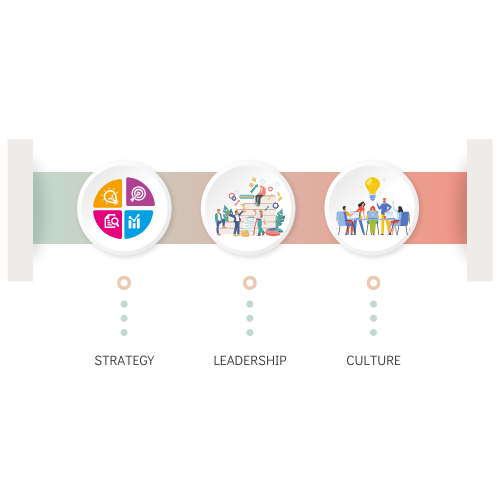
To achieve this, Li shares three crucial elements:
- Your strategy must be inspired by the needs and desires of future customers. It is about anticipating their demands and creating solutions that impress them.
- Leadership plays a vital role in creating a movement of disruptors. Such leadership inspires others to become leaders, leading to a domino effect of innovation.
- Your organizational culture must foster an environment where creativity and new ideas are welcome and where change and mistakes are seen as opportunities for growth and learning.
Preparing for this transformative journey is not easy, and indeed, there will be difficulties. It is not uncommon for businesses to face significant hurdles along the way, including employee resistance, changing market conditions, and the need to invest heavily in new technologies or processes.
Li recommends you start with your strategy and ensure it follows a customer-centric approach. This means understanding your future customers’ needs and wants, which is vital to achieving disruptive growth.
This was clearly depicted in Adobe’s strategy in 2010 when Mala Sharma, VP of Product Marketing, decided to move Creative Suite from selling perpetual licenses to an online subscription-based model. This was a very new concept and disruptive to the organization and to the market. Not only was it going to change how they sold the product, but also it was expected to decrease revenue for a period of time. Upon launching the model, Adobe’s net income did decline for a few financial reporting periods. Nonetheless, Sharma and her team were successful in launching the model, reengineering the distribution channel, and increasing the company’s market share and trust. In the end, although Adobe’s net revenue decreased, its stock price skyrocketed.
To implement their transformation successfully, Sharma and her team employed these crucial steps:
- Gather and analyze data to support your assumptions and ideas. Ensure that everyone understands the information.
- Communicate and get everyone’s buy-in to work towards the same goals. This is crucial to make the strategy effective.
- Commit fully to the objectives and do not look back. Much like Alexander the Great’s approach of burning the boats, the whole organization is committed to the goals and aligned to work towards the same objectives.

A good strategy relies on the collective effort of motivated change agents who drive and achieve its ultimate goal of disruptive growth. While a good leader can initiate a movement, it takes a truly exceptional leader to nurture and sustain it. As a leader, you must identify potential followers and cultivate them into future disruptive leaders.
Most importantly, it is crucial to establish a clear relationship with your followers. You should openly share their aspirations and concerns, actively engage with them, and consistently communicate to capture their interest and curiosity. By inspiring followers with a powerful manifesto, this movement gains momentum, motivating them to pursue tangible results and take decisive action.
Progress isn’t achieved by preachers or guardians of morality, but by madmen, hermits, heretics, dreamers, rebels, and skeptics.
~ Stephen Fry

Li developed four (4) archetypes of disruptive leaders as a guide into becoming effective drivers of change.
- Steadfast Managers get things done with their team feeling empowered. People love working for them because they are great collaborators and communicators.
- Realist Optimists are highly effective leaders who are open to change with strong leadership behaviors that empower and inspire others.
- Worried Skeptics see the world as a glass-half empty and worry about all of the things that can go wrong. They excel at cleaning up the mess.
- Agent Provocateurs are not afraid of change, they seek out change or new opportunities to improve and make things better.
Each of these archetypes can be used to help you better understand your leadership style, learn how to effectively work with other leaders, and develop future leaders in your organization.
Culture eats strategy for breakfast every day.
~ Attributed to Peter Drucker
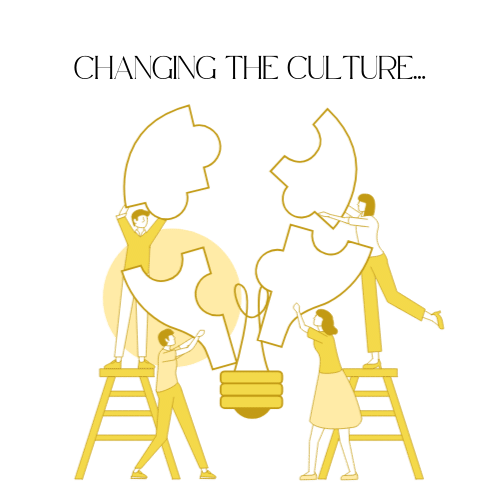
As Li explicitly describes in her book, having a good strategy and exceptional leadership are not enough to drive disruptive transformation that leads to growth and change. It is essential to unlearn the bad behaviors and practices to make room for better ones. The author recommends adopting a flux culture operating system that is conducive to changing the culture for the better.
To change the culture, one needs to navigate the underlying beliefs and behaviors. This involves encouraging openness, empowering employees to act like owners, and embracing a bias for action. In addition, it requires a stable structure (backbone) that supports the process (lifeblood) and lore (soul) of the organization.
The author provides examples of how ING Netherlands adopted a new organizational structure of tribes and squads, much like the Spotify model, to create a more collaborative and decentralized structure. She also provided real life examples of how organizations, like Amazon, employ a ‘press-release from the future’ process to approve new initiatives where everyone takes the first few minutes of the meeting to read before initiating a discussion. Other organizations, like OXO (the global houseware manufacturer), employ lore, symbols and rituals to develop a strong bond and alignment across the team members. For example, OXO’s team members bring back to the workplace any lost glove that they find to visualize the different hands they are designing for. This ritual is a good reminder and helps them focus on the customers their products are made for.
These are all the building blocks that help create a stable culture operating system, which promotes creativity and allows value delivery to flourish, and ultimately, drive towards success. Every organization has their own unique intricacies. You can help your team develop your own flux culture and establish its own structure, process, and lore.
Let’s Take Action Now!
Disruptive movements are propelled by a disruption mindset. Mere talk is insufficient. It necessitates a commitment to action. As a leader, you hold the power to establish a compelling purpose and foster an environment that supports the arduous work required for success. Li highlights three essential elements to transform this vision into reality: a sound strategy, disruptive leaders, and a culture that encourages shedding detrimental habits and embracing new ones. It is crucial to ignite a movement that mobilizes your organization on this transformative journey. These elements are indispensable for sustaining momentum and achieving tangible outcomes: growth and change.
Are you prepared to unleash disruptive growth and change? Read the Disruption Mindset. Dive deep into these concepts and learn from the practical application of these ideas. And, embark on your own disruptive movement. There’s no time like the present.
In case you missed it, we also reviewed Tribal Unity Em Campbell-Pretty. Check it out and share it with your friends or colleagues.

by Rochelle Tan | Jan 24, 2024 | InBiteSize
Building High-Performing Teams for Increased Productivity
Em Campbell-Pretty’s book “Tribal Unity” encourages readers to strive towards becoming high-performing agile teams to deliver value to customers consistently. Imagine an agile team where everyone feels and works together as one tribe: a family that rows in unison toward one direction, which leads to exceptional productivity. Sadly, only 2% of US organizations have achieved this level of delivery, as exemplified by the likes of Olympic gold medal teams and Apple Macintosh.
Campbell-Pretty outlines the essential elements required to build effective and motivated tribes. These include:
- Creating Great Teams: Encourage oneness, self-organization, and collaboration by communicating regularly.
- Building Strong Teams and Cultivating Your Tribe: Establish team identity, share common interests, invest in team-building activities, and foster cohesive relationships.
- Connecting with Leaders: Bring leaders close to the team and make them more relatable by allowing them to be vulnerable and show their humanity.
- Connecting to an Idea: Ensure everyone is aligned with the overall strategy, open to different perspectives, and willing to learn new ideas and gain insights.
- Sustaining Tribal Unity: Utilize data and metrics to maintain unity.
- Engaging Leaders: Create small wins to generate credibility and secure buy-in from leaders.
I had the privilege of being part of an organization that had a remarkable level of Tribal Unity. Having worked for over two decades, I can confidently say that such teams or organizations are rare. This experience came during my involvement in a cloud acceleration initiative at an Oil and Gas company. Our goal was to migrate thousands of apps to the cloud, establish the necessary infrastructure and services, and enable teams to efficiently utilize the new CI/CD* pipeline within MS Azure.
Although the initiative has now concluded, the most valuable aspect was the learning experience. It was an opportunity to observe and learn about the key elements that make a team successful, such as clear direction, supportive management, and empowered teams. Although not without flaws, the teams and team members worked together towards common goals and targets. This resulted in exceptional outcomes in every iteration: such as migrating 120 apps instead of the planned 100 in a single quarter.
On one hand, the success of this initiative was due to the sense of unity among team members. It felt like a big family, fostering strong trust among team members. We all trusted each other and worked together to achieve our common goals. Team members pitched in wherever help was needed, regardless of their job descriptions. I have witnessed developers helping with testing, QA specialists giving sprint demos, and scrum masters providing team training. On the other hand, our team does not lie in wait for the person with the highest position to make decisions. Our team members were empowered and held accountable for their actions—this collaborative mindset was the key to our success.
The transformation did not happen overnight. It had a rough start with a series of revolving doors and a storm of conflicting ideas, as new teams and initiatives do. The initiative began with three agile teams. The program had a few attritions in the first few iterations, early failures, and other obstacles. Notwithstanding, the teams leveraged the overall strategy in order to manage the work effectively: prioritized the work, implemented in smaller batch sizes, and only worked on the highest valued items.
To promote oneness and a sense of belonging, the teams decided to adopt common-themed names based on the nature of their work. The system teams, who were responsible for enabling the services (i.e., data, compute, VM, billing, etc.), designing the architecture guidance, and setting up the CI/CD* pipeline adopted rocket ship names. While the teams that were responsible for migrating apps from the on-prem solution to the cloud, they were named after birds due to their migration patterns.
Success was measured when we demonstrated working solutions. In every iteration, teams would demonstrate the migrated apps and primary functionality to show how the application operated in the cloud. In addition, setting clear metrics criteria, such as what qualifies as a successful application migration, is important to confirm progress towards the overall goal. Saying we have migrated ten apps means meeting the expected behavior, quality, and performance standards. This then shows that we have the capability to achieve our goals and measure our progress with impressive precision.
The team members, recognizing the importance of building a stronger and closer team, came up with various initiatives! These initiatives included Thursday Happy Hour sessions, where the team members would gather after work to interact and build lasting relationships outside of work. A Lean Coffee Friday session was another opportunity that provided a safe space to discuss any, not only work-related, topics and share their views and opinions. A Hackathon was also initiated, where team members worked on a project and developed innovative solutions to a given problem. Ultimately, the intention of these fun activities were formed with the team members in mind and how they could benefit from a positive work environment. Thus, being part of a team that fostered a culture of collaboration and teamwork resulted in increased productivity and efficiency.
How has your organization established Tribal Unity? If you have not done so, what key elements can you incorporate into your organization? By learning about Tribal Unity, you can learn how to create oneness, build strong relationships, and connect with leaders. So, get ready to dive into the fascinating world of tribal culture and learn the key elements that will help you achieve this vision!
Curious for more, check out our book review on Tribal Unity.
* CI/CD – Continuous Integration/Continuous Deployment
by Rochelle Tan | Jan 10, 2024 | InBiteSize
Life is a grand adventure, much like the stories we find in books and movies. Just like the heroic characters we admire, we embark on our journeys in pursuit of our dreams and goals. For example, take Frodo Baggins from The Lord of the Rings, one of my favorite books. He couldn’t destroy the one ring all by himself. He needed the help of his friends and the Fellowship of the Ring. Together, they faced countless obstacles and remained steadfast in their mission.
And just like Frodo, you have your own epic story to fulfill. You are the main character in your own narrative, which is filled with thrilling adventures, challenges, and setbacks. The key to success is recognizing that you don’t have to do it alone. Instead, seek support from others as you navigate through the ups and downs of your journey. Each hurdle you overcome brings you closer to your purpose and ultimate goal. Indeed, you won’t succeed in every adventure, but each experience builds resilience and confidence within you. This fuels your drive to move forward and complete your journey on your terms.
In this post, I want to share my own epic story with you. Through my personal and professional journey, I’ve encountered various trials and tribulations that have shaped me into the resilient person I am today.
Spoiler alert: my story is still a work in progress. As I reflect on this new year, I can’t help but look back at my humble beginnings as an antivirus software engineer at Trend Micro and where I am now as a proud business owner of Rtculate.com. While I may not have reached my ultimate goal just yet, I can confidently say that I’ve come a long way. Along this path, I’ve experienced tremendous growth and countless valuable lessons. These experiences have made me stronger and more resilient than ever.
Recently, I met with my university classmates to celebrate our anniversary since graduating all those years ago. It brought back memories of that special day filled with hope and excitement for the future. At the time, armed with a computer science degree and honors, I believed I would easily secure a great job. However, the reality was quite different as I faced rejection after rejection.
Thanks to the unwavering support and encouragement of my family, I didn’t give up. Eventually, I received a job offer from Trend Micro. It seemed like a happily ever after, but reality hit hard. The work didn’t align with my strengths and interests, leading me to become a low-performing employee. I even had to take remedial classes to improve my skills.
Just as I was ready to give up and go back home, a conversation with one of my managers changed everything. He was a former professor who had transitioned into the tech industry. Although his advice was initially hard to hear, it was invaluable. He urged me to explore other areas, both within and outside the organization, that aligned with my interests and personality. I realized that I loved technology but also craved human interaction. At that time, my job was isolating and demanding and consisted of 13-hour night shifts.
With the support of my manager and a glimmer of hope, I decided to find another opportunity and pursue higher studies by obtaining an MBA. After three different jobs, I finally found a role that perfectly matched my skills. I joined a professional services team, working directly with Trade Finance clients across Southeast Asia. Here, I could utilize both my formal training and social skills, which breathe new life into my career.
And my story didn’t end there. A few years later, I made the bold decision to seek greener pastures in the West. I thought to myself, “How hard could it be? I have an impressive educational background and years of experience in IT. Plus, IT is a universal field with no need for additional certifications, right?”
Little did I know that migrating to a new country would be like hitting the reset button on my career. Suddenly, my qualifications and foreign education became potential drawbacks when applying for jobs. I hit a career-low and began questioning my decision. As my savings dwindled, I even contemplated giving up my resident status and returning home.
But here’s the twist: I didn’t give up. I persevered through those challenging months, pushing beyond my self-doubt. I discovered new strategies, sought assistance from job search coaches, and adjusted my approach. And eventually, my determination paid off. I found a new role that aligned with my skills and experiences, which proved that resilience and adaptability are the keys to success.
After deciding to take a few years off to focus on motherhood, I thought it would be easy to jump back into my professional career. But boy, was I wrong! The industry had evolved, and I had to recalibrate. Each job interview turned into a discussion about the gap in my career rather than my qualifications.
Facing setback after setback, I questioned my decision to take time off. But then I reached out to other parents who had done the same, and they provided the support and inspiration I needed. Some chose to stay home, while others successfully reintegrated into the professional world. They showed me that I wasn’t alone and that there was still hope.
Instead of dwelling on my struggles, I focused on excelling in my current role and seizing opportunities to learn and network. This mindset shift led to recognition and success. I was given the chance to lead a team and even stumbled upon an unexpected opportunity to start my own business.
Venturing into entrepreneurship was a whole new challenge. The first year was tough with no clients and a drain on my personal savings. Just as I was about to abandon my dreams, fate intervened. Someone noticed my past volunteer work and offered me a lifeline.
Being a business owner comes with its own risks and uncertainties. Looking back, I wouldn’t trade it for anything. Building relationships with clients and fellow entrepreneurs has been very rewarding. Although there will always be obstacles, disappointment, and doubters, I trust that there are good people out there who will support me.
As I continue to write my epic story, I realize that life is full of adventures. It’s not always easy, and the key is to keep pushing forward even if we don’t have all the answers or resources. So, I ask you: how’s your own epic story unfolding? Who is accompanying you on your journey? And how do you tackle the challenges along the way?
Remember, life is a series of adventures, and achieving our goals takes hard work, time, and effort. With determination and the support of others, we can overcome anything. So, let the next chapter of your epic story begin. And if you need a little push, we’re here for you.
If you are thinking about what to do next, don’t forget to check out our How to find a hobby.

by admin | Dec 24, 2023 | InBiteSize
It’s 10:34 pm and I’m sitting at my younger sister’s house and trying to figure out what to say. It’s been an intriguing year. A lot has happened, and a lot didn’t happen either. I ask myself, what am I supposed to be feeling? At peace? Hopeful? Thankful? If anything, I’m a bit anxious…
If you have read through The Beginning of it All, then you’ll know Rochelle Tan and I embarked on this adventure to start InBiteSize earlier this year. For the past seven months, we’ve been hard at work to curate a selection of tools and reviews to help you, help your teams become great. On top of that, we’ve been researching ways to make our work more accessible, effective, and relevant. For example, we introduced an article regarding AI in November.
In my own world, I picked up two new sports, biking and running, and competed in my first professional race. (In fact, I was crazy enough to sign up and complete two of them within a two month period) I was amazed with my own discipline to the sport and my commitment to not finishing last. In addition, I gained a new appreciation of a hobby (running) that both my mother and younger sister love. Hopefully, it is something that I can share with them even though we’re 1,900 miles apart.

On top of that, I’ve entered a new life stage with my longtime partner. We tied the knot this past summer and now reside in a suburb of the San Francisco Bay Area. It’s been fun going on spontaneous weeknight dates to Costco and knowing that I have someone to come home to. Plus, I have come to realize how lonely I truly was during the pandemic and how much I craved social connection. Now, I make sure that I cherish the time I have with others.
So, what’s going on? Maybe I’m anxious because I feel that I have people counting on me every moment of my life. One, I now have deadlines outside of work. Two, I no longer live alone. Three, we have an adorable cat that relies on us. For each of these relationships, I strive to be a better partner. To me, that means giving my 100% in all the endeavors I commit to, while also making sure I give 100% to myself. And I think, am I doing enough…

What I have learned from watching Brené Brown’s docuseries Atlas of the Heart, anxiety, and excitement are two sides of the same coin. That same tension and shortness of breath we experience when we’re anxious is very similar, if not the same physiology that we feel, when we’re excited. As Brown puts it, it may be time to befriend anxiety.
Let me start over. It’s 11:44 pm, and I’m lying in bed at my younger sister’s home and reflecting on all that has come to pass. There’s been many highs from starting this blog with Rochelle to achieving a personal record (PR) in the 5K. Likewise, there’s been many challenges, like navigating the home-buying process in the San Francisco Bay Area and all the people-pleasing and society-shaming that comes with wedding planning. It’s been an intriguing year.
So how am I feeling? Frankly, I didn’t undergo a huge emotional transformation in the last hour. Yes, I’m still a bit nervous. Yes, there’s still a lot of thoughts swirling in my head. And yes, I still feel a little sick in the stomach at the thought of them. And maybe I’m a little bit excited, too, because there’s a lot to savor and be proud of. Plus, I know there are many great things to come in the new year from InBiteSize’s new podcast series to my partner and I’s first trip to Japan.
So as the year winds down and a new one approaches, I’ll take a cup of kindness yet for Auld Lang Syne.
Looking for a bit of inspiration for the new year? Check out How To Find A Hobby or one of our book reviews, including Atomic Habits, and The Tipping Point.