The question of whether Agile is dead has sparked significant debate recently. Before diving into this topic, let’s first consider why many organizations transitioned from the traditional Waterfall methodology to Agile in the first place.
Why did companies move from Waterfall to Agile?
The shift to Agile was driven by the need for business agility. To stay relevant in today’s fast-paced market, businesses must quickly develop and mature innovative products, requiring a cultural shift in strategy and operations. The long delivery cycles of the traditional Waterfall methodology hinder an organization’s innovation strategy. While Waterfall isn’t entirely obsolete, delivering innovative products is better achieved with an Agile approach, which allows for value delivery when customers need it (or just moments before they realize they need it). Developing such products requires an environment that encourages risk-taking and views failure as an opportunity to learn and grow. This fosters the business agility needed to quickly learn, adapt, and accelerate value delivery.
Business agility refers to an organization’s ability to adapt quickly and efficiently in response to market changes. It involves fostering a culture of constant innovation, adaptability, and continuous growth.
What is the problem then?
Recently, some have claimed that Agile is dead. This sentiment often stems from a misunderstanding of what Agile truly represents. Many view Agile as a methodology or process, but it is more accurately described as a mindset. Methodologies come and go, usually defined by a set of rules and steps that teams must follow, giving an impression of rigidity. A misstep can lead to issues or non-delivery.
This article will delve into the meaning of methodologies and mindsets, the relationship between the two, and the importance of recognizing Agile as a mindset rather than a methodology.
Agile as a Mindset
Limiting Agile to a mere methodology is a narrow perspective. At its core, Agile fosters a culture of innovation, adaptability, and continuous growth. It fundamentally reshapes how teams think, act, and make decisions. Unlike rigid methodologies, Agile is a mindset that informs the development of frameworks, processes, and methodologies to enhance business agility.
Innovation
Encourages creative solutions and new ideas. It provides space for team members to focus on their work, experiment with new concepts, and rewards unconventional thinking because risk-taking is the norm.
Adaptability
Embraces change and enables rapid adjustments. While processes help align the organization, decentralizing decision-making is prioritized to empower autonomous teams, thereby increasing organizational accountability and responsiveness.
Continuous Growth
Emphasizes constant improvement and learning. Recognizing that building innovative products and services carries a higher risk of failure, which is viewed as an opportunity for growth and learning.
The agile mindset is achieved by embracing its core values rather than relying on tactical methods. These values include:
Individuals and interactions over processes and tools
working software over comprehensive documentation
Customer collaboration over contract negotiation
Responding to change over following a plan
What Agile is Not
Agile should not be mistaken for a process, methodology, or company policy. It is a way of working and thinking that permeates the organization. Unlike defined methodologies, which can be changed through policies and playbooks, a mindset is foundational and takes time to become ingrained. It becomes part of the team’s and organization’s culture.
Methodology vs. Mindset
Methodologies are more tactical and process-focused, while a mindset embodies the core principles guiding every team member’s and leader’s behavior and decisions.
Methodologies are well-defined and specific, whereas a mindset is abstract and encompassing.
Methodologies can change easily, but a mindset is long-lasting and foundational.
In simpler terms
As organizations progress in their agile journey, they may develop frameworks and models to boost agility. These can be translated into methodologies and playbooks. Each organization can tailor these variations for effectiveness. The core agile values and principles persist as an agile mindset.
Assuming that an organization can foster an innovative culture without embracing an agile mindset is akin to:
Raising a child by merely providing food, shelter, and clothing, while neglecting their cognitive, mental, and emotional development.
Running a business solely to survive, without any strategy or growth plan.
Delivering a speech that is devoid of purpose or conviction.
A painter creating art with no emotion or meaning.
Writing a grammatically perfect novel that lacks a compelling plot or message.
Looking into the Future
This article is the first in a series that will explore Agile values, explained through its 12 principles.These principles encapsulate what it means to fully embrace an Agile mindset, setting a foundation for future discussions and deeper understanding. Stay tuned as we delve into how you can harness these principles to empower your organization, accelerate value delivery, and drive sustained success.
Principles behind the Agile Manifesto
1. Our highest priority is to satisfy the customer through early and continuous delivery of valuable software.
7. Working software is the primary measure of progress.
2. Welcome changing requirements, even late in development. Agile processes harness change for the customer’s competitive advantage.
8. Agile processes promote sustainable development. The sponsors, developers, and users should be able to maintain a constant pace indefinitely.
3. Deliver working software frequently, from a couple of weeks to a couple of months, with a preference to the shorter timescale.
9. Continuous attention to technical excellence and good design enhances agility.
4. Business people and developers must work together daily throughout the project.
10. Simplicity–the art of maximizing the amount of work not done–is essential.
5. Build projects around motivated individuals. Give them the environment and support they need, and trust them to get the job done.
11. The best architectures, requirements, and designs emerge from self-organizing teams.
6. The most efficient and effective method of conveying information to and within a development team is face-to-face conversation.
12. At regular intervals, the team reflects on how to become more effective, then tunes and adjusts its behavior accordingly.
Peering into the looking glass of artificial intelligence (AI), we’re often cautioned about the “hallucinations” that Language Learning Models (LLMs) might produce. And yes, while it’s a concern worth acknowledging, I’m here to guide you through a compelling argument that LLM hallucinations, often decried, aren’t all that bad. In fact, they might just be the yin to the yang of AI’s capabilities.
Unveiling the Facets of LLM Hallucination
Before we decry the concept altogether, it’s crucial to understand what LLM hallucinations are. LLMs can produce text that carries meaning, but that doesn’t mean it’s always accurate. The difficulty lies in LLMs’ learning processes, which consist of predicting and approximating sentence structures without truly ‘understanding’ as humans do. Consequently, they may inadvertently usher “hallucinations” into their output, which are difficult to differentiate between insight and illusion.
The Implications We Can't Ignite
We’ve seen the ripples of these hallucinations, which sometimes cause tidal waves of disruption. Consider Google’s chatbot, Bard, live launch event where an erroneous output/response led to a $100 billion tumble in the tech giant’s stock value (see article for more information).
In another instance, a court case resulted in the plaintiff lawyer’s “fall from grace” influenced by a 10-page brief filled with fictitious legal precedence generated by ChatGPT (see article for more details). These scenarios are but a few examples from a long list of misleading occurrences attributed to AI hallucinations.
The Unspoken Advantages of AI's "Hallucinations"
For every misstep, there’s a stride—an innovative step forward. AI’s “hallucinations” can inject creativity and novelty into its output by threading together responses that human logic might not fathom. But it doesn’t end there. These figments can also fill in gaps in information with astonishing coherence and generate content that does not aim for precision or accuracy but somewhere within the lines of intuitively correct and engaging. Below are a couple of examples to ponder on:
Entertainment – Take a playwright for instance. He or she may be looking for wild ideas that can transform into a compelling story that plays on the border of fiction and reality. The objective is to make it convincing enough for the audience to accept the plot as a plausible occurrence, yet provide enough novelty to trigger the senses through the unexpected.
Beyond entertainment and engagement, hallucinations can be used as a tool to minimize, if not prevent, hallucinations. Encountering and analyzing hallucinations in outputs can be valuable for researchers and developers as they work to improve AI models. Understanding the conditions under which hallucinations occur can help in developing more robust and reliable systems.
The Parrying of Potential Pitfalls
Acknowledging the tightrope walk, AI navigators face is crucial. To mitigate the risks of hallucinations, strategies such as retrieval-enabled models, self-consistency checks, and prompt engineering stand at the forefront. These guardrails steer the AI’s course back to accuracy and away from the edge of misinformation. Here are some strategies to take to improve the LLM’s accuracy or trustworthiness:
Retrieval-enabled models – These are models that first retrieve relevant data or documents from various sources and use the information to inform their LLMs response. This grounds the responses on retrieved (relevant) data instead of the output being based purely on patterns in the training data.
Self-consistency checks – This method involves the generation of multiple answers to the same question from the model. The idea is that a correct and reliable response will be consistently produced across different compositions of the same question or even varied internal parameters of the model.
Prompt Engineering – This involves carefully formulating the input or ‘prompt’ given to the LLM to elicit the most accurate and relevant information. This can include structuring the prompt to reduce ambiguity, leading the model with specific instructions or framing the questions in a way that encourages the model to access the most relevant parts of its knowledge.
Harnessing the Benefits, Avoiding the Downside
If used wisely, AI-generated content could be the ‘secret sauce’ for creativity in industries that face the brunt of routine and rigidity. However, given the current state and nature of training LLMs – data used to train LLMs come from various sources, usually the web, which can contain facts, embellished, fake, biased, and myriad of information – it would be prudent to say that the content they produce will require some level of human verification or oversight to harness AI’s potential without succumbing to its pitfalls.
Opinion pieces can often be read as warnings against the potential hazards of new technologies. However, in the nuanced world of AI, it’s imperative to also appreciate the shades of gray. By utilizing the creative and insightful capabilities of Large Language Models (LLMs), we can envision a future where AI serves not only as a repository of knowledge but also as a collaborative partner in shaping human narratives.
This doesn’t mean we should forget the human touch that helps us tell facts from fiction. Actually, it’s the opposite. It’s like we’re being invited to strengthen our bond with AI, so we can keep learning from it and make sure it learns from us too.
Diving into the paradoxical world of LLM hallucinations? I’m turning the spotlight on you! What’s your take on the benefits and uses of LLMs in your world? On the other side of the coin, what wise strategies should we employ to navigate past those deceptive “hallucinations”? How can we equip ourselves with the knowledge and insight to see beyond the facade and make informed decisions that propel us forward? Your thoughts are the gold we need to map out this wild AI journey. So, drop your insights below or hit us up on your go-to social spot. Let’s keep this crucial conversation rolling!
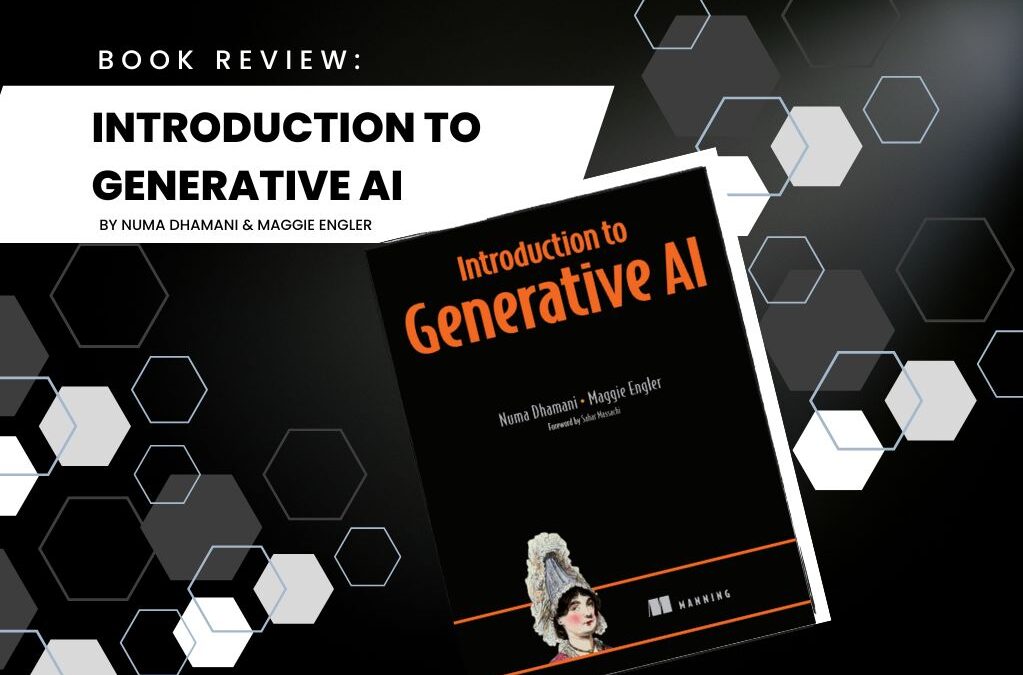
As the world of artificial intelligence (AI) rapidly grows in popularity and notoriety, “Introduction to Generative AI” by Numa Dhamani and Maggie Engler serves as a significant beacon for beginners and experts alike. This book provides a broad and extensive overview of Generative AI, with a particular focus on Large Language Models (LLMs), in which Dhamani and Engler unpack its complexities in an accessible manner. The authors’ intent to educate, create awareness, and advocate for the ethical and responsible use of AI is clear and compelling.
In this review, we’ll break down the key elements of the book and highlight some of its strengths and weaknesses.
Informing to Understand
At the core, the book dives into the intricacies of what makes LLMs tick — from the pre-training phase to the exploration of web data and to the algorithms that contribute to the output. Notably, the coverage of emergent abilities, like zero-shot and few-shot learning, alongside considerations, like potential inclusion of Personally Identifiable Information (PII), stereotypes, or derogatory data, provides a balanced view.
A Timeline of Breakthrough Events in NLP
1944
Warren McCullough and Walter Pitts, a neuropsychologist and mathematician respectively, develop the first neural network models.
1950
Alan Turing proposes an “imitation game” as a test of machine intelligence, which will come to be referred to as the Turing test.
1966
Joseph Weizenbaum releases ELIZA, a therapist chatbot.
1970-80s
Symbolic systems are most popular in NLP, while reduced funding and few research breakthroughs mark the period later known as an “Al winter.
1990s
Statistical models begin to set new benchmarks on NLP tasks, and the first deep, recursive neural networks are trained.
2006
Google Translate becomes the first commercially successful NLP system.
2013
Google researchers introduce word2vec, the first model to produce word embeddings, which will be widely reused for encoding words for NLP tasks.
2014
The attention mechanism is conceptualized.
2017
Google Brain researchers introduce the Transformer architecture.
2018
OpenAl releases GPT-1, their first Generative Pre-trained Transformer model.
2019
OpenAl releases GPT-2 after a months-long delay over concerns about misuse; Google releases BERT, another large Transformer model that will also be used widely to create word embeddings or representations.
2020
OpenAl releases GPT-3.
2022
OpenAl releases ChatGPT, which achieves overnight popularity.
Reference: “Introduction to Generative AI” by Numa Dhamani and Maggie Engler, p.10, Figure 1.3
Capabilities and Applications
From language modeling and content generation to coding and logical reasoning, Dhamani and Engler showcase the profound capabilities of LLMs. Real-world examples, including OpenAI’s ChatGPT and GitHub’s Copilot, are used to illustrate the stark realities of AI in action, providing readers a tangible connection to abstract concepts.
They also provide more personal applications of LLMs including Xiaolce, Replika, and Character.AI. These platforms facilitate interactions between humans and AI for companionship, romance, or entertainment, underscoring the importance of balancing the appeal of AI companionship with rigorous data protection measures.
Caution on the Data
To address the ethical dimension, the authors highlight the dual-edged sword of using open-source web data, which is potentially embedded with biases and/or hallucinations that lead to stereotypes or misinformation, respectively. With mechanisms, like post-processing detection algorithms and reinforcement learning from human feedback, the book does not shy away from discussing AI’s vulnerabilities and limitations.
The discussion extends into the implications of bias, hallucinations, and sustainability. They provide practical examples, including the precautionary tale of NEDA’s AI-driven helpline, Tessa. There’s an urge towards responsible AI governance, emphasizing the need for an independent body of experts to leverage its use ethically and to the broader population’s advantage.
Manning Publications offers a platform that encourages in-depth discussions about Generative AI, focusing on how AI applications can improve both the workplace and our daily lives, all while prioritizing ethical and responsible usage. Engage directly with the authors by joining the lively discussions in their liveBook. Learn more here.
Analysis
For curious readers, the “Introduction of Generative AI” has the following key highlights and considerations.
Highlights:
The book stands out for making the complex domain of LLMs accessible to a wide audience by providing an array of real-life use cases.
It’s a clear and resonant call for responsible innovation by providing pathways towards ethical governance in AI development and deployment.
Considerations:
Those seeking in-depth technical knowledge or how-to guides on developing LLM may find the scope limiting.
Its high-level overview prioritizes breadth over depth, potentially leaving technical enthusiasts desiring more granularity.
Final Thoughts
“Introduction to Generative AI” serves as a fundamental guide that effectively unravels the complexities of a complicated topic. Dhamani and Engler have produced work that is not just educational but also a call to action for ethical responsibility in the AI arena. It invites readers on all levels to ponder not just the capabilities but the broader implications of deploying Generative AI in everyday applications.
While the book’s treatment remains high-level, its real accomplishment is in spotlighting the myriad considerations — technical, ethical, and environmental — that come with integrating LLMs into our digital ecosystems. For anyone interested in understanding Generative AI’s landscape without getting lost in the technical weeds, this book offers a valuable and insightful starting point.
Let’s continue the conversation. Has your organization taken steps to establish internal controls or guidance regarding the use of LLMs, or any AI technology, in your organization? Is your organization ready to embrace a technology that has taken the modern world by storm?
What truly drives us? Is it the primal force of survival? Is it the promise of reward or the threat of punishment? Or could there be a deeper, more intrinsic force at play in our daily work and lives? In his book “Drive,” Daniel H. Pink sets out to answer these questions, taking the reader on an exploration of human motivation, from the dawn of time to the 21st-century workplace. Pink’s narrative reveals the outdated models of motivation and presents a refreshed, research-backed framework—Motivation 3.0—crafted for the modern world. Here, we’ll unpack each layer of Pink’s paradigm shift from Motivation 1.0 to Motivation 3.0. “Drive” provides a roadmap for leaders, managers, and professionals who seek to unlock the full potential of their teams and themselves.
Try to pick a profession in which you enjoy even the most mundane, tedious parts. Then you will always be happy.
– Will Shortz Puzzle guru
Presenting Motivation 1.0 as the Essential Starting Point
Motivation 1.0 emerged as humanity’s foundational drive system, deeply rooted in our survival instinct. It guided our ancestors through the harsh and unforgiving landscapes of the early world, where the primary concerns were avoiding danger and securing basic necessities like food, water, and shelter. This primal nature of Motivation 1.0 is instinctual, operating on the simple but powerful mechanism of reward and punishment to ensure survival. It’s a testament to the resilience and adaptability of humans, driving us to overcome challenges and thrive in diverse environments. As societies became more sophisticated, there was a need to upgrade from this basic model to something more refined to align with the current times: Motivation 2.0.
Unveiling Motivation 2.0 and its Shortcomings
Motivation 2.0, the traditional ‘carrot-and-stick’ approach, was the popular management approach during the Industrial Age. It was a time when impersonal, routine, and mechanistic work demanded little more than a reliable, controllable human component. The system was simple: reward productive behavior, punish unproductive behavior. Although this approach is still applicable to some of today’s organizations, it has several loopholes that cannot hold up in the face of the complex, creative, and innovation-driven tasks of the modern workplace. Pink dissects compelling and evidence-based reasons why carrots and sticks don’t work. He showcased how this system not only fails to inspire but also can, in certain instances, stifle performance, creativity, and ethical behavior. Thus, the need for another upgrade in the operating system was required. Pink refers to this upgrade as Motivation 3.0.
The Rise of Type I Behavior in Type X World
Today’s revolutionizing workplace dynamics means acknowledging the need for a new type of motivation—Motivation 3.0. The backbone of Motivation 3.0 is based on certain behaviors, specifically Type I and Type X Behavior, with focus on the relevance of the former. Type I Behavior is where individuals are driven by internal motivations, such as the satisfaction of personal growth, the pursuit of meaningful work, and the desire to contribute to a greater good. Here, Pink introduces a radical shift—fostering environments that promote autonomy, mastery, and purpose. Pink does not disregard the effectiveness and applicability of Type X – external reward-based motivation – to inspire workers to perform. However, Type X Behavior excels when the work is more routine and repetitive. This type of work is far from the creative and innovative work required in most of today’s workplaces.
Nothing is more important to my success than controlling my schedule. I’m most creative from five to nine A.M. If I had a boss or co-workers, they would ruin my best hours one way or another. – Scott Adams Dilbert creator
The Principles of Motivation 3.0
Motivation 3.0 is not just a conceptual upgrade; it’s a framework embedded with actionable insights. Here are the pillars that underpin this modern motivational approach:
The desire to do something because you find it deeply satisfying and personal challenging inspires the highest levels of creativity, whether it’s in the arts, sciences, or business. – Teresa Amabile Professor, Harvard University
Autonomy at the Core
Employees crave the independence to manage their own work schedules and processes. By granting autonomy, leaders instill a sense of ownership and passion that can never be derived from an external command or pressure.
Pursuing Mastery
The quest for personal excellence is deeply rooted in human nature. In the pursuit of tasks, people yearn to grow and master their skills. In a Motivation 3.0 environment, work is reconfigured not as a monotonous chore but as a pathway to continuous development and achieving ‘flow.’
The Pull of Purpose
Beyond the ‘what’ and ‘how’ of work, lies the critical question of ‘why.’ Purpose is what propels individuals to work with passion, to have a stake in the outcome, and to be part of something that endures beyond the day-to-day toils.
Motivation 3.0 in Action
In a recent case study, I supported a Platform Director who sought to address low productivity within their team by tracking individual task lists. However, this approach backfired as it was seen as micromanagement and raised concerns about the use of data. Working collaboratively with the Director, we pivoted towards a more empowering strategy: asking each team to conduct their own root-cause analysis to understand why commitments were being missed and identifying areas for improvement in future iterations.
This alternative approach fostered autonomy within the teams, allowing them to engage in problem-solving based on their expertise. It also promoted mastery by encouraging continuous improvement through experimentation, observation, and adjustment in each iteration. By fostering a culture of collaboration and empowerment, leaders can drive sustainable growth and success within their organizations.
I believe wholeheartedly that a new form of capitalism is emerging. More stakeholders (customers, employees, shareholders, and the larger community) want their businesses to … have a purpose bigger than their product. – Mats Lederhausen Investor and former McDonald’s executive
Embracing the Future of Work with Motivation 3.0
Traditional approaches to motivation are no longer enough in today’s rapidly evolving workplace. Motivation 3.0, based on autonomy, mastery, and purpose, is the key to success and fulfillment for your team. So let’s revolutionize how we motivate our teams! Create a workplace where personal accountability and growth, continuous learning, and meaningful contributions are the norm. Be the leader who drives this change and shapes a brighter future for all.
Leaders hold the key to this transformation. Empower your teams to drive towards success by fostering creativity, pursuing passions, and pursuing excellence with purpose. The future awaits – are you ready to unleash the true potential of your team’s intrinsic motivation?
Explore More: Uncover the Key Insights from Drive
If you found the book review on Drive inspiring, get ready to delve deeper into Motivation 3.0: 3 key pillars, how to develop your own Type I behavior, and the practical application of motivating people in various respects of our personal and professional life. Stay tuned for our next installation to help unlock your potential as a leader or manager.
Feel free to connect with us if you need any assistance with motivating your team.
This presentation will show how a large oil and gas company was able to transform itself to become a nimble start up powered by self-organizing agile teams while guided by a Lean Portfolio Management (LPM) framework. This allowed the enterprise to tie the execution the work to the enterprise strategy. The journey was not easy. It required a mindset shift and establishing a safe environment for continuous learning. By leveraging external expertise, adopting a lean and agile approach, and portfolio alignment tools, the enterprise was able to scale its transformation, drive consistency across the organization, and continuously evolve to meet the needs of its customers and the ever-changing landscape of the business.