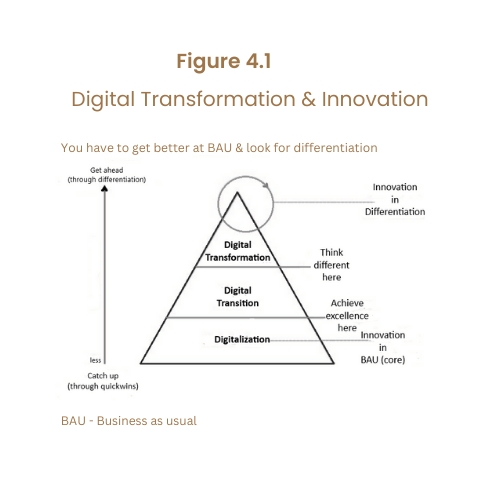
Navigating a Digital Transformation demands a solid strategy, transcending the outdated “Too big to fail” belief. History has shown us with Kodak, Nokia, MySpace, and Blackberry that complacency is not an option. Agility is imperative. Many organizations embark on this journey, but only a fraction succeed. It requires a lot to achieve the highest level of digital maturity. This is not about superficial adjustments or merely focusing on BAU (business as usual) but a comprehensive overhaul. It requires a genuine metamorphosis of resources, processes, culture, and mindsets. As Nassim Nicholas Taleb articulates, becoming antifragile is essential—organizations need the capability not just to endure change but to excel within it.
Why This Book?
Neil Perkin and Peter Abraham‘s “Building the Agile Business Through Digital Transformation” serves as an extensive guide for organizations aiming to embrace agility. It delineates the path to becoming an innovative organization that creates differentiating products and services. While not all-encompassing, the book delivers invaluable insights and strategies vital for any transformation leader. As a Digital Transformation Consultant, I regard this book as an indispensable resource, offering expert guidance through concepts, frameworks, and real-life use cases on cultivating an agile business.
Structure of the Book and This Review
The book offers flexible reading options. Beginners in digital transformation and agile practices should follow the authors’ recommended sequence for better comprehension. More seasoned transformation leaders might prefer to jump directly to Part Five, which integrates the tools, techniques, frameworks, examples, and concepts discussed in Parts One through Four. You can then explore the earlier sections for specific details as needed. This book review presents the 5 core dimensions for becoming an agile business, highlights the key concepts for each agile business component, and warns of potential pitfalls for companies where digital transformation has not succeeded.
Key Components of an Agile Business
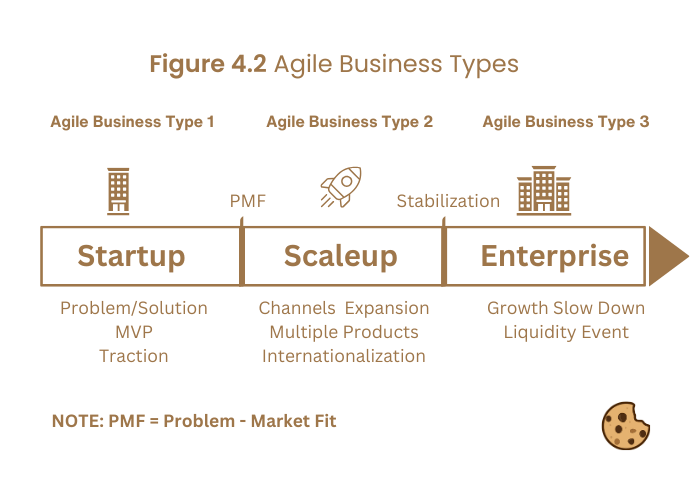
One of the key information to help transform an organization is to understand its agile business type. It helps the organization determine its digital business maturity (see Figure 4.2 Agile business type), which supports the creation of the organization’s blueprint to create its own digital transformation roadmap. According to Perkin and Abraham, the transformation journey is complex and multifaceted, but regardless the agile maturity of a business type – startup, scaleup, and enterprise – transformation leaders must account for these 5 key components:
Startup: Focused on early-stage experimentation.
Scaleup: Growth-oriented, expanding capabilities.
Enterprise: Mature organizations embedding agility in processes.
1. People
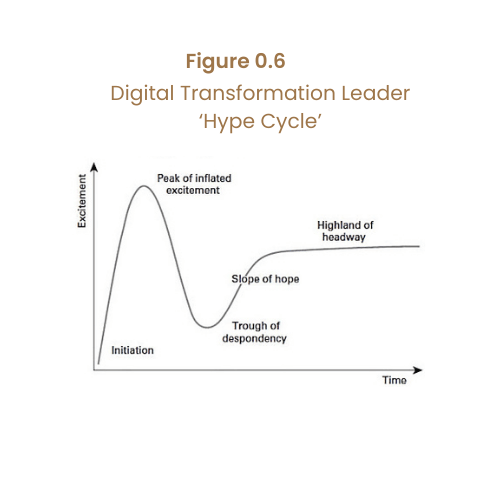
A common trend among organizations is a sudden peak in interest in the beginning of the digital transformation initiative. There is curiosity and strong interest among team members. Although every person likes to do well, the ‘hype cycle’ (Figure 0.6 Digital transformation leader ‘hype cycle’) usually takes a dip after the team realizes the complex challenges they have to navigate and overcome in this journey. The authors provide great ideas to maintain interest and consistently make progress towards becoming an agile business beyond the initial ‘hype’. Some of these ideas are as follows:
It is crucial for everyone to share a vision and have the autonomy to execute on these objectives because it promotes inclusivity and ownership.
Every person’s effort must serve the customer.
It is important to identify advocates to promote the endeavor and recruit supporters.
2. Principles
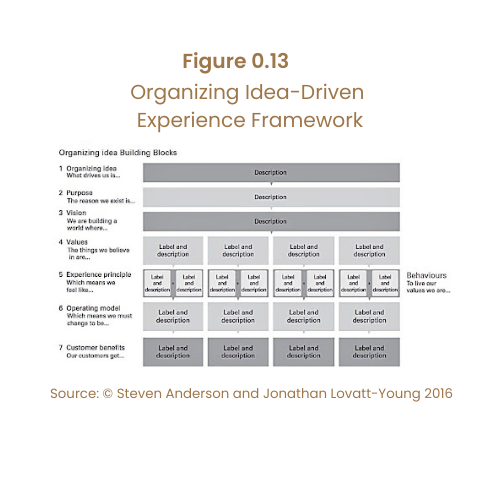
Digital transformation is a multifaceted undertaking with numerous intertwined dependencies. Crafting a playbook to cover every possible scenario and response is impractical. Instead, the organization should align with a unified vision and direction for change; the organization must be oriented around foundational principles, values that shape everyone’s behavior. This approach nurtures a sense of tribalism, fostering shared loyalty and purpose for diverse teams working concurrently and on varying initiatives. The authors offer the idea-driver experience framework (see Figure 0.13 from the book) as a tool that organizations can use to identify and align everything and everyone.
3. Process
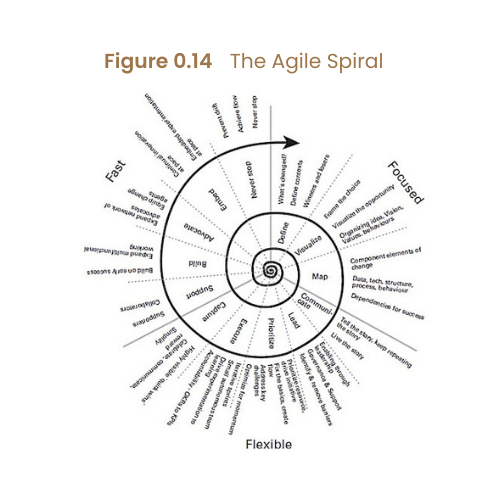
In the quest to create a more digital-native framework, organizations aim for speed, focus, and the environment and culture that enables transformative change. Today, organizations must learn to operate fast, iteratively, and in a non-linear model (i.e., run multiple elements concurrently). There is no specific beginning, middle, and an end. It operates in a continuous state of organization flex and flow, which best describes the agile spiral model.
The 3 foundational components of the agile spiral model is summarized below:
Situation and story – create the reason and impetus for change by leveraging storytelling to appeal to people’s senses and bring them along in the journey.
Energize and enable – do not just execute but also energize the drivers of change, prioritize the work, remove barriers, build momentum, and amplify positives.
Flex and flow – support the effort with a network of supporters and collaborators , build on early success, create as many advocates, embed constant experimentation into resourcing, and never stop working to resist inertia (non-action or losing interest).
4. Practice
For true transformation to occur, something more fundamental than best practices must happen. Perkin and Abraham emphasize the need to identify the factors that shape everyday behavior. Author Clive Hyland has written about a simple behavioral model that is a helpful tool in recognizing ways to appeal to people’s way of thinking, senses, and intuition to drive the most fundamental and long-lasting change in the organization. This technique is a good tool to use for changing an individual’s habit and can be leveraged to transform an entire organization’s culture and behavior.
Think – which includes the domain of logic, reason and rational processing.
Feel – which touches the sense, emotions, relationships, connections.
Know – which consist of the domain of instinct, intuition or gut feel.
5. Pace
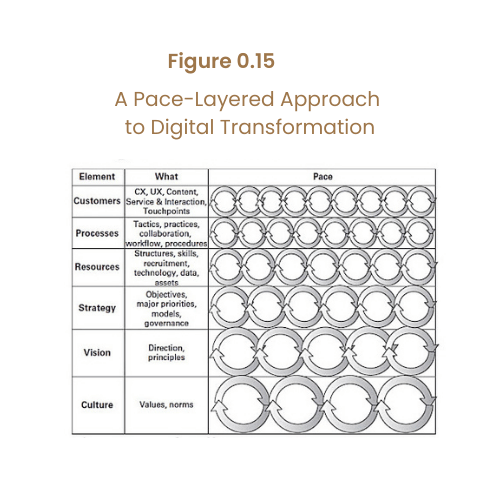
According to Perkin and Abraham, organizational change does not happen instantaneously, and it happens at different times with different pace. There’s a combination of addressing technical challenges and adaptive challenges, which solves more complex and fundamental problems. They are different and cannot be solved rapidly; they will require experimentation, learning, and behavioral change across the organization. Recognizing and understanding the elements and pace of change helps the organization plan, execute, and adjust efforts to drive transformative shifts for an organization to become a true agile business.
Conclusion
Digital transformation is more than upgrading technology; it requires drastic and fundamental changes (e.g., cultural shift). This book helps transformation leaders create their transformation roadmaps through the 5 key components and leveraging the framework, tools, techniques, and real-life examples. For those ready to lead (or are leading) their organizations into the future, this book is an essential resource. Explore its pages to not only uncover the insights and actionable strategies for your digital transformation journey but also to create your organization’s own agile transformation roadmap.
For today’s video, we’re bringing you bite-sized, insightful conversations with industry leaders, teaching concepts and providing you with actionable steps in around 10 minutes or less. In today’s episode, we’re excited to welcome back Cynthia Mary Thomas, Product Manager at Egen.ai. Cynthia shares her expert insights on staying calm, focused, and adaptable amidst change—essential traits for fostering innovation and staying competitive in today’s dynamic market.
✨ In this video, you’ll learn: Key qualities every leader needs to adapt successfully to change
How to create an environment that encourages innovation and adaptability
Practical techniques to stay focused and resilient when facing shifts in the market
Whether you’re a seasoned leader or an aspiring one, Cynthia’s tips are sure to provide you with valuable strategies to lead with confidence and resilience.
Don’t forget to subscribe and hit the notification bell so you never miss an episode!
Follow us on Spotify and Amazon Music: @InBiteSize
Are you leading the AI revolution, harnessing its power to optimize your workflows, data, and processes? Or is your organization grappling with the absence of an AI strategy? The impact of AI has never been more profound. Businesses worldwide are striving to tap into AI’s potential and navigate its rapid advancements. Staying updated with the latest knowledge and skills is crucial. But with an overwhelming flow of information and the complexities of AI, where should you begin? The solution lies in crafting a personalized learning framework tailored to your needs. This strategy will not only help you stay organized and focused but also maximize your learning potential.
Key Components of Your Learning Framework
1. Assess
Begin by assessing your current AI knowledge and skills. Take an honest look at what you know and identify areas for improvement. This assessment will serve as the foundation for setting specific, achievable goals. Once you’ve identified your goals, develop a clear plan of action. Whether it’s mastering machine learning algorithms or exploring natural language processing, your roadmap should guide you towards your desired outcomes. Have a look at the AI Learning Assessment.
2. Learn
Everyone has a unique learning style, and it’s important to explore various learning opportunities that suit your preferences. Visual and tactile learners benefit when they can see or physically interact with the material, while auditory learners might prefer listening to information or accompanying their studies with calming music. Regardless of how you learn best, there are numerous courses and resources available both online and in-person to support your journey:
Online Courses: Platforms like Coursera, edX, and Udacity offer in-depth courses on AI, taught by industry professionals.
AI Tools: Engage with powerful AI tools such as TensorFlow, PyTorch, and Jupyter Notebooks to acquire practical experience.
TensorFlow provides a comprehensive ecosystem for building machine learning models, PyTorch offers dynamic computation graphs for flexible experimentation, and Jupyter Notebooks enable interactive coding and visualization, helping you acquire practical experience in developing and deploying AI solutions.
University Programs: Consider joining university programs or workshops that offer structured learning paths and mentorship. Many certificate and diploma programs are available to enhance your expertise. Examples of these are Georgia Tech’s Master’s in Analytics
3. Network
Expand your knowledge by leveraging professional networks. Join AI-focused groups, attend symposiums and conferences, and participate in Meetups. Engaging with practitioners and other professionals will expose you to new insights, diverse perspectives, and potential collaborators. Networking is an invaluable component of your learning framework, offering both inspiration and guidance.
4. Integrate
To truly internalize your learning, incorporate AI tools into your daily tasks and projects. This practice will bolster your AI proficiency and enhance your productivity. From simple note-taking to complex self-healing AI applications, a wide array of use cases awaits exploration. By integrating AI, you’ll uncover tools that streamline your work, particularly in administrative and routine tasks such as organizing, testing, data extraction, and processing. This allows you to focus on high-value activities like strategizing, collaborating, motivating, and synergizing, ultimately leading to a more efficient workplace and better products and services in less time. Many companies are experimenting with new AI-driven products and are keen to learn from users like you to align their features with your needs. Seize this opportunity to get involved and be a trailblazer.
Challenges in Developing Your Learning Framework
Creating a personal learning framework comes with its own set of challenges:
Finding the Time: Balancing learning with other responsibilities can be demanding.
Developing Discipline: Staying committed to your learning goals requires discipline and perseverance.
Determining Priorities: With so much to learn, figuring out what to focus on first can be overwhelming.
To overcome these challenges, dedicate specific time for learning, establish realistic milestones, and remain adaptable. Adjust your plan as necessary to integrate new interests or accommodate changing circumstances. In my experience, numerous organizations I work with promote the 20% rule, which encourages dedicating 20% of one’s time to learning activities. This could entail reading a new book, enrolling in a course, or exploring new ideas unrelated to current work assignments. Exploratory and experimental learning frequently results in innovative products. This is evident in Google’s creation of Gmail, Meta’s introduction of the ‘like’ feature on Facebook, and Atlassian’s development of the Jira Service Management portal.
If you’re struggling to find time to learn, consider the next time you check your phone, play video games, or binge-watch Netflix, think about the time you’ve spent on these activities. Can you carve out a fraction of that time for your own learning and growth? You can still do these things, but consider setting aside just 15 minutes a day for learning. I used to defer my reading, but I always seemed to find time for online reels. To keep myself accountable, I started a book review section on www.InBiteSize.com. Each month, I review a book on topics that might interest transformation leaders like me. I can’t read a whole book in one sitting, but I make time to read each day. Eventually, I finish the book in a few days or weeks. Now, when I’m traveling or waiting at the doctor’s office, I bring out my book.
Benefits of Using Your Learning Framework
Despite the challenges, employing a structured learning framework offers numerous benefits:
Self-Awareness: It provides a clear gauge of where you are in your AI journey and where you aspire to be.
Habit of Growth: Cultivating a habit of continuous learning fosters personal and professional growth. This is applicable for learning AI and for other types of learning in the future.
Adaptability: Your framework evolves alongside your learning, allowing you to stay current with advancements in AI.
Creating a personal learning framework is a strategic move towards mastering AI, empowering you to take control of your education and equipping you with the tools for success. It sets you on a path of lifelong learning and growth.
There’s no better time than now to begin, as many organizations are just starting to discover practical, market-worthy applications for AI. The race has begun, but it’s still in its early stages. Begin crafting your framework today, and soon you’ll be well on your way to becoming an AI expert.
Our premise for this season is to have a casual conversation with a leader in the field where we teach a concept and provide other thought leaders, like you, with actionable steps in roughly 10 minutes or less.
In today’s episode, we have Shivang Shekar, a Product Manager at Egen.ai, who shares his product motto and three strategies to ensure we deliver value to our customers.
Learn how to be a better product leader by:
Owning your product narratives
Focusing on a segment of your customer
Having a beginner’s mind.
Follow us on Spotify and Amazon Music: @InBiteSize
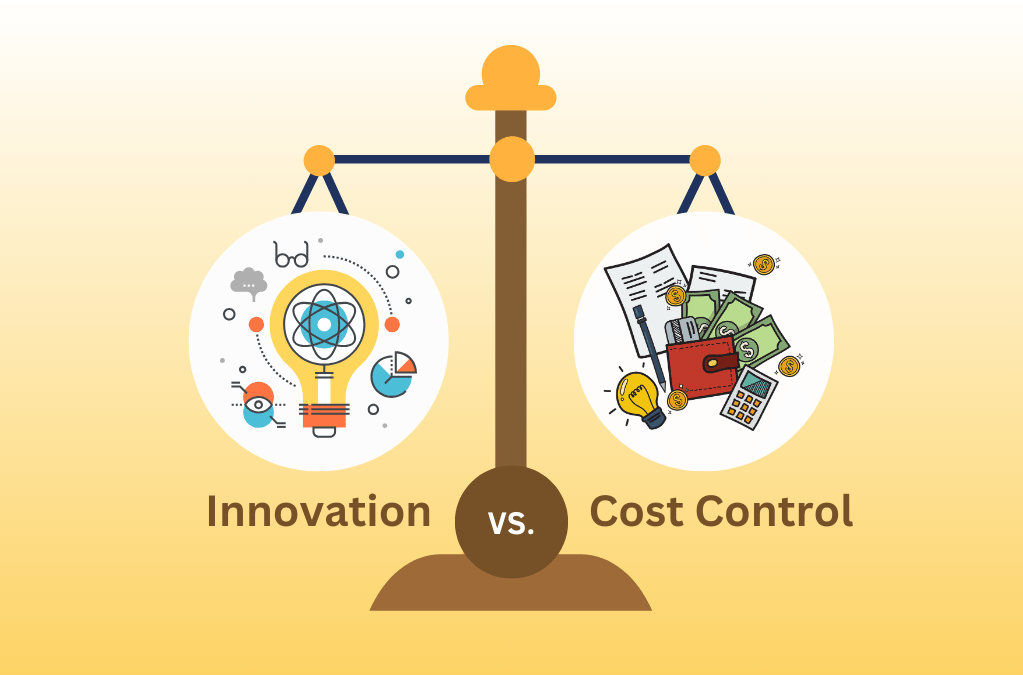
Imagine being the CEO of your own company with a $10 million budget, faced with numerous innovative ideas and ongoing initiatives to fund. How would you allocate your budget? Which investments would you prioritize? Running a successful business requires more than just developing and selling products; it involves making strategic decisions. Balancing innovation with cost control is a significant challenge. Innovation fuels growth but often comes with high costs. The key is finding a balance that enables advancements without risking financial stability. This article explores strategies like the Lean Start-up approach and participatory budgeting through lean portfolio management to achieve this balance.
Understanding the Landscape: Challenges and Strategies
Balancing innovation with cost control presents several challenges:
Knowing which product to invest in: Companies need to identify which products or services warrant investment to maximize returns.
Managing investments across horizons: Spreading investments wisely between short-term, medium-term, and long-term goals is essential.
Controlling cost overruns: Keeping expenses within budget while innovating can be daunting.
Deciding to pivot or persevere: Continuously assessing whether to continue with the current strategy or make changes is vital for success.
To tackle these challenges, organizations can utilize Lean Portfolio Management (LPM). LPM offers a versatile approach that integrates frameworks, tools, and techniques to aid in investment prioritization, governance, and achieving operational excellence. The tools and techniques included are as follows:
Investment by horizon
Participatory budgeting
Lean budgeting
Lean start-up approach
Leveraging Lean Portfolio Management (LPM)
LPM is a strategic approach that aligns strategy with the execution of engineering and operational activities. It helps organizations to prioritize initiatives and projects based on their potential value and strategic fit, ensuring efficient allocation of resources. Key elements of LPM include:
Decision-making for investment horizons: LPM helps in evaluating and prioritizing projects across different horizons.
Financial management: Provides a framework for tracking investments and returns, enabling better financial control.
Operational excellence: Ensure the consistent and proper implementation of strategic initiatives, aligning them with company standards.
Investment by Horizon
Investing by horizon involves categorizing investments into short, medium, and long-term goals. This approach helps in managing financial risks and aligning innovation with strategic objectives.
Short-term investments: Focus on enhancing current offerings.
Medium-term investments: Develop new products or services expected to generate revenue within a few years.
Long-term investments: Invest in high-risk, high-reward innovative projects that could transform the industry.
Organizations can prioritize tasks across different horizons, enabling a diversified portfolio and budget allocation that encourages innovation.
Participatory Budgeting (PB)
PB engages employees, customers, and key stakeholders in the budget allocation process by enhancing transparency and accountability. By incorporating diverse perspectives, strategic decisions are informed and well-rounded. This method can also be applied to prioritize features and business capabilities during the product discovery process. (More about PB – https://www.participatorybudgeting.org/about-pb/)
Lean Budgeting
Another framework for financial management is lean budgeting. Lean Budgeting focuses on empowerment, transparency, continuous improvement, and waste reduction. This is done through the following key components:
Empowering teams: Teams manage their budgets, making them more flexible and accountable for financial decisions.
Transparency: Encourages open communication about resource allocation and financial constraints. By making the work and cost visible, it creates awareness and accountability across the organization.
Innovation within constraints: Teams are motivated to innovate efficiently within budget limits and promote the economic approach to decision-making, project selection, prioritization, execution, spend, etc.
The Lean Start-Up Approach
To support operational excellence, the Lean start-up approach emphasizes iterative development and customer feedback loops. This method allows companies to quickly test and validate ideas, minimizing resource wastage. Here’s how it helps address key challenges:
Cost overruns: By focusing on MVPs (Minimum Viable Products), companies can reduce the risk of overspending on unvalidated ideas while double-downing on products that proved to be desirable, viable, and feasible.
Investment management: Regular feedback and iterative processes ensure that only high-valued products and services continue to receive funding. Each product iteration undergoes a review to determine whether to pivot or persevere.
Case Study and Implementation Insights
Lean Portfolio Management in Action
A healthcare company used Lean Portfolio Management to decide on investment horizons. To simplify initiative prioritization, each initiative was categorized by horizon and priorities were done based on these categories. Budgets were set by horizon and by value streams.
Each implementation team organized by value streams – aligning the development teams to the products and services they build/support. Each value stream manages their budgets within set thresholds. By aligning finance with this new model, they recognized costs (e.g., Opex vs. Capex) based on agile product development’s iterative approach.
This organization took a holistic view to their lean portfolio management model that allowed them to build innovative products without losing sight on the importance of cost management to ensure the longevity of the company.
Future Trends and Concluding Thoughts
The landscape of innovation and cost control is continuously evolving. Emerging trends such as AI-driven project management and real-time financial analytics are poised to further enhance the balance between innovation and cost control.
In conclusion, balancing innovation with cost control requires a structured, strategic approach. By leveraging strategies within lean portfolio management, companies can drive innovation and meet customer needs while maintaining financial stability. It requires an investment from the organization and taking a holistic approach to create an innovative and cost-conscious ecosystem.
Call to Action
Ready to implement these strategies in your organization? Start by evaluating your current approach to innovation and cost control. Explore our resources and tools to help you on this journey. Invest in developing organizational capability by leveraging industry experts, course offerings, and getting hands-on experience. Balance the scale and achieve economical sustainable growth in today’s dynamic business landscape.