Human beings are constantly faced with a barrage of decisions, ranging from the mundane to the monumental. A decision requires a choice among a set of alternatives and inevitably, carries consequences, both positive and negative. In product management, decision-making is a critical component of the job requirements from product visioning to features prioritization and from making trade-offs to creating evolutionary solutions. Effective decision-making fuels product innovation, solves complex problems, and yields positive business outcomes. In this blog post, we will explore the insights on decision-making presented by Malcolm Gladwell in his book, Blink, and how it applies to product management.
1. Expertise
Gladwell highlights the importance of expertise in decision-making. Expertise is the result of prolonged practice and experience within a specific domain. Many successful decision-makers, such as doctors, sports coaches, salespeople, and firefighters, are experts in their fields. Their expertise allows these individuals to make decisions effortlessly. This is often done with great precision without being able to explain their decision-making process. We sometimes say that these people have “the eye for it”. This is clearly depicted by a few experts that Gladwell pointed out in the book, one of which is Vic Braden, a tennis coach. By looking at a player’s form, Branden can accurately predict whether the tennis playe is about to make a mistake or score an Ace. When asked how he does it, he cannot tell you exactly what he saw, but with his experience, he can foresee the success rate of an athlete with such a high level of accuracy. In a product management context, incorporating expert perspectives lead to innovative products and services that may become market disruptors. Expertise could come from a blend of domain knowledge, market experience, and technical solution expertise.
2. Gathering Information
Gladwell also highlights the importance of gathering information before making a decision. A well-informed decision is based on relevant data collected from a variety of sources—only to a certain extent. One case study, presented by Gladwell, was from the Cook County Hospital ER in Chicago, which is ran by Dr. Brendan Reilly. Dr. Reilly promoted the use of the Lee Goldman decision tree algorithm to help diagnose a patient’s likelihood of having a heart attack (aka acute myocardial infarction). Comparing the results of doctors using this algorithm showed a faster and higher accuracy rate than the more conventional, and more costly, process of diagnosing a patient. When it comes to product management, gathering information involves conducting market research, taking feedback from customers, and gauging the competition. This Information provides the decision-makers with the latest trends and market changes. At the end of the day, it is the product manager’s responsibility to process the data and translate it to a tactical body of work that the teams can implement. The goal is to create products and services that customers will want and pay to have. In this digital environment, having good enough information is more valuable than waiting for the data to be perfect.
3. Instant vs Time/Space
In Blink, Gladwell emphasizes the importance of quick decision-making. He claims that decisions made in the blink of an eye can often be just as accurate as those made over an extended period of time. Gladwell’s focus on quick decisions is practical for product managers who often face high-pressure, time-constrained situations. That said, making quick decisions isn’t a universal rule. In some scenarios, taking time and creating space to think can lead to better decision-making outcomes. It’s important to strike a balance between speedy and well-thought-out decision-making and quick, blink of an eye decisions. To help with this balance, product managers who build products within an agile framework are allowed to work iteratively and switch between well thought-out vs. quick decisions. For example, each iteration is time-boxed to allow product management and the implementation team time to deliver value in small increments to their customers. This lends to shorter and faster learning cycles in which the team receives continuous feedback in each delivery. Feedback from customers’ comments and behaviors provide insight on whether to pivot or persevere on the current product/service development and delivery process. This saves time and monetary investment and allows the team to only focus on building products and services that the customers truly want. In Mr. Gladwell’s words, it’s important to strike a balance. There needs to be a balance between instinctive versus deliberate thinking.
4. Context Matters
Gladwell also explores the context in which decisions are being made. Decision-makers may fall into a trap of making decisions based on “not so accurate” information. The source and manner of which the data or how data was retrieved is crucial to the context it provides. Case in point is the Coca-Cola vs. Pepsi sip test. There was a time when Coca-Cola decided the need to create New Coke. Based on extensive sip tests in various cities across the US, the testers seem to prefer Pepsi over Coke. This led to the Coca-Cola company to think that they needed to sweeten their formula, which seems to be the deciding factor for sip testers. However, this product was a complete flop. Coca-Cola’s management team realized that the sip test did not represent how Coke’s original patrons normally drink the product. In fact, Coke is known for its extra fizzy content, which is only active during the first minutes of opening a can or a bottle. During the sip test, samples were usually sitting out in the open for a long period of time before the actual sip test was conducted. As a result, the sip test results provided a different context than how the customers actually consumed the product. This situation should hit home to the product discovery process, which is crucial to driving important decisions on what features and functionalities should be incorporated to existing products or if there’s a need to diversify with alternatives. Doing the Gemba walk is just one of the many techniques that product management can do to get solid information. This means product managers or their representatives observe, or even participate, in the customer’s experience in order to gain insights as to the nature of the customer’s work and the challenges or opportunities that the experience brings to light.
5. Not Bias, Not Prejudiced
Lastly, Gladwell talks about the negative effects of biases and prejudices in decision-making. Biases can cause a decision-maker to overlook certain facts or make a choice based on personal opinions rather than cold facts. Gladwell provides several examples of how bias and prejudices resulted in negative results, while the absence of it led to revolutionary changes. One of these positive changes was with the symphony audition. By doing screened auditions (musician’s identity is hidden behind the screen while auditioning) Abbie Conant, trombonist for the Royal Opera of Turin, and Julie Landsman principal French hornist at the Me were selected to be first chairs on previously considered as male-only instruments. In product management, removing bias from decision-making creates rational and objective product decisions. This is done by using a variety of techniques, such as Behavior-Driven Development (BDD), Design Thinking, Voice of the customer, and Canary Testing.. This promotes the creation of solutions that the customers really want rather than those based on what the product management thinks the customer wants. As an example, Behavior Driven Development (BDD) is a quality management approach used in software development. It is an extension of Test Driven Development (TDD). It promotes the creation of test cases before even building the solution. Initial tests will fail until the solution or body of work is completed and eventually passes the test based on the action/behavior that the customer expects from the solution. This aligns the solution with the customer’s needs rather than the developer or product manager’s expectations.
Conclusion
In conclusion, decision-making is an essential aspect of product management. Gladwell’s Blink provides insightful perspectives on how to make effective decisions in various contexts by using a five step approach. These five elements– incorporating expertise, gathering information, striking a balance between instant and time-consuming decision-making, considering the context, and ensuring that decisions are not bias or prejudiced– are all vital parts of effective decision-making. Ultimately, decision-making is not a one-size-fits-all approach, and product managers must tailor their decision-making strategies according to the specific product, stakeholders, and the ever-changing market landscape.
What’s the last book that left you thinking differently? Share your recommendations below! Be sure to take a look at our review of the book “The Tipping Point” by Malcolm Gladwell.
Mural is a digital workspace that helps distributed teams come together and get work done. What makes it effective is that it’s simple, easy to use, and visually appealing. With its low learning curve, Mural also allows you, and your team, to focus on being productive, fast. Plus, it’s fun! You will quickly enjoy collaborating with your team using this platform. In this blog post, we will show you how to use Mural to make your next endeavor more engaging and successful.
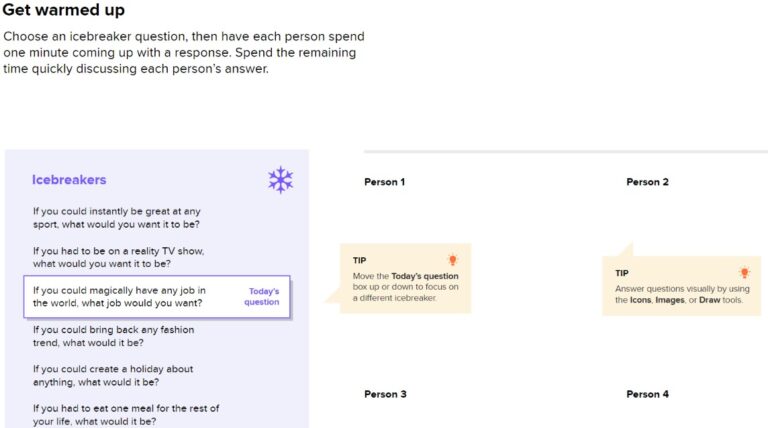
Figure 1.0 – Ice Breaker with 21 questions to get the team warmed-up and know each other.
What is the mural app and how can it be used to increase team productivity?
Whether starting with a blank Mural or building off one of the many existing templates, anyone can easily create Murals for various purpose: brainstorming, storyboarding, team retrospectives, strategic planning, training, as such. Teams can also take part in real-time online discussions around projects, making everything more interactive. These workspaces are designed so they are easy to share – meaning teams can participate as anonymous visitors in a Mural without requiring any paid license. While other collaboration tools usually require a paid license to be able to participate in the collaboration board. Once all the work is said and done, the content can be downloaded and shared as a pdf or image.
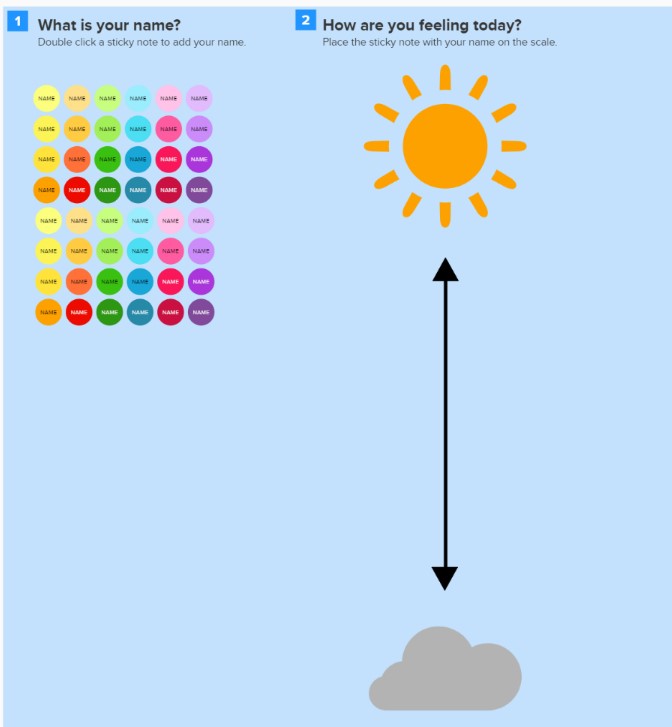
Figure 2.0 – Quick check-in to get participants to focus and learn the Mural activity.
What makes Mural unique is that it comes with a number of build-in features. For example, users can choose from a library of icons, photos, and frameworks. If you are feeling creative, you can simply draw in the drawing section to create visuals that communicate ideas effectively. The tables feature makes it easy to organize content into columns and rows, while the framework feature allows the quick creation of industry-standard templates to be embedded into the Mural. The content library allows users to quickly save and repurpose images, texts and import files for future use as well. All these features make the workspaces easy to navigate and can be created into aesthetically pleasing forums. While other collaboration tools also have some templates and other build-in functionalities, Mural has pioneered the collection of templates by opening up to contributors beyond just the Mural team.
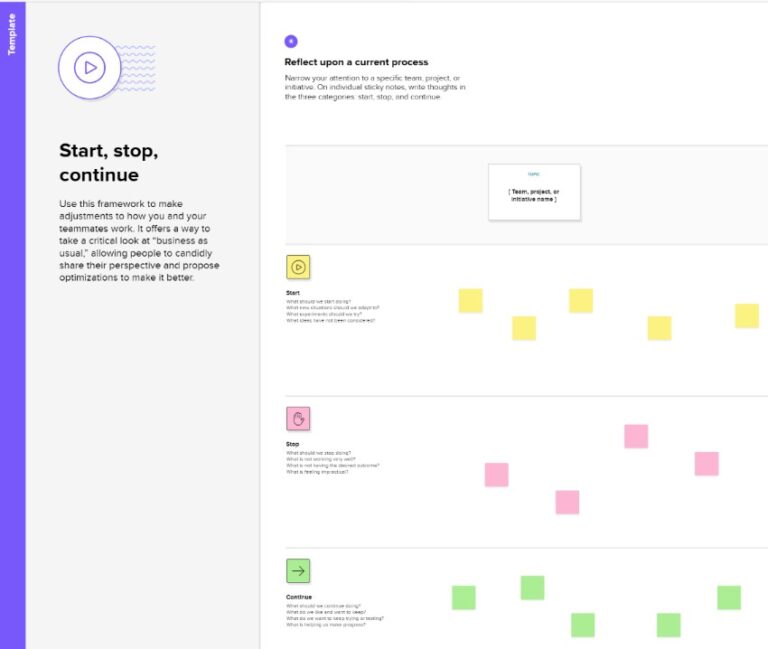
Figure 3.0 – Team Retrospective provide by Mural
The benefits of app.mural.co for facilitators and participants
With easy sharing capabilities, your organization can quickly and seamlessly get everyone in the same room onboard with what is happening even if they are miles apart. For participants, the Mural becomes an interactive medium where everyone can have a voice. It brings teams, or teams of teams, together synchronously and asynchronously. In addition, some Mural sessions can have multiple templates to support breakout sessions. Participants can work together in their own work areas, while having visibility to the other teams’ work. This is great if you need to share your work across multiple teams. This supports divergent and convergent activities that happen during prioritization, design thinking, and architecture design.
Mural offers facilitators of remote or hybrid teams an array of features that help bring teams together. With Mural’s voting feature, facilitators can easily gauge the opinion of team members on different ideas and solutions, allowing for effortless group decision-making. The outline feature allows facilitators to hide, display, and focus on the most important topics. The summon feature allows facilitators to guide mural participants to navigate to the appropriate section or topic. Facilitators can also share content with both members and visitors, downloading and sharing all content with ease. Private mode is available too, allowing participants to provide input anonymously. Facilitators, along with participants, can provide comments on edits and feedback – providing multiple ways to communicate effectively within teams. All these functionalities make it easier than ever before for teams to collaborate, work together, and document feedback with higher efficiency while having fun at the same time.
In conclusion
There are a myriad of options when it comes to online collaboration tools, with Mural as one of InBiteSize’s top choices. It is a cost-effective and easy to use tool. Its visual appeal makes it engaging for all involved, while its accessibility ensures everyone can use the platform with ease. With features such as brainstorming, design thinking, ice breakers, diagramming, and hosting virtual events, Mural offers a range of functions to help teams work together productively. Whether you’re looking for a way to collaborate more effectively or just want some fun in the workplace, Mural should definitely be your go-to choice! What are you looking forward to using Mural for? Contact us if you need help.
Ever wonder how something goes viral? What makes something so infectious? I am not mainly referring to a disease or a virus, but more on the lines of ideas or trends. Often we hear something or somebody going viral in social media. It’s often because of a major incident or disaster, a funny video clip, or a new mind blowing idea. When Malcolm Gladwell wrote The Tipping Point, the age of influencers and the addiction to TikTok was years away. But I find a co-relation to some of his thinking that explains how people are drawn to adopt certain ideas and spread it like wildfire.
The Tipping Point is an insightful read that delves into the fascinating phenomenon of when an idea, product or movement reaches a tipping point of success. This is when an idea drives people to action, when a product reaches a point of significant success, or a movement becomes a widely adopted norm. Through his research and analysis, Malcolm Gladwell has identified three important principles that affect this phenomenon: the Law of the Few, Stickiness, and Power of Context.
The Law of the Few suggests that an idea or a product’s success relies heavily on an influential but small group of people who have access to key networks and possess the ability to spread ideas rapidly across large networks. Referred to as “Connectors”, “Mavens”, and “Salesmen”, these individuals have the charisma and power to influence others and drive people to take action. They are able to establish relationships with key influencers in a particular market, identify successful trends among consumers, and share their product information quickly. For example, Connectors tend to know multiple people from various backgrounds which makes them great at networking while Mavens tend to be well informed on specific topics and can identify successful ideas; Salesmen have charisma and are able to communicate product information in a convincing manner in order to gain customers’ trust. These are like the influencers and the thought leaders of today.
Stickiness is another principle that plays an important role in reaching the tipping point. It focuses on making sure that ideas or products are memorable, thus compelling one to take action. This requires careful analysis of consumer sentiment and demand to be driven to not just try a product, but to develop brand loyalty. Gladwell provides interesting use cases, the likes of Sesame Street and Blues Clues, to explain the rationale behind the success of these shows. Both shows take into close consideration their target audience. Determine a clear objective of what they want to achieve and how to achieve it. A key component included listening to what their target audience are looking for. One of the key use case was convincing Yale University students to take the tetanus shot. Providing very compelling reason and asking students was not as convincing for students to think about getting the shot to actually doing it. It was only when the students were provided the building location and the tetanus shot schedule that the adoption rate significantly increased. It was through a simple way to package information and with the right circumstance that an idea or a product becomes irresistible.
Lastly is Power of Context which explains how our environment effect our decisions and behaviors. This has a stronger influence than our human traits, family influence, and personal beliefs. It is through seemingly insignificant aspects or small changes in our environment (e.g., situation, context) that can have dramatic effects — for better or worse — on an idea that can mobilize an entire community to drive a movement; a start-up product to become a mainstream commodity; a virus to spread and become an epidemic. This was demonstrated in the New York Subway Graffiti Clean Up in 1984-1990 and the Broken Window Theory with the New York Police. Both endeavor drove the tipping point for the New York Subway getting cleaned and for New York crime to decline in 1990. It contradicts what psychologists say about a person’s action/behavior is driven by an intrinsic force instead of the environment.
Overall, The Tipping Point serves as an incredibly useful guidebook into understanding what causes an idea, product, or movement to reach its point of success or widespread adoption. Through his analysis and research, Malcolm Gladwell provides key principles, backed by real-life examples, that endorses the driver of the tipping point. Highly recommended read! Contact us if you have any questions.