by Rochelle Tan | Jan 24, 2024 | InBiteSize
Building High-Performing Teams for Increased Productivity
Em Campbell-Pretty’s book “Tribal Unity” encourages readers to strive towards becoming high-performing agile teams to deliver value to customers consistently. Imagine an agile team where everyone feels and works together as one tribe: a family that rows in unison toward one direction, which leads to exceptional productivity. Sadly, only 2% of US organizations have achieved this level of delivery, as exemplified by the likes of Olympic gold medal teams and Apple Macintosh.
Campbell-Pretty outlines the essential elements required to build effective and motivated tribes. These include:
- Creating Great Teams: Encourage oneness, self-organization, and collaboration by communicating regularly.
- Building Strong Teams and Cultivating Your Tribe: Establish team identity, share common interests, invest in team-building activities, and foster cohesive relationships.
- Connecting with Leaders: Bring leaders close to the team and make them more relatable by allowing them to be vulnerable and show their humanity.
- Connecting to an Idea: Ensure everyone is aligned with the overall strategy, open to different perspectives, and willing to learn new ideas and gain insights.
- Sustaining Tribal Unity: Utilize data and metrics to maintain unity.
- Engaging Leaders: Create small wins to generate credibility and secure buy-in from leaders.
I had the privilege of being part of an organization that had a remarkable level of Tribal Unity. Having worked for over two decades, I can confidently say that such teams or organizations are rare. This experience came during my involvement in a cloud acceleration initiative at an Oil and Gas company. Our goal was to migrate thousands of apps to the cloud, establish the necessary infrastructure and services, and enable teams to efficiently utilize the new CI/CD* pipeline within MS Azure.
Although the initiative has now concluded, the most valuable aspect was the learning experience. It was an opportunity to observe and learn about the key elements that make a team successful, such as clear direction, supportive management, and empowered teams. Although not without flaws, the teams and team members worked together towards common goals and targets. This resulted in exceptional outcomes in every iteration: such as migrating 120 apps instead of the planned 100 in a single quarter.
On one hand, the success of this initiative was due to the sense of unity among team members. It felt like a big family, fostering strong trust among team members. We all trusted each other and worked together to achieve our common goals. Team members pitched in wherever help was needed, regardless of their job descriptions. I have witnessed developers helping with testing, QA specialists giving sprint demos, and scrum masters providing team training. On the other hand, our team does not lie in wait for the person with the highest position to make decisions. Our team members were empowered and held accountable for their actions—this collaborative mindset was the key to our success.
The transformation did not happen overnight. It had a rough start with a series of revolving doors and a storm of conflicting ideas, as new teams and initiatives do. The initiative began with three agile teams. The program had a few attritions in the first few iterations, early failures, and other obstacles. Notwithstanding, the teams leveraged the overall strategy in order to manage the work effectively: prioritized the work, implemented in smaller batch sizes, and only worked on the highest valued items.
To promote oneness and a sense of belonging, the teams decided to adopt common-themed names based on the nature of their work. The system teams, who were responsible for enabling the services (i.e., data, compute, VM, billing, etc.), designing the architecture guidance, and setting up the CI/CD* pipeline adopted rocket ship names. While the teams that were responsible for migrating apps from the on-prem solution to the cloud, they were named after birds due to their migration patterns.
Success was measured when we demonstrated working solutions. In every iteration, teams would demonstrate the migrated apps and primary functionality to show how the application operated in the cloud. In addition, setting clear metrics criteria, such as what qualifies as a successful application migration, is important to confirm progress towards the overall goal. Saying we have migrated ten apps means meeting the expected behavior, quality, and performance standards. This then shows that we have the capability to achieve our goals and measure our progress with impressive precision.
The team members, recognizing the importance of building a stronger and closer team, came up with various initiatives! These initiatives included Thursday Happy Hour sessions, where the team members would gather after work to interact and build lasting relationships outside of work. A Lean Coffee Friday session was another opportunity that provided a safe space to discuss any, not only work-related, topics and share their views and opinions. A Hackathon was also initiated, where team members worked on a project and developed innovative solutions to a given problem. Ultimately, the intention of these fun activities were formed with the team members in mind and how they could benefit from a positive work environment. Thus, being part of a team that fostered a culture of collaboration and teamwork resulted in increased productivity and efficiency.
How has your organization established Tribal Unity? If you have not done so, what key elements can you incorporate into your organization? By learning about Tribal Unity, you can learn how to create oneness, build strong relationships, and connect with leaders. So, get ready to dive into the fascinating world of tribal culture and learn the key elements that will help you achieve this vision!
Curious for more, check out our book review on Tribal Unity.
* CI/CD – Continuous Integration/Continuous Deployment
by Rochelle Tan | Jan 10, 2024 | InBiteSize
Life is a grand adventure, much like the stories we find in books and movies. Just like the heroic characters we admire, we embark on our journeys in pursuit of our dreams and goals. For example, take Frodo Baggins from The Lord of the Rings, one of my favorite books. He couldn’t destroy the one ring all by himself. He needed the help of his friends and the Fellowship of the Ring. Together, they faced countless obstacles and remained steadfast in their mission.
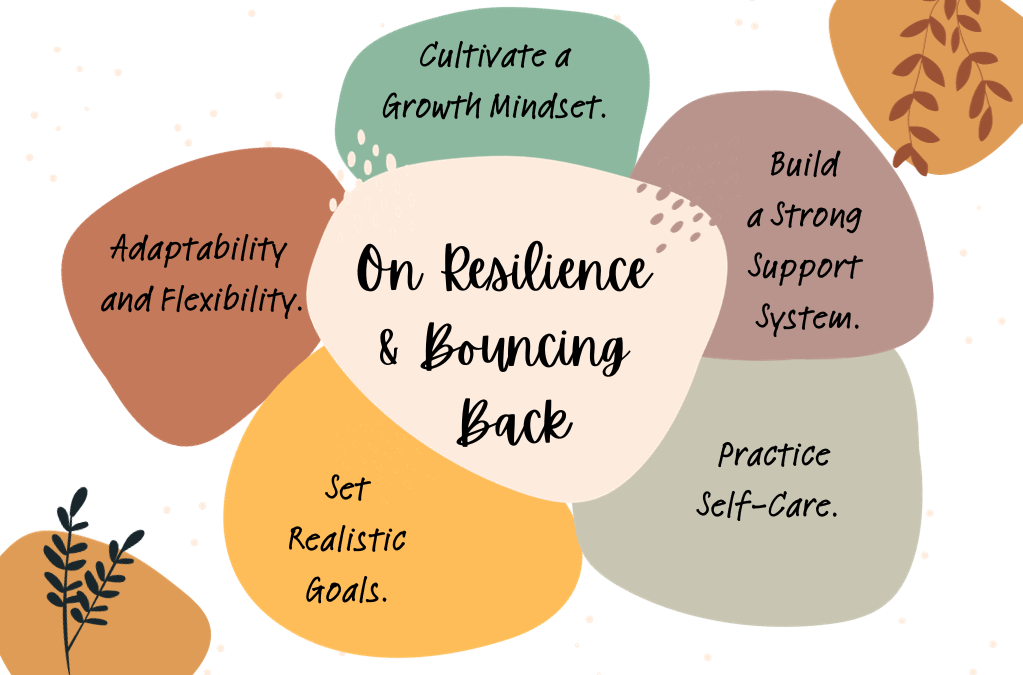
And just like Frodo, you have your own epic story to fulfill. You are the main character in your own narrative, which is filled with thrilling adventures, challenges, and setbacks. The key to success is recognizing that you don’t have to do it alone. Instead, seek support from others as you navigate through the ups and downs of your journey. Each hurdle you overcome brings you closer to your purpose and ultimate goal. Indeed, you won’t succeed in every adventure, but each experience builds resilience and confidence within you. This fuels your drive to move forward and complete your journey on your terms.
In this post, I want to share my own epic story with you. Through my personal and professional journey, I’ve encountered various trials and tribulations that have shaped me into the resilient person I am today.
Spoiler alert: my story is still a work in progress. As I reflect on this new year, I can’t help but look back at my humble beginnings as an antivirus software engineer at Trend Micro and where I am now as a proud business owner of Rtculate.com. While I may not have reached my ultimate goal just yet, I can confidently say that I’ve come a long way. Along this path, I’ve experienced tremendous growth and countless valuable lessons. These experiences have made me stronger and more resilient than ever.
Recently, I met with my university classmates to celebrate our anniversary since graduating all those years ago. It brought back memories of that special day filled with hope and excitement for the future. At the time, armed with a computer science degree and honors, I believed I would easily secure a great job. However, the reality was quite different as I faced rejection after rejection.
Thanks to the unwavering support and encouragement of my family, I didn’t give up. Eventually, I received a job offer from Trend Micro. It seemed like a happily ever after, but reality hit hard. The work didn’t align with my strengths and interests, leading me to become a low-performing employee. I even had to take remedial classes to improve my skills.
Just as I was ready to give up and go back home, a conversation with one of my managers changed everything. He was a former professor who had transitioned into the tech industry. Although his advice was initially hard to hear, it was invaluable. He urged me to explore other areas, both within and outside the organization, that aligned with my interests and personality. I realized that I loved technology but also craved human interaction. At that time, my job was isolating and demanding and consisted of 13-hour night shifts.
With the support of my manager and a glimmer of hope, I decided to find another opportunity and pursue higher studies by obtaining an MBA. After three different jobs, I finally found a role that perfectly matched my skills. I joined a professional services team, working directly with Trade Finance clients across Southeast Asia. Here, I could utilize both my formal training and social skills, which breathe new life into my career.
And my story didn’t end there. A few years later, I made the bold decision to seek greener pastures in the West. I thought to myself, “How hard could it be? I have an impressive educational background and years of experience in IT. Plus, IT is a universal field with no need for additional certifications, right?”
Little did I know that migrating to a new country would be like hitting the reset button on my career. Suddenly, my qualifications and foreign education became potential drawbacks when applying for jobs. I hit a career-low and began questioning my decision. As my savings dwindled, I even contemplated giving up my resident status and returning home.
But here’s the twist: I didn’t give up. I persevered through those challenging months, pushing beyond my self-doubt. I discovered new strategies, sought assistance from job search coaches, and adjusted my approach. And eventually, my determination paid off. I found a new role that aligned with my skills and experiences, which proved that resilience and adaptability are the keys to success.
After deciding to take a few years off to focus on motherhood, I thought it would be easy to jump back into my professional career. But boy, was I wrong! The industry had evolved, and I had to recalibrate. Each job interview turned into a discussion about the gap in my career rather than my qualifications.
Facing setback after setback, I questioned my decision to take time off. But then I reached out to other parents who had done the same, and they provided the support and inspiration I needed. Some chose to stay home, while others successfully reintegrated into the professional world. They showed me that I wasn’t alone and that there was still hope.
Instead of dwelling on my struggles, I focused on excelling in my current role and seizing opportunities to learn and network. This mindset shift led to recognition and success. I was given the chance to lead a team and even stumbled upon an unexpected opportunity to start my own business.
Venturing into entrepreneurship was a whole new challenge. The first year was tough with no clients and a drain on my personal savings. Just as I was about to abandon my dreams, fate intervened. Someone noticed my past volunteer work and offered me a lifeline.
Being a business owner comes with its own risks and uncertainties. Looking back, I wouldn’t trade it for anything. Building relationships with clients and fellow entrepreneurs has been very rewarding. Although there will always be obstacles, disappointment, and doubters, I trust that there are good people out there who will support me.
As I continue to write my epic story, I realize that life is full of adventures. It’s not always easy, and the key is to keep pushing forward even if we don’t have all the answers or resources. So, I ask you: how’s your own epic story unfolding? Who is accompanying you on your journey? And how do you tackle the challenges along the way?
Remember, life is a series of adventures, and achieving our goals takes hard work, time, and effort. With determination and the support of others, we can overcome anything. So, let the next chapter of your epic story begin. And if you need a little push, we’re here for you.
If you are thinking about what to do next, don’t forget to check out our How to find a hobby.
by Rochelle Tan | Nov 28, 2023 | InBiteSize
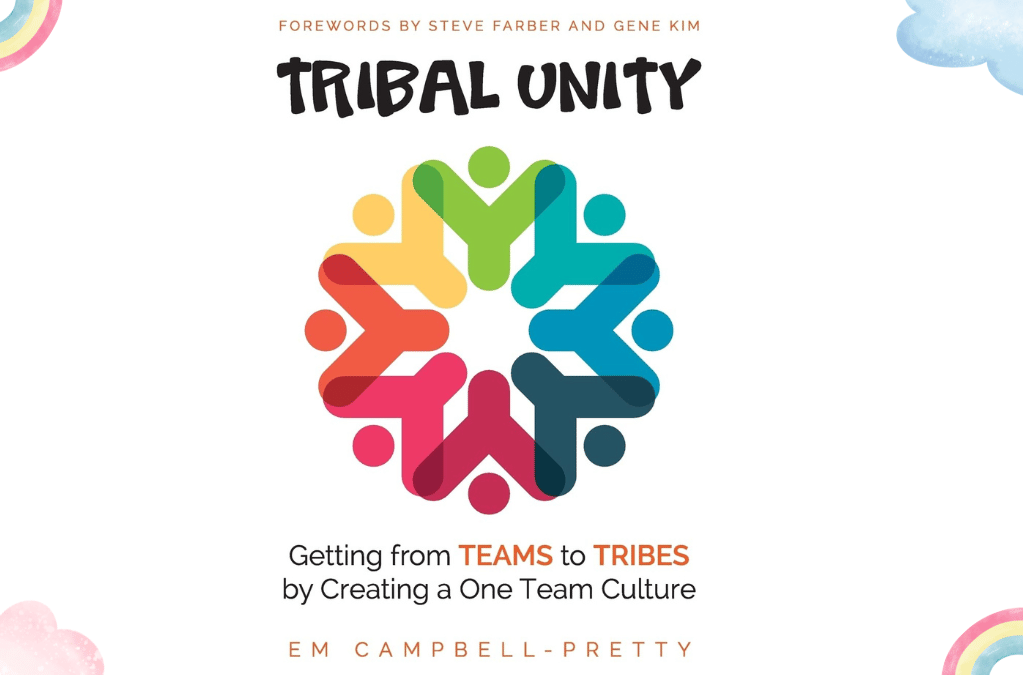
If you’re searching for ways to create a happy and collaborative workplace, look no further than Em Campbell-Pretty’s book: Tribal Unity. With real-life experience as a foundation, Campbell-Pretty offers a practical guidebook on building Tribal Unity. She doesn’t claim to introduce a new idea, but instead references various sources that have been successfully applied by her and her team.
Drawing inspiration from David Logan’s Tribal Leadership, Campbell-Pretty simplifies the concept of Tribal Culture as an organization to an Agile Release Train (ART) or Team of Agile team perspective as Tribal Unity. She encourages readers to strive to become Stage 5 tribes for increased productivity. Imagine an ART where everyone feels like family and productivity is off the charts. Currently, only 2% of US organizations have reached this level, with examples like Olympic gold medal teams and Apple Macintosh.
Campbell-Pretty presents the key elements necessary for building effective and motivating tribes. Get ready to feel motivated and energized with your team every single day.

The Agile Release Train (ART) is a long-lived team of Agile teams that incrementally develops, delivers, and often operates one or more solutions in a value stream.
© Scaled Agile, Inc.
To establish a culture of oneness, start by allowing team members to self-select into their teams. This method helps ensure that team members have a sense of belonging and ownership over their work. This is done by providing the team members the mission and vision of the product along with clear constraints (e.g., number of people per team, teams need to be co-located, teams must have cross-functional skill sets). Then, leaders allow them to use this information to self-organize.
Implement work practices such as daily communication and inspect and adapt on cadence to support collaboration and continuous improvement, respectively. Visualizing the work and making the vision, dependencies, and blockers clear helps promote alignment and transparency. If any of these work practices are too overwhelming to implement, at the very least make time to conduct the inspect and adapt. There’s nothing worse than expecting the team to improve if they do not take the time to identify areas for improvement and do something to resolve it.
While co-location is ideal, embrace technology to bridge the gap for distributed teams. Communication, collaboration, and delivering exceptional products can still be achieved.

• Daily communication is also known as daily stand-ups or team syncs.
• Inspect and Adapt is also called as sprint retrospective or iteration retrospective.
In order to foster a sense of unity within your team of teams, it’s important to create a shared identity and experiences. One way to do this is by using themed team names, such as Rocket Ships or Bird Names. You can also utilize innovative games like “product box” to align the team’s understanding and vision.
In addition, adopting a whole-of-tribe perspective can help bring teams together and emphasize the importance of unity. Chapters and Guilds provide a unique approach, focusing on similar skills and competencies rather than traditional functional teams. In these groups, members don’t have a direct manager, but instead come together to share challenges, learnings, and collaborate on solving common problems within their teams.
Participation in Chapters and Guilds is voluntary, allowing members to join or leave as they wish. And don’t forget to celebrate as a tribe and implement Tribal Kaizen to encourage a continuous search for improvement opportunities.
To further strengthen your tribe, consider organizing events like a unity hour, where everyone synchronizes, or a joint chant like the Haka. Another great idea is to have a breakaway day or sports day, which allows team members to get to know each other beyond their work roles.
Kaizen is a Japanese word that means “change for the better.” It was introduced Taiichi Ohno as part of Toyota’s Production System.

Kaizen is about changing the ways things are. If you assume that things are all right the way they are, you can’t do kaizen! So change something! – Taiichi Ohno
The vulnerability paradox: It’s the first thing. I look for in you and the last thing I want you to see in me.
—Brené Brown
To truly bring leaders into the team, it’s important for them to also walk the talk. They need to show vulnerability and embrace their humanity. This means being actively involved in the changes and connecting with their team on the ground level.
Simply stating the desire to support and connect with the team isn’t enough. Leaders need to invest time in going to where the work is happening and truly understanding the system. By doing this, they can better relate to their team and become subject matter experts themselves.
The author shares her own experience of joining a tennis-throwing activity and displaying her bad hand-eye coordination. She also shares a bad attempt at the Bus Stop dance move in response to the team’s feedback about her not doing the Macarena dance. This shows vulnerability and breaks down barriers between leaders and their teams, even if it may be challenging or embarrassing for the leader. It can be a powerful tool for fostering stronger connections between leaders and their teams.
To truly embrace an idea, it’s not enough to simply share the vision and mission. Consistent reinforcement and alignment are key. But what if there’s not enough time to learn and understand new concepts? Campbell-Pretty had a similar challenge with their EDW team. So, they came up with a solution: a book club. By setting aside dedicated time for reading and discussion, they created a space for learning, alignment, and execution of their team’s vision.
When introducing new ideas, it’s natural to encounter opposing views. There will always be both supporters and detractors. Campbell-Pretty has a great approach to handling detractors: observe and listen. They provide evidence of change and stay true to their ideas. By demonstrating the impact, value, and boost in team morale, they show that an idea can make a difference. Having detractors doesn’t mean giving in or compromising. It’s about giving their ideas a fair chance while remaining open to necessary changes.
…change sticks only when it becomes “the way we do things around here”, when it seeps into the very bloodstream of the work unit…
—John Kotter, Leading Change.
Building a strong team and connecting them to a common vision is a great start, but how do you maintain that momentum? This article explores the importance of metrics like NPS and eNPS to gauge customer and employee satisfaction. Sharing team success stories and making them visible to everyone is also key. Additionally, setting up successors for success and maintaining discipline will ensure ongoing success. Learn how to avoid complacency and keep your team thriving in this insightful read.
It is important to remember that management is not the enemy. They want to do a good job just like everyone else. To gain their support, here are some tips from the author:
- Make Tribal Unity relevant to them
- Appeal to their empathy
- Celebrate small victories and involve leaders in the process
- Propose small changes to get things started
One way to change the narrative is by turning to Brené Brown’s book, Rising Strong. Brown explores how the stories we tell ourselves shape our perception of the world. Often, our assumptions about leaders are incorrect or incomplete. To bridge this gap, perform a quick reality check by comparing the stories you tell yourself with the actual situation.
Sometimes proposing something small is the best way to get management to try new things. So, choose an endeavor that you’re almost sure will work. Get agreement to get it done. Once you have a successful implementation, you can leverage your new ticket to play by getting approval for the next small thing.
Implementing these parts may require some time, effort, and patience. However, the benefits of Tribal Unity are invaluable. By fostering a sense of belonging, shared vision, and consistently reinforcing this mindset, you can establish and uphold a culture of unity within your team. Take the first step towards building your team’s Tribal Unity today!
Don’t forget to check out our review of A Sense of Urgency.

by Rochelle Tan | Nov 14, 2023 | InBiteSize
AI, or Artificial Intelligence, is significantly transforming our work and daily lives. According to Coursera.org, AI refers to the creation of computer systems capable of performing tasks that historically only a human could do, such as reasoning, making decisions, or solving problems. AI encompasses a range of technologies, including machine learning, deep learning, and natural language processing (NLP). These technologies enable machines to perform tasks that previously only humans could do, like generating written content, steering a car, or analyzing data. It allows computers to think or act more human by processing information that is provided or gathered and deciding its response based on what it knows or learns.
By harnessing the power of AI, experts can amplify their abilities, while leaving mundane and tedious (sometimes complicated) tasks to machines. Imagine a world where traffic lights change seamlessly, self-driving cars navigate the roads safely, customer queries are answered promptly, and job applicants are selected efficiently – all thanks to AI.
The practical applications of AI are limitless. From IBM Watson’s cutting-edge NLP system, which outperformed human experts on the game show Jeopardy, to OpenAI’s ChatGPT, revolutionizing text-based conversations, AI is revolutionizing communication. Google’s writing assistant, Bard, assists in producing high-quality content, while AlphaFold revolutionizes drug discovery by predicting protein structures. Computer Vision technology accurately identifies objects, streamlining processes, and self-driving cars are revolutionizing transportation. Furthermore, NLPs enhance the efficiency of customer support centers, while image recognition solutions read documents for compliance and validity or provide visual inspection of potential product deficiency or machine failure. AI’s potential applications expand daily.
However, we must approach AI with caution. It has so much potential and capabilities that its misuse can lead to detrimental and long term effects. AI can be subject to bias and discrimination based on the data it uses or associated attributes, which may not necessarily include information such as age, gender, and ethnicity but data with attributes that lead to the association to these data points. Here are some potential scenarios to consider:
- Job applications: Companies should be vigilant about sensitive attributes like age and ethnicity, even if they are indirectly inferred by the AI from other attributes. This can lead to unfair exclusion of certain groups of applicants without the recruiters being consciously aware of it.
- Security and policing: Racial profiling, a form of bias, can occur if facial recognition systems are trained on data that discriminates against specific groups of people given that there’s more data available on areas that they live in.
- Healthcare: While AI and machine learning solutions can predict adverse conditions and coordinate care, organizations must ensure that these technologies do not reinforce existing biases or discriminate in providing care due to skewed or insufficient data. Otherwise, they risk failing to serve the areas or groups that need care the most.
- Marketing: AI techniques used in marketing can effectively generate custom content tailored to specific segments or target customers. However, the same technology can also produce misinformation and conspiracy theories that manipulate people’s thinking, raising ethical concerns.
To mitigate these risks, industry leaders like IBM, DataPrime, and Google have implemented Responsible AI frameworks. Let’s examine their core pillars or guiding principles.
First, we’ll take at IBM‘s AI implementation framework1, which is guided by five core pillars:
- Explainability: Building trust by making transparent decisions and providing clear explanations.
- Fairness: Addressing biases and promoting inclusivity by assisting humans in making unbiased choices.
- Robustness: Protecting AI systems against threats and ensuring their reliability.
- Transparency: Sharing information about AI use with stakeholders of diverse roles.
- Privacy: Prioritizing and safeguarding employee privacy rights throughout the AI lifecycle.
Secondly, DataPrime emphasizes Accountability, Impartiality, Resilience, Transparency, Security, and Governance as vital aspects of responsible AI. Each element is described below, with detailed information within the original article:
- Accountable: Algorithms, attributes and correlations are open to inspection.
- Impartial: Internal and external checks enable equitable application across all participants.
- Resilient: Monitored and reinforced learning protocols with humans produce consistent and reliable outputs.
- Transparent: Users have a direct line of sight to how data, output and decisions are used and rendered.
- Secure: AI is protected from potential risks (including cyber risks) that may cause physical and digital harm.
- Governed: Organization and policies clearly determine who is responsible for data, output and decisions.
Finally, Google puts focus on the following principles:
- Fairness addresses the possible disparate outcomes end users may experience as related to sensitive characteristics such as race, income, sexual orientation, or gender through algorithmic decision-making.
- Accountability means being held responsible for the effects of an AI system. This involves 3 dimensions.
• transparency, or sharing information about system behavior and organizational process, which may include documenting and sharing how models and datasets were created, trained, and evaluated.
• interpretability, which involves the understanding of ML model decisions, where humans are able to identify features that lead to a prediction.
• explainability is the ability for a model’s automated decisions to be explained in a way for humans to understand.
- Safety includes a set of design and operational techniques to follow to avoid and contain actions that can cause harm, intentionally or unintentionally.
- Privacy practices in Responsible AI involve the consideration of potential privacy implications in using sensitive data. This includes not only respecting legal and regulatory requirements, but also considering social norms and typical individual expectations.
Above are just examples that have been formally shared with the public. Each organization has the flexibility to define their guiding principles and shape their own responsible AI framework. However, what matters most is putting these principles into practice, despite the complexities of AI solutions.
Overall, AI holds immense potential for improving our lives. However, it must be used with ethics and responsibility in mind. By adopting frameworks and prioritizing guiding principles, we can harness the power of AI while safeguarding against its potential harm.
Is your organization thinking about Ethical AI? Does your organization have a Responsible AI Framework? What are your guiding principles?
Don’t forget to check out our blog about Microsoft Whiteboard.

by Rochelle Tan | Sep 28, 2023 | InBiteSize
In today’s fast-paced world, it’s not enough to have a great idea; it needs to stick. And that’s precisely what Chip Heath and Dan Heath explore in their book, “Make it Stick.” This book review will unpack their SUCCESs formula, an approach to making ideas more memorable and impactful. Whether you’re a coach, consultant, executive, marketer, or sales manager, this book holds universal lessons on how to make your ideas stick and guide the behavior of those around you that will lead to positive change.
The first idea in “Make it Stick” is that simplicity is the key. Compact messages help the listener remember and can be achieved by leveraging concepts that are already in place: things that are familiar to the audience (aka schemas). The authors recommend breaking ideas down into the most essential parts and then reinforcing them. This approach helps make the information more memorable and easier to recall. This is the same approach that journalists take in writing their articles by taking the inverted pyramid model: “Don’t bury the lead”. Usually, the headline provides the gist of the article and provides the critical information early on.
The “curse of knowledge” affects us all when we assume that our audience knows what we know. But The Heath brothers urge us to avoid this and instead use Barry Loewenstein’s “gap theory” to keep our listeners’ interest. This approach presents an open gap between what the audience knows and what they need to know. This piques their curiosity and makes them more interested in the information. In a way, it is about holding your audience’s attention so that they consistently want more. An example of this is when a science teacher presents a question at the beginning of a class, such as, “What makes up the rings of Saturn?” This question keeps the students interested in discovering the answer to the mystery that is unraveled throughout the class.
One of the best ways to make an idea stick is by using vivid and specific examples. The authors cite examples like Jerry Kaplan’s personal computer presentation to Silicon Valley investment capital in 1987. Mr. Kaplan used his maroon leather case, which only contained a blank pad of paper, to illustrate the portability, simple functionality, and a myriad of functionalities (e.g., address book, manage word processing, etc.). His concrete example made it easy for the panel of investors to visualize and understand the features of this innovative product. By using concrete examples, ideas become easily remembered and can act as guiding principles without the need for complicated translation. People respond and remember situations and people more than statistics. It is the same concept that enterprise leaders should adhere to when communicating corporate strategies. When the message is clear and concrete, folks are under the strategy, which drives the right behavior from everyone across the organization.
While it’s tempting to rely on authority figures to add credibility to our ideas, the authors suggest that sometimes it’s better to use antiauthority. One example they cite is Pam Laffin’s anti-smoking campaign by the Massachusetts Department of Public Health. In some cases, internal validation can be far more effective. For instance, by using more vivid details, stories, and examples, we can persuade others without relying on stats and figures that may go over the audience’s heads. This concept was clearly depicted in the case of Wendy’s “Where’s the Beef?” campaign to discredit McDonald’s hamburgers or the Sinatra Test used by Safexpress, which guaranteed film producers the safe and timely delivery of Bollywood movies.
This chapter focuses on how tapping into emotions can help make ideas stick. The Heath brothers point out that people will only act when their emotions are engaged. Emotional engagement can be achieved in many ways, and one of the most effective ways is to help people care enough to act. For instance, priming candidate donors to feel and care about the cause before asking for support helps trigger generosity. An example of priming is leveraging Mother Teresa’s principle: If I look at the one, I will act. It is easier to ask potential patrons to give to an actual person than to donate to an entire cause (e.g., Save Africa, Run for the Cure, etc.)
The final aspect of the SUCCESs model is story. As human beings, we naturally gravitate towards stories; they engage us and make us feel something. Trying to make a point triggers debate. However, sharing our ideas via stories invites our audience to discuss and expand on the topic. It helps make the idea more compelling. One example provided is Stephen Denning’s experience during his stint with the World Bank. Denning employed Zambia’s story on fighting malaria and finding information to combat the disease. Instead of presenting statistics and data, the Zambia story appealed to Denning’s audience and led to the World Bank’s focus on information management.
“Make it Stick” is an excellent read that explores an effective way of making your ideas more impactful. By using the SUCCESs formula, we learn how to keep things simple, uncommon, concrete, credible, emotional, and engaging. Done correctly, compelling ideas have the power to guide behavior and effectively create change. How are you going to use this formula to elevate your ideas and make a lasting impact?
Don’t forget to check our review of The Art of Decision-Making: Insights from Blink for Product Management.